

FEDERAL AND STATE OFFICE
Congress
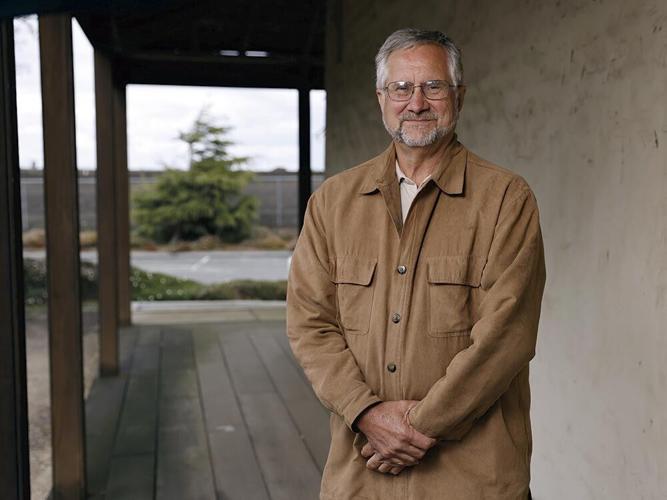
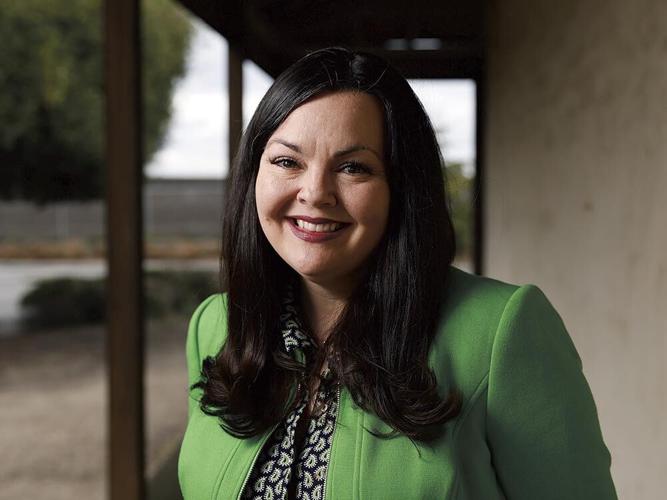
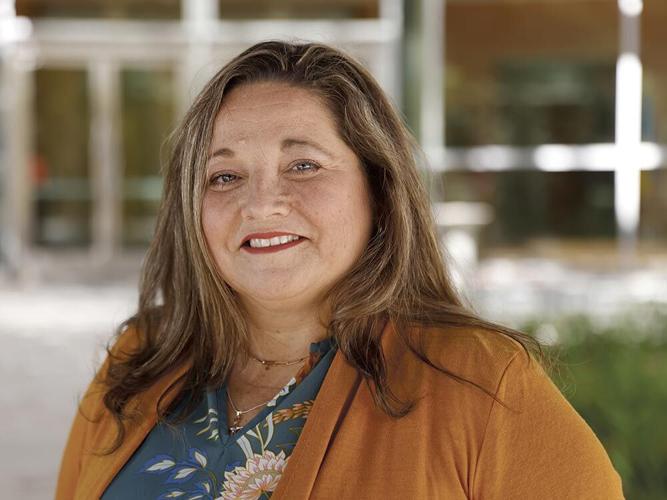
Zoe Lofgren | District 18
Jimmy Panetta | District 19
While California has its share of challenges, we’re grateful to live here more than ever before and are proud that our elected leaders are by and large reasonable, competent and forward-thinking. Our state continues to adopt leading-edge policies to address the climate crisis, to create programs to ensure we remain at the center of the technology revolution, to find ways to welcome immigrants and address the housing shortage.
In Congress, our area is represented by two thoughtful, passionate, progressive-minded Democrats – Zoe Lofgren (District 18) and Jimmy Panetta (District 19). Having two representatives for Monterey County is new; it’s the result of a nonpartisan state commission redrawing districts, a process that is mandated every 10 years, after the U.S. Census.
Lofgren has represented Silicon Valley since 1994; her district now includes parts of Monterey and Santa Cruz counties, and all of San Benito County. She is smart, independent and fiery. She serves on the special committee investigating the Jan. 6, 2021 insurrection, and has been quite impressive in that role. Moreover she has been outspoken about the fragility of our political system and the need for our rules and laws to be adhered to if we hope to keep our democratic system in place.
Lofgren advocates for bringing tech to rural communities and is a champion of agricultural labor issues, specifically an ag workforce reform bill that would provide a legal path for undocumented farmworkers to gain citizenship, a win for our community. She is forthright about the climate crisis to our national security and introduced the Clean Energy Victory Bond Act – modeled after the WWII-era program as a way of issuing bonds – to give Americans an opportunity to invest in building clean energy systems.
Panetta is steadfast in his support for critical Central Coast issues. He serves on the influential Ways and Means Committee, which oversees all revenue-raising measures and taxes in Congress. He’s a strong advocate for addressing the affordable housing crisis facing our district (and this country), helping secure $23 million in housing relief and an additional $16 million for rental assistance at the outset of the pandemic. Panetta also supported a first-time homebuyer tax credit of $15,000, increasing the low-income housing tax credit, and establishing a tenant bill of rights for residents of privatized military housing. He supports protections for oceans and the environment. He is an accessible and devoted public servant.
Both Lofgren and Panetta ought to join forces to help one of our county’s fastest-growing agriculture sectors, cannabis, now the third-largest crop in our county. Action is needed to reform the byzantine banking regulations that prevent legal cannabis operators from banking like other legal businesses, forcing them to do all of their transactions in cash, making this legitimate trade behave as if it is not. This archaic rule needs to be updated for the safety of those in this industry.
We encourage voters to re-elect both incumbents to bring measured ideas to a fractured Capitol.
State Assembly
Robert Rivas | District 29
Four years into his stint in Sacramento, Robert Rivas may no longer qualify as a rising star in the Assembly. He has arrived. After two terms as a San Benito County supervisor and now two terms in the Assembly, Rivas has assumed leadership positions that are a direct result of his legislative talents. He is chair of the agriculture committee in the Assembly and vice chair of the Latino legislative caucus. He has his sights set on being the next Speaker of the Assembly.
In Sacramento, Rivas authored the farmworker Covid relief package of bills, the Farmworker Housing Act and Farmworker Smoke Protection Act. While on the San Benito County dais he led the effort to ban fracking in that county, and in 2021 he introduced legislation in the Assembly to advance carbon sequestration on ag fields. His bonafides protecting vulnerable workers and the environment are well established and we endorse his return to Sacramento in the newly numbered Assembly District 29.
Dawn Addis | District 30
The new district map – the result of the California Citizens Redistricting Commission – is as much the story in Assembly District 30 as the candidates. It’s a big and varied district with no incumbent running; it’s far more Democratic-leaning now and Republican contender Vicki Nohrden is neither compelling nor competitive.
Dawn Addis is a teacher and city council member in Morro Bay. Addis distinguishes herself by virtue of her ready command of the variety of issues across the district that are both similar and different – things like water, tourism, green infrastructure, access to health care and the cost of housing are all on her list of urgent needs to address. She is a founder of her local Women’s March group and a committed bridge-builder and listener who’s interested in getting to know this vast new district and fight for its constituents in Sacramento
Addis is well positioned to represent this stretch of California’s coastline and its unique challenges.
COUNTY
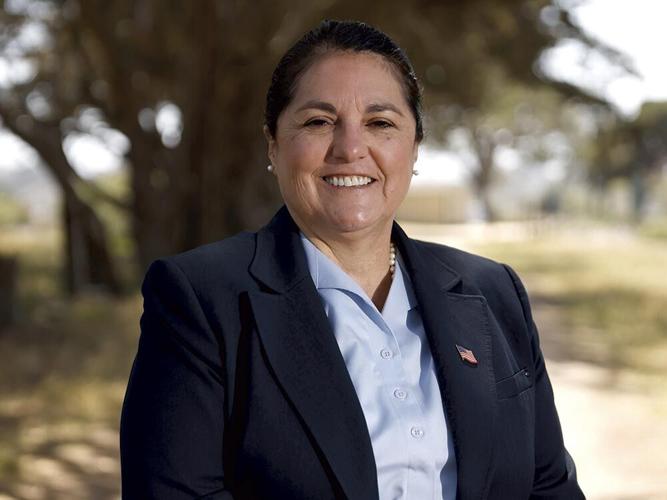
Tina Nieto | Sheriff
The Monterey County Sheriff’s Office needs a shakeup, and we believe Tina Nieto is best equipped to offer that.

Tina Nieto | Sheriff
Currently the Marina police chief, a role she has held since 2017, Nieto also has management experience on a much bigger scale. She worked for 28 years for the Los Angeles Police Department where she became the first Latina police captain, and where she managed teams as big as 500 people. She has the rare combination of experience and being a complete outsider to the Monterey County Sheriff’s Office, which has been plagued by poor leadership and bitter politics under outgoing Sheriff Steve Bernal.
While Capt. Joe Moses promises to lead in a different direction – and Bernal withdrew his endorsement of Moses when they parted ways on what should have been an obvious stance against sexual harassment within the department – he still sees the department from the inside, with blinders to opportunities to change things. Here’s Moses on how Covid was handled in the jail: “The Covid response at the jail was handled very well.” Nieto, by contrast, says, “We hopefully we can do better the next time.”
Moses has a lot to be proud of in his career to date in the Sheriff’s Office, where he’s held just about every role. Most recently, as the supervisor in charge of the jail, he worked to expand programming and mental health services – necessary endeavors that Nieto pledges to continue to pursue.
She’s also committed to resetting the department’s relationship with the public, the press and the county Board of Supervisors when it comes to transparency. This is critical in restoring public trust.
Glenn Church | County Supervisor, District 2
The five-member Monterey County Board of Supervisors occupies an important and unique role. Besides setting policy and budget for countywide services and institutions, it serves as the local government agency for all of unincorporated Monterey County. Where there’s no mayor to ask about streetlights and potholes, there is a county supervisor. Glenn Church is especially invested in being the people’s supervisor, pledging to address everyday concerns – things like litter, traffic, animal control – in this rural district in which about 60 percent of constituents live in unincorporated areas.

Glenn Church | County Supervisor, District 2
This kind of return to constituent services is needed in North County, and Church distinguished himself early on in a primary field of six candidates (aiming to replace retiring Supervisor John Phillips) with his focus on service over politics. “I’m not looking to line up as a bloc with anybody. I have my constituents to take care of, and then I can make the right decision for this whole county,” he says.
Church is not a government outsider – his father, Warren Church, was supervisor from 1965-77 – but he is not beholden to special interest groups. He is a Christmas tree farmer in Royal Oaks who we believe will be an independent and critical thinker.
He also has a lot of good ideas, like a fire prevention plan. He wants to rein in the county’s legal expenses. And he is rightly skeptical of spending on Laguna Seca raceway.
“I’m not afraid to raise questions,” Church says. “I am not doing this as a career. I am going to make a lot of people uncomfortable.”
Church’s opponent, Regina Gage, seems not to like being uncomfortable. She declined to participate in the Weekly’s endorsement process. She serves on the board of Salinas Valley Memorial Healthcare System and is executive director of Meals on Wheels of the Salinas Valley. She has strong support from labor unions. Whoever wins, this critical county seat will break from the mold of Phillips and the interest groups that support him, but we’d like to see a truly independent thinker fill it.
Kevin Raskoff | Monterey Peninsula Regional Park District, Ward 3
Incumbent Kevin Raskoff is running against a “habitat first, access second” candidate in Don Gruber.
Raskoff has served the district well, acting as the representative to a joint powers authority (working along with representatives from the cities of Monterey and Seaside) to address access and safety at Laguna Grande Park. The JPA seeks to reclaim that park from an established homeless encampment for the wider community’s use. Raskoff ought to continue that work to completion.
He’s also been a strong advocate for the Fort Ord Regional Trail and Greenway (FORTAG) project, an exciting new 28-mile multi-use bike and walking trail impacting Ward 3 including parts of Del Rey Oaks, Seaside and Marina. His opponent has actively campaigned against it, and vows to vote no when sections come before the MPRPD board. We could not disagree with him more, and this alone is reason to ensure Raskoff wins.
Raskoff is also committed to opening up access at Palo Corona Regional Park, as well as the broader mission of expanding equity and access throughout the area the district serves (with parks like Laguna Grande). His methodical approach and big-picture goals are a good leadership combination.
CITIES
Monterey
Tyller Williamson | Mayor
We want to begin by saying that we appreciate Dan Albert and how he has evolved as a council member, that he brings a certain level of grace and respect to his service. He’s likable and demonstrates a love for the city of Monterey. That is undeniable.

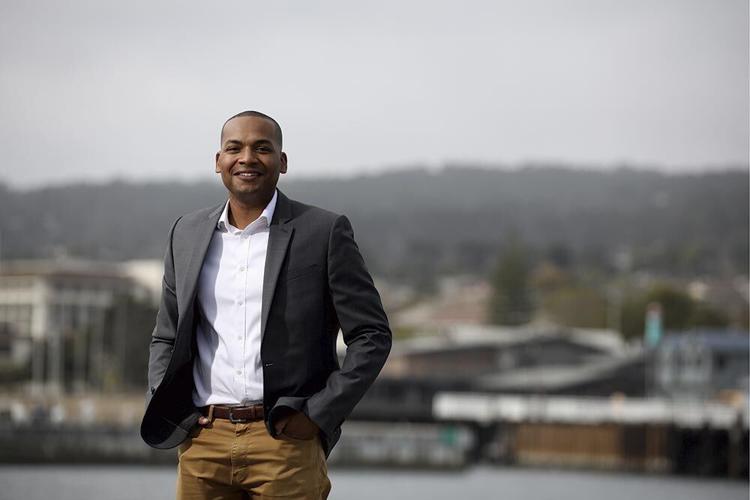
Tyller Williamson | Monterey Mayor
But in our assessment, Albert has also been slow to move the city forward. He voted no on a much-needed affordable housing project on Adams Street amid the first whisper of neighbor opposition, and he said yes to legal cannabis – but only begrudgingly, with a preference for only one cannabis dispensary in the whole city and he opposes cannabis events. And he was late to jump into this race, and we were dismayed by the way this went down: that retiring mayor Clyde Roberson anointed Albert as his pick for the new mayor, coordinating his retirement announcement and endorsement with Albert’s campaign launch. That’s the old way of doing things in Monterey and frankly, it stinks. The old boys club ought not get to decide who is the next “king.”
Since Albert and Tyller Williamson both serve on city council now, we’re sorry the city will lose one after the mayor is selected. We think they are both good leaders, but Williamson stands to move things forward.
Williamson is by no means perfect, but he has demonstrated during his term on City Council that younger people have an important role to play in government. He is smart and ready to tackle the tough decisions, even if unpopular. He has been a strong voice for making the city more affordable to those who rent, a group that comprises 66 percent of city residents. He has advocated for zoning changes to enable the city to build more housing closer to its commercial districts, a big positive – and then when the rubber meets the road, he says yes to real projects, even over neighbor opposition (like the Adams Street proposal mentioned above).
He’d also be Monterey’s first young, first Black and first openly gay mayor, all important ways to reflect the city’s population on council. Considering the way the old boys lined up with Roberson for the Albert endorsement deal, Williamson will bring forward a refreshing change and give California’s first city a new (and improved) way of being, and seeing itself.
The new mayor will preside over a new council. For the first time, Monterey City Council elections will be district-based, and two candidates (newcomer Kim Barber in District 1 and incumbent Ed Smith in District 2) will be automatically elected.
Salinas
Kimbley Craig | Mayor
When former Salinas mayor Joe Gunter died, Kimbley Craig was retired from Salinas City Council. But seeing a leadership void, she stepped in to run in 2020, and in her first term, she has led the city firmly and gracefully.

Kimbley Craig | Salinas Mayor
Craig is not afraid to tackle the big issues in her city, and rightly identifies housing and homelessness as the most formidable challenges. Salinas led the way in the county with implementing state initiatives Roomkey and Homekey to get roofs over people’s heads, and is a partner in the much-needed SHARE Center for homeless families. There are real results here to show for the city’s efforts. In City Hall, there is dedicated leadership coming from what Craig rightly calls “an all-star team.” And federal Covid relief funding has allowed the city to make progress on some long-stalled, much-needed projects.
Her competitor, businessman Amit Pandya, offers little by way of a plan; his platform is mostly casting shade on Craig.
While we do not agree with Craig on all the issues – particularly when it comes to regional solutions for a water supply – she has shown herself able and willing to forge unconventional partnerships and get the work done. She is a cheerleader for her city and also gets into the bureaucratic weeds, a good combination.
On some important issues, her own council routinely splits 4-3, with Craig in the minority; those four colleagues are endorsing her opponent. There is work to do on building communication and more trusting relationships on the council itself, but a lot of that work lies with the councilmembers. We hope they are willing to work together more under her leadership.
Christie Cromeenes and Steve McShane | City Council
On that note of two distinct blocs: All three members of council who align – Mayor Kimbley Craig, District 3 Councilmember Steve McShane and District 5 Councilmember Christie Cromeenes – are up for re-election this year. While we admire the four other members and what they stand for, we similarly endorse Cromeenes and McShane for another term. They are effective and do good work representing their districts.

Christie Cromeenes | Salinas City Council
Cromeenes wants to continue working on projects like park and traffic calming improvements, plus her mission to get a community center built in District 5. She wants to branch out the city’s economic development vision, despite the presence of the city’s big malls in her North Salinas district: “The large box store concept is outdated,” she writes, and we agree.
Cromeenes was elected four years ago with just an 86-vote edge over Andrew Sandoval, who is running again. We admire Sandoval, an energetic community activist and government watchdog who also serves as a board member of the Santa Rita Union School District. While Sandoval is a strong candidate, we think Cromeenes has done a good job of representing her constituents.
We feel similarly about McShane, who is seeking a fourth term. He has a persistent presence in the community and is clearly proud of his city. He helped push the Downtown Vibrancy Plan along that is finally paying off and making Oldtown Salinas shine. He wants to support more food trucks and farmers market opportunities for small business owners.
His opponent, Cary Swensen, seems enthusiastic and capable but also unprepared with plans or specific ideas.
Pacific Grove
Mike Wachs | Mayor
Incumbent Mayor Bill Peake cares deeply for his town and is accomplished at running a meeting, but he leads from behind and it is time for new energy and direction. Pacific Grove is a small city with a large collection of passionate and committed know-it-alls. Peake’s leadership style to acquiesce to the last and loudest public voice makes him the second best choice in this election. In our candidate interview, much like he has done from the dais over the past four years, he was asked repeatedly to stake out a position on controversial topics, and he deflected each time.
For Pacific Grove to meet its low-income housing zoning targets, develop new sustainable revenue streams and advance as a beacon of civic-mindedness on the coast of California, more leadership is necessary. Mike Wachs is new in town, has a young family and works in the nonprofit sector. He says he is running for mayor because no one else was challenging Bill Peake. We say, let’s give him a chance.
Joe Amelio and Tina Rau | City Council
Joe Amelio, the only incumbent running for reelection, is a steady leader with a track record of good votes on the state project Homekey, affordable housing, the American Tin Cannery hotel project and the P.G. Hotel. He is a calming influence and bridge-builder among some overbearing characters. He deserves reelection.
Tina Rau serves as chair of the city’s Diversity, Equity and Inclusion Task Force, and when asked about building a skatepark in Pacific Grove she says she wants to change the experience in P.G. to make it work for a broader swath of people. That is a worthy vision. She also authored a pretty dumb set of tweets that were blatantly intolerant on their face, for which she has apologized. Mistakes are essential to learning. We’ll accept the apology and hold her to an even higher standard for inclusivity going forward.
Debby Beck and Mark Chakwin have both served (Beck currently) on the P.G. Planning Commission and seem to be running for council largely to overturn the approval of the ATC hotel project. They are committed community-minded residents, but their vision for the city is dated and they express hostility to new ideas. Lori McDonnell is an advocate for wildlife, the environment and ecotourism, but her view – essentially that no tree should come down, ever – means that under her leadership there’s no way anything, even an institution like the Monterey Bay Aquarium, would ever be built. That is well-intentioned, but overzealous. Darla Vining seems unprepared for the job.
While there are three open seats, we could only justifiably endorse two candidates.
Carmel
Jeff Baron and Ashley Stoddard | City Council
For a city outwardly proud of its bohemian, artistic roots and its village character (think cottages and shingled roofs, no street addresses nor routine home mail delivery) the city of Carmel-by-the-Sea’s policymaking is mind-boggling. “Village character” is a Carmel buzzword we pressed each candidate to define. Collectively, it seems to mean keeping out a proposed Verizon cell tower, ending the pandemic-era experiment with restaurant parklets, no more wood fires on the beach (propane only) and impossibly expensive housing in a city full of mostly empty vacation homes.
Incumbent Jeff Baron is self-confident and smart, but also confounding. While we like some of his policies, in another moment he baffles us. He speaks about his love of the walkable village, yet he is vocal in his disdain for restaurant parklets, that the city is losing vital parking spaces, that the restaurant owners are getting one over on the city. Huh? Still, he’s done a fine job on the climate change action plan, promoting electrification of city buildings, energy renovations, a new bicycle master plan and more. He’s also a sensible leader on housing issues, and we hope he makes real progress in this realm in a second term. (We’re still hoping Baron comes around on parklets – they are winners for Pacific Grove, San Francisco, Santa Barbara, Paris, etc.)
For the second open seat, we endorse Ashley Stoddard, an artist and gallery owner, and former board chair for the Carmel Chamber of Commerce. She’s new on policy issues (for example, her suggestion that empty vacation homes be converted into workforce housing might be well intentioned, but it’s a pipe dream). Yet she proposes reasonable solutions for things like downtown parking, advocating for a shuttle for workers. She wants to address low-income housing as a priority. Hopefully she will bring forward reasonable and attainable solutions on council.
Parker Logan, who owns the bar Sade’s, is an intriguing adversary to the current council, but his policies are all over the map – and he didn’t even vote in three of the past four elections. He wants to “Make Carmel Carmel Again,” which has a shape-shifting meaning. It includes being “100-percent against” paid parking downtown, planting more trees and endorsing “whimsical architecture.”
Local historian and journalist Alissandra Dramov is a strong supporter of the Stop Cell Towers movement, which is most likely a losing proposition. While it’s great to see citizens empowered to fight for their interests – in this case, the outcome will be a new telecom guideline policy for the city – it means that City Council denied Verizon’s request, and now finds itself defending an unwinnable lawsuit currently under appeal. Plus, she’s expressed concerns about the city’s climate action plan, a mindset that is ill advised as the climate crisis worsens.
For mayor, Dave Potter is running unopposed for another term.
Marina
Brian McCarthy and Liesbeth Visscher | City Council
It’s a strange year for Marina politics in that the two incumbents up for re-election were drawn out of their districts in the redistricting process that followed the 2020 Census results. That means two new faces guaranteed: One is Brian McCarthy, a current planning commissioner, who is running unopposed in District 1. We appreciate his thoughtful answers to questions and his enthusiasm for transparency, community engagement, increasing housing and sensible growth, all alongside being a genuine cheerleader for his city. “I am not afraid to fight for the high-quality growth we deserve,” he says. Given that long-stalled development is underway, high-quality growth is critical.
In District 4, Liesbeth Visscher wants to prioritize quality-of-life facilities like an aquatic center alongside needed investments like a new fire station to reduce emergency response times. She wants to see new communities in Marina connected to older neighborhoods. She has been involved in local water issues as a member of Citizens for Just Water for five years, which gives her some insight into local government, but we hope that won’t limit her ability to work collaboratively with other jurisdictions; cooperation is needed on water, which all too often is a drag-out fight.
Les Martin, a retired Naval officer, is a local government enthusiast and second-time candidate, but his ideas tend toward more vague. We’re also troubled that he has no plan to increase public engagement, and that his ideas about legal cannabis – a new industry for Marina – put him out of step with reality. “I do not want to see more cannabis businesses in Marina. I also realize we won’t be turning that clock back. Too bad,” Martin says.
In the mayor’s chair, Bruce Delgado is seeking a seventh term – his first re-election bid unopposed. While we do hope he runs tighter, more efficient meetings, we think he’s a solid leader for Marina.
Del Rey Oaks
Alison Kerr | Mayor
John Uy and Louise Goetzelt | City Council
For a small city, Del Rey Oaks has an outsized intensity. Part of that comes from citizen engagement, which we think is a good thing. But part of that comes from a vocal few wielding too much influence.

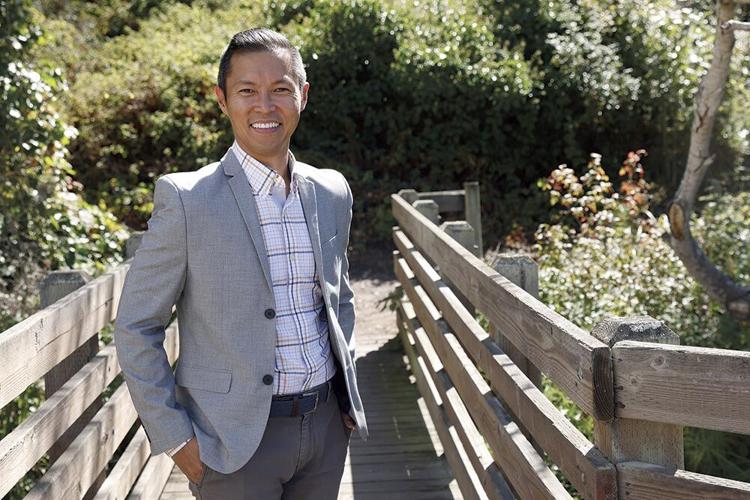
John Uy | Del Rey Oaks City Council
Scott Donaldson, a current city councilmember, is challenging incumbent Mayor Alison Kerr for her seat. (Donaldson is midway through a four-year term, so he still has two years on council even if he loses.) Donaldson talks about restoring a “local focus” to Del Rey Oaks. That amounts to a failure to see the forest for the trees. Consider the 1.5-mile stretch of a path known as the Fort Ord Regional Trail and Greenway (FORTAG) that is planned to cut through Del Rey Oaks. FORTAG will offer a benefit to the region, including people who work in or visit Del Rey Oaks. But opponents seized on NIMBY issues – read, “local focus” – to get Measure B on ballots last June, giving Del Rey Oaks voters the opportunity to overturn this regional asset.
While FORTAG opponents failed to overturn it, Donaldson strove to accommodate them.
It’s not just one issue. Now, upon hearing concerns from neighbors of Del Rey Park about parking and noise on the weekends, there’s an emerging discussion of limiting access to this community park – letting a hyper-local focus cloud the bigger community benefit.
One priority for the city needs to be finally getting something done with its Fort Ord land. Both Donaldson and Kerr want to see that happen. She wants the city to hire a consultant just to deal with that property, a smart idea. In Kerr’s two terms so far, Del Rey Oaks has hired a capable new city manager; righted its fiscal situation, with a nearly $2 million reserve; and (hopefully) resolved the drama around FORTAG.
For City Council, there are two seats up for election, and neither incumbent is seeking re-election. Three candidates are vying for those two open seats: former planning commissioner Jeremy Hallock, current planning commissioner Louise Goetzelt and political newcomer John Uy.
We are enthusiastic about Uy, who embodies the type of spirited government service we need more of. He immigrated from the Philippines in 2007 for a job as a special ed teacher in Arizona, and now teaches Tagalog at the Defense Language Institute. His parents followed him to the U.S. after Typhoon Haiyan devastated his hometown in 2013, and later moved with him to Del Rey Oaks, where Uy started to get involved. He attends community events, and in 2021, became the first person ever to raise the Pride flag in Del Rey Oaks. He has measured, practical ideas about issues like road safety and also wants to see development (including housing) on the city’s Fort Ord land move forward. He brings diversity as a younger (age 41), gay, immigrant candidate. And mostly, he brings an infectious enthusiasm and sense of duty to serve. “We need a fresh person on the council,” he says. We agree.
We reluctantly endorse Goetzelt, who also has previous experience on council as an appointee. Although her platform is vague, Hallock is vehemently insular – that local focus again.
LOCAL BALLOT MEASURES
Yes On Measure J | Cannabis business license tax in Monterey
In 2016, California residents overwhelmingly voted to legalize the adult use of marijuana. The city of Monterey was part of this majority: 62.6 percent voted for legalization, 37.4 percent voted against. Fast-forward six years and the city still has no cannabis dispensaries, although this is about to change. Considering that legal weed is available just outside the city limits in Del Rey Oaks and in Seaside, it seems like the city is about to tell its neighbors, “don’t bogart that joint my friends, pass (the taxes) over to me.”
Measure J would impose new taxes for legal cannabis businesses beginning Jan. 1, from 1 percent of receipts for testing labs, 4 percent for dispensaries and delivery businesses, and 2 percent for every other cannabis business.
It’s high time the city supports its citizens’ will and reaps the tax revenues that come from legal cannabis.
Yes on Measures G and H | Salinas City Elementary School District bonds
Adequate school facilities for our kids are critical, and the way to get there is by approving bonds. We support this pair of measures to get Salinas City Elementary schools needed upgrades. Measure G is a $74.5 million bond for infrastructure like plumbing, roofs and electrical; Measure H is a $75 million bond for classroom modernization like technology, playground improvements and security system updates. Both would be paid for at $30 per year per $100,000 of assessed property value, and both need 55 percent of the vote to pass.
Yes on Measure L | Sand City transactions and use tax
In essence, this is a vote for an increased sales tax (a transactions and use tax goes in its entirety to the city while only a portion of a sales tax does).
While we like a number of initiatives in the county’s tiniest city, Sand City still gets a mixed report card. They have a surplus of over $500,000, which is a great thing. The City Council has been supportive of the arts. They’ve got a smart, relatively new city manager, and we like the direction she’s taking the city.
Sadly, the city appealed its regional housing needs allocation (an appeal that it lost), showing an old way of thinking on the regional challenge of housing. And the council continues to give the police department too much weight – a department that was even brazen enough to carry (and show off) automatic weapons at the peace-loving West End Celebration.
The city’s current approved budget is $8.6 million, and nearly 10 percent of that is derived from a lease with California American Water, which pays Sand City for use of its water from its desalination plant. But that lease for the desal facility is coming to a close, and Cal Am income to the city will decrease from $850,000 to $7,000 per year, beginning in 2023. The city wants the new tax to replace that. Estimates are that this new tax will bring in $1.4 million annually to Sand City.
While we supported the city’s previous transactions tax, 43 percent of the city budget today is going to police, which seems out of proportion for a small city.
And yet, the loss of Cal Am revenue would put the city budget into the red, and may be too much to overcome. We reluctantly support this new tax, which brings its sales tax to 9.25 percent, on par with other Peninsula cities. We also believe it’s past time to prioritize regional sharing of public safety agencies, where there are meaningful cost savings to be had.
Yes on Measure M and N | Cannabis and a cannabis business tax in Pacific Grove
Measure M asks voters if they want to allow one cannabis dispensary to be sited in town, but not within 1,000 feet of a school or daycare center. Since it was legalized in California six years ago, recreational cannabis sales have not turned Del Rey Oaks or Seaside into Sodom or Gomorrah. Welcome to the modern world, Pacific Grove. (This measure would not in and of itself amend the city charter; it is more of a poll that would go back to council for action.)
Measure N taxes cannabis sales up to 6 percent, to fund general city services. The community will benefit from legal weed with Measure N, assuming M also passes and council approves it.
Yes on Measure O | Shrinking the size of Pacific Grove City Council
This measure would amend the city charter to reduce Pacific Grove’s city council from seven members to five – the same size as all the rest of the cities on the Monterey Peninsula. It will, by default, make meetings shorter and with LULAC threatening to sue unless the city moves to district elections, it is essentially a foregone conclusion anyway.
There are those who fear a smaller council will mean that it will be easier for the shrillest members to solidify a majority. While that may be true in the short term, there are only so many qualified candidates out there. Ultimately fewer, better councilmembers will be an improvement in governance.
Editor's note: The write-ups for Measure M and O have been updated to reflect the following correction. It is Measure O that would amend the city charter, not Measure M. The effect of each measure was described correctly.
Yes on Measure Q | Monterey County affordable childcare tax
It’s hard to overstate the benefits of affordable childcare. Studies provide compelling evidence that freeing up parents to join the workforce more than pays for the cost, in economic terms. Then there are benefits to the kids, as well, whose long-term health is better, incarceration rate is lower and earnings are higher. Then there’s the benefit to the next generation. Measure Q, a $49-per-parcel annual tax, would generate an estimated $5.5 million a year to support childcare in Monterey County, and we are certain it will more than pay for itself as a value proposition.
We’re also certain it is desperately needed. There are about 36,000 children under age 5 in Monterey County, but less than 9,200 licensed childcare spaces. And about 1 in 4 Monterey County children start school already behind, and at a learning disadvantage that will last for the rest of their life.
Revenues would support the recruitment, training and hiring of teachers for preschool programs in a range of settings (worth noting: That includes private settings of various sizes; this is not government-run preschool). First 5, a trusted local entity, would be responsible for overseeing the funds, with a citizens’ oversight committee keeping watch.
Opponents from a taxpayer group are bothered by raising taxes and letting the government be involved at all – they’d rather see money go directly to families to pay for childcare options. But the problem is there aren’t enough childcare options. Measure Q would not force any family into anything, but it would create a workforce and enough preschool spots (an estimated 9,200 – doubling existing supply) to make a difference in the lives of local families, and generations to come.
STATE BALLOT MEASURES
Yes on Prop. 1 | Constitutional right to reproductive freedom
This will enshrine the right to privacy, contraception and abortion services in the state constitution. While this proposition doesn’t change any existing rights or laws, it will ensure that no future state court nor legislature will ever be able to take those rights away from Californians.
No on Prop. 26 | Allow in-person sports betting at select tribal casinos
No on Prop. 27 | Legalizing online sports betting in California
To oversimplify: Proposition 26 will make a few tribes very rich, Proposition 27 will make a few big out-of-state gaming companies even richer. In neither of these scenarios does California benefit sufficiently. Sports betting will come to California in the near future, but a better alternative would be that our legislature figure out a mechanism where a significant share of the revenue generated in the largest market in the country benefits the residents more appropriately.
Yes on Prop. 28 | Fund arts and music education in public schools
This is a noble cause and there is no organized opposition to this initiative, but it should be noted that this is what people in the legislature call ballot box budgeting. Prop. 28 will take 1 percent to the amount of money that K-12 schools receive each year out of the general fund and peg it specifically to arts education. That leaves less money available for the discretion of the budgeters to fund other essential services in California, but we endorse this as a tradeoff that is worth making.
No on Prop. 29 | Requires state-licensed medical personnel onsite at dialysis clinics
This is the third time that organized labor has attempted to require increased staffing at California clinics via this exact initiative. It’s a power grab, and no great harm has come to patients since 63 percent of California voters rejected this same law in the last election. Opponents of this initiative contend these staff requirements would threaten the viability of some clinics and be harmful to patients.
Yes on Prop. 30 | Fund electric vehicle infrastructure and wildfire mitigation with a tax on incomes over $2 million
Designed to improve air quality by reducing tailpipe emissions and preventing wildfires, Prop. 30 is cleverly written to tax the wealthiest Californians an additional 1.75 percent but not have any of the money go to K-12 education. For that reason, it is opposed by teachers’ unions and the governor.
Prop. 30 is another case of ballot box budgeting, yet we think the need is urgent to electrify transportation in California. And those who are taxed (the wealthiest) will benefit from fewer catastrophic wildfires.
Yes on Prop. 31 | Prohibits the sale of flavored tobacco products
This proposition affirms a law passed in 2020 to ban the sale of candy-flavored vape cartridges and menthol cigarettes. A similar regulation was passed by the Monterey County Board of Supervisors.
(0) comments
Welcome to the discussion.
Log In
Keep it Clean. Please avoid obscene, vulgar, lewd, racist or sexually-oriented language.
PLEASE TURN OFF YOUR CAPS LOCK.
Don't Threaten. Threats of harming another person will not be tolerated.
Be Truthful. Don't knowingly lie about anyone or anything.
Be Nice. No racism, sexism or any sort of -ism that is degrading to another person.
Be Proactive. Use the 'Report' link on each comment to let us know of abusive posts.
Share with Us. We'd love to hear eyewitness accounts, the history behind an article.