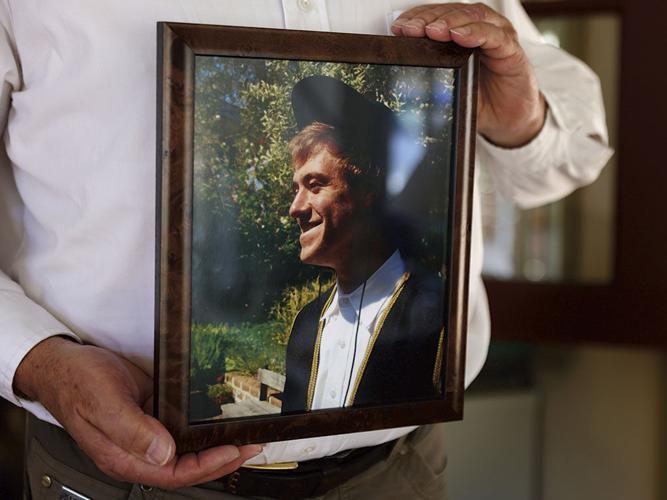


Eric Sand holds a picture of his son David, who died at Monterey County Jail in November 2022 at age 29. Sand had a documented history of schizophrenia that was overlooked by the jail’s health care staff, according to third-party monitors.
SOON AFTER BEING BOOKED INTO MONTEREY COUNTY JAIL IN FEBRUARY, Erick Stewart struck up a friendship with fellow inmate James Hall. The angle of their respective cells meant that they could see and talk to each other regularly – an opportunity they used to study the Bible together.
They would also discuss Hall’s health problems, as Hall had trouble breathing at night and usually relied on a CPAP machine when sleeping. But when Hall was brought to the Salinas facility, his CPAP machine did not transfer with him, and his appeals to the jail’s staff for such a device were ignored, he told Stewart.
“When we talked in the housing unit, he told me multiple times that he wakes up in the middle of the night gasping for air,” Stewart recounted in a court affidavit.
On the morning of April 7, 2023, Hall told Stewart that he had again woken up the night before as though he were suffocating, and “felt that he almost died.” Hall wasn’t scheduled to be let out to the jail’s dayroom, where he could access a phone and call a lawyer, until 5pm that day, so he asked Stewart to do so for him.
But later that afternoon, Stewart suddenly heard a commotion. “I heard people yelling ‘Man down,’ because they saw that Mr. Hall collapsed on the floor in his cell,” Stewart recalled. Deputies soon arrived, pulled Hall out of his cell and began chest compressions. “When they first pushed on his chest, it looked like the entire contents of Mr. Hall’s stomach came out of his mouth. But Mr. Hall was otherwise not responsive.”
Jail nurses and then paramedics subsequently arrived, and worked to resuscitate Hall while placing him on a stretcher and carrying him away. Stewart later got confirmation that Hall, 39, had died when jail staff returned to take his belongings from his cell. (Though lawyers for the jail would later claim Hall died of a drug overdose, Stewart testified that Hall had never mentioned “anything about having access to drugs” to him, nor did he see any jail personnel administer Narcan anti-overdose medication to Hall.)
“Since that day, I have even experienced physical pain in the form of a headache and stomach ache when I think about Mr. Hall,” Stewart testified. “I feel angry and also helpless because Mr. Hall needed medical attention and was asking staff for help, but they never gave him his CPAP machine.
“The medical and mental health treatment that I and others have experienced at this jail,” he added, “is absolutely atrocious.” Stewart claimed he himself had been on the receiving end of such treatment – having been deprived of incontinence supplies and forced to dispose of soiled diapers in brown paper meal bags, for instance. “I am very concerned that more people like Mr. Hall might die.”

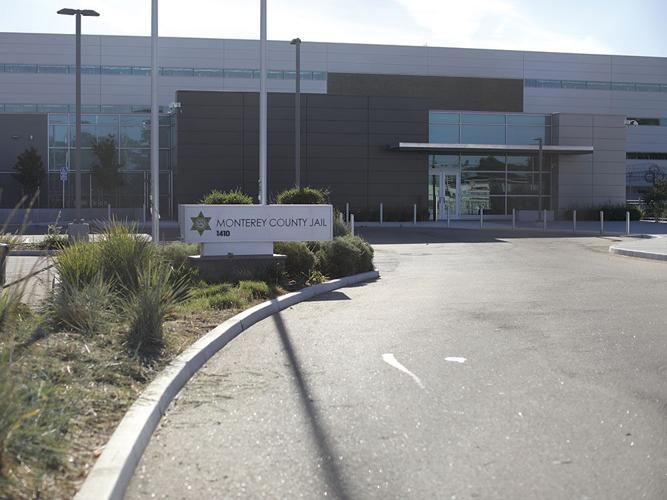
An expansion project at Monterey County Jail was completed in 2022, raising the capacity from 825 to 1,401 inmates and alleviating problems with overcrowding.
MORE PEOPLE WOULD DIE. On May 22, six weeks after Hall’s death, deputies at Monterey County Jail responded to a 63-year-old male inmate who was found unresponsive in his cell and pronounced dead by paramedics soon after, according to the Monterey County Sheriff’s Office. Then two-and-a-half weeks later, on June 9, a 47-year-old male inmate was also found unresponsive in his cell, and transported to a hospital where he died. (The Sheriff’s Office has not publicly identified either of the men nor their causes of death.)
Five people housed at the jail have died this year alone, according to attorneys representing the county jail’s inmates in a 2013 class-action lawsuit over inadequate health care at the facility. Twenty-six have died in the eight years since a 2015 settlement, the attorneys claim – noting that the jail’s annual death rate over that period is more than twice the national average for local jails, while its suicide rate is more than three times the average for California jails.
Those deaths – plus other accounts of non-fatal illnesses and injuries – are even more alarming considering that the class-action settlement mandated that Monterey County Jail improve its health care conditions to avoid such outcomes. The agreement placed the onus squarely on the lawsuit’s defendants: the County of Monterey, the Sheriff’s Office (which manages the jail), and Wellpath – America’s largest prison health care contractor, which privately runs the jail’s medical, mental and dental health services.
As part of legal efforts to prove that the defendants are in violation of the settlement, attorneys for the inmates won a court battle in August over the public release of more than 30 previously sealed reports from health care professionals tasked with regularly inspecting the jail to evaluate its compliance with the settlement agreement. These reports, filed by the neutral monitors, reveal an institution that has failed to consistently improve inmate conditions over the past eight years, and also bring unprecedented transparency to the jail’s operations and its treatment of the people housed there.
(The Weekly – along with the First Amendment Coalition and the families of two people who died in the jail – joined the effort to unseal the monitor reports, filing as intervenors in the case. Additional monitors’ reports were obtained by the Weekly via a California Public Records Act request.)
The documents reveal “the extent to which Wellpath and the County have utterly failed to meet their court-ordered obligations,” according to Van Swearingen, a partner at San Francisco-based law firm Rosen Bien Galvan & Grunfeld, which has represented the incarcerated people at the jail since the lawsuit was first filed in 2013.
They also raise questions about the County’s relationship with Wellpath, which runs health care operations at roughly 500 jails, prisons and detention centers in 37 states across the country – including at more than half of California’s county jails.
The company was formed through a 2018 merger between two prison health care contractors, Nashville-based Correct Care Solutions and California Forensic Medical Group, which was founded by Monterey-based physician Taylor Fithian and had been contracted at Monterey County Jail since the mid-1980s.
Wellpath has reportedly faced thousands of lawsuits in recent years related to its care of prisoners, resulting in legal orders such as a consent decree over its work at New Orleans’ city jail. That settlement mirrors many aspects of Wellpath’s issues in Monterey County: Physically and mentally ill patients were frequently deprived of proper care, resulting in injuries or deaths, while monitors tasked with overseeing the consent decree have subsequently found little improvement.
Yet neither alleged malpractice nor the 2015 settlement – which has cost Monterey County taxpayers millions of dollars in legal fees and compliance measures – discouraged the Board of Supervisors last year from renewing Wellpath’s contract at the jail through 2025, at a total cost of more than $44 million.
While Monterey County Sheriff Tina Nieto says she is “laser-focused” on resolving the settlement and improving inmate conditions, it’s unclear whether things have gotten any better since she assumed her role last December. Though virtually all of the neutral-monitor reports detail the state of the facility under her predecessor, Steve Bernal, the five deaths under her watch this year have put the jail on track for its deadliest year since the settlement agreement was finalized, attorneys for the inmates claim.
“This is an issue with jails in general up and down our entire state, not just Monterey County,” Nieto says. She attributes the jail’s record to broader issues afflicting its incarcerated people, such as drug addiction and mental illness. “When you are bringing in a population that is the most ignored, unfortunately we have had jail deaths.”
THE ONGOING FIGHT OVER CONDITIONS AT MONTEREY COUNTY JAIL DATES BACK TO 2013, when the class-action lawsuit was filed in federal U.S. District Court for Northern California. Hernandez v. County of Monterey takes its name from Jesse Hernandez, an inmate who, after undergoing colostomy reversal surgery during his imprisonment, claimed he did not receive proper care – resulting in symptoms such as fevers, bleeding and intestinal swelling. Hernandez eventually collapsed from the symptoms; after other prisoners in his pod shouted “Man down,” it took half-an-hour for medical assistance to arrive.
The lawsuit alleged that the constitutional rights of Hernandez and others at the jail were being violated by its inadequate health care services. Under the 2015 settlement reached in the case (commonly known as the “Hernandez settlement”), the County and Wellpath were ordered to comply with a wide array of medical, mental and dental health care standards – practices touching everything from initial intake screenings and chronic care services, to suicide risk assessments and dental emergencies. The jail’s disability accommodations and safety measures were also subject to monitoring.
To ensure that compliance, the jail was ordered to allow court-appointed neutral monitors – professionals in the medical, psychiatric and dental fields – to conduct site visits at least twice annually, during which they would be allowed to interview inmates and staff and review records. The monitors began their site visits in 2017.
Since then, their now-unsealed reports have indicated little-to-no progress at the jail, with the facility continuing to be in noncompliance with the vast majority of standards. In his first audit in March 2017, Dr. Bruce Barnett, the designated medical monitor, determined an overall compliance score of 48.1 percent – well below the 80-percent mark generally accepted as compliance. By Barnett’s October 2022 visit more than five years later, the overall compliance score had fallen to 42.6 percent.
“The neutral monitors have given [Wellpath and the County] the recipe book for success, but that has been ignored,” Swearingen says. “In every single neutral monitor report, there are recommendations the defendants should take in order to come into compliance. Those are routinely ignored and not adopted.”
The October 2022 report noted that “few, if any of my recommendations” from Barnett’s previous visit to the jail six months prior had been followed, and cited “persistent departures” from the court-ordered implementation plan meant to bring the jail into compliance with the settlement. Intake screenings saw patients with serious clinical conditions “not consistently referred for appropriate follow-up examinations,” Barnett wrote. Inmates were “not timely seen following their written request for [a] sick call.” Those with substance abuse issues were “often not entered into appropriate monitoring protocols,” while patients with infectious diseases like HIV, hepatitis C and tuberculosis were not screened properly. Annual exams “were at times incomplete and lacked full physicals,” sometimes resulting in “inaccurately reported diagnoses.” Staffing continued to be “insufficient.”
The reports also shed light on numerous case studies involving inmate medical incidents and emergencies – including the November 2022 death of 29-year-old David John Sand of Carmel Valley, who had a documented history of schizophrenia. Sand’s mental illness had seen him cycle in and out of psychiatric treatment centers while battling drug abuse and spending time homeless on the streets of Salinas. He was booked at Monterey County Jail in April 2022 due to probation violations including a felony charge for throwing a rock at a fire engine, his father says.
Yet Sand’s medical records at the jail showed he received no psychiatric evaluation or treatment during his time at the facility – or even an initial health history assessment and physical exam – among multiple other “departures from care required by the implementation plan,” Barnett wrote. On Nov. 12, 2022, he was found unresponsive and pulseless in his cell, lying in a pool of blood and water, according to postmortem reports by the Sheriff-Coroner’s Office. He had been writing on the walls of his cell in his own blood; an autopsy report determined the cause of Sand’s death as acute water intoxication likely caused by the excessive and compulsive drinking of water, a known symptom of schizophrenia.
“I can’t begin to explain how appallingly I feel about the way the County treated my son,” says his father, Eric Sand, who plans to pursue legal action against the County and Wellpath for David’s death. “The County knew he had been in jail many times from the effects of schizophrenia… They had access to his health history.”
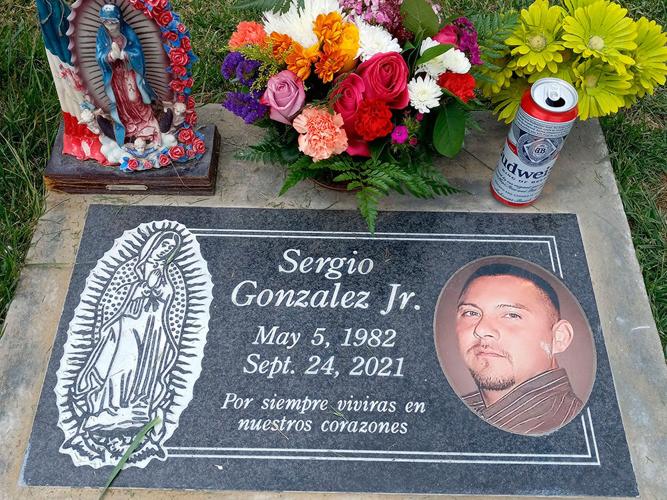
Other deaths in which the jail was found to have deviated from the implementation plan’s requirements included that of Sergio Gonzalez, who died in September 2021 amid an outbreak of the Covid-19 virus at the facility. Despite being treated for deep vein thrombosis prior to his incarceration – and being prescribed blood thinners by a Natividad Medical Center physician before being booked – a physician assistant at the jail decided that Gonzalez needed no such drugs, according to Barnett’s reports.
While being monitored for a Covid infection, Gonzalez’s condition quickly worsened, and his death was later attributed to coronary thrombosis. Barnett noted that Gonzalez’s “risk for thrombotic events was increased when he became ill with Covid,” and also cited several circumstances in which his treatment fell short of the settlement requirements – including the treating physician assistant withholding Gonzalez’s blood-thinner prescription without oversight from a supervising physician.
“In retrospect it is disconcerting that [Gonzalez] never received the prescription for [blood thinners]… even after complaining to a [Monterey County Jail nurse practitioner] that he had leg pain and swelling reminiscent of DVT, and after seeing the MCJ medical director for a six-month exam,” Barnett wrote. He added that, had Gonzalez received his prescription, “the risk of fatal blood clots such as occurred in the coronary arteries would have been reduced.”
Gonzalez’s family subsequently sued the County last year for negligence and denial of medical care, among other allegations. A lawyer for the family says the case is ongoing.
“I don’t think they took care of him,” Isabel Gonzalez, Sergio’s mother, says of the circumstances around her son’s death. “Maybe they could have saved his life. I don’t think they even cared, to tell you the truth… If they had taken the right steps, I think my son would still be alive.”

A health care monitor found that Sergio Gonzalez was deprived of a blood-thinner prescription that could have prevented his death at Monterey County Jail in 2021.
IN 18 OF THE 19 DEATHS AT MONTEREY COUNTY JAIL THAT THEY REVIEWED, neutral monitors determined that the fatalities “could have been prevented with adequate treatment and/or involved violations of Wellpath’s obligations,” attorneys for the inmates claim. The reports also cite numerous non-fatal incidents where care has fallen short of standards.
Inadequate women’s health care is common, including cases that occurred this year. In one instance in February, Barnett found that a 34-year-old female inmate who had requested help to terminate her 15-week pregnancy had not received a response from Wellpath staff for several weeks. According to attorneys, the woman did not receive assistance until the medical monitor “urged Wellpath to take appropriate action.” She was eventually able to obtain treatment in late March – just shy of the 23-week fetal viability mark that bars abortion in California in non-health-threatening circumstances.
Another female inmate was admitted to the hospital in December 2022 after failing to receive timely treatment for heavy vaginal bleeding, according to filings. She was hospitalized again in March 2023, underwent a hysterectomy to address the problem, and had to go to the emergency room in April 2023 after her incision reopened and started bleeding. It subsequently became infected “after she received no medical care from Wellpath for four days,” per court filings.
Beyond the medical reports, the mental health care standards at Monterey County Jail have proven just as lacking. Inmates’ attorneys note that for all but two of the 17 separate mental health quality indicators evaluated, monitors “have never found Wellpath substantially compliant” since the audits began in 2017. After a site visit this May, mental health monitor Dr. James Vess told the attorneys that he had, just that day, witnessed a patient suffering from a psychiatric crisis who “was made to wait for emergency medication because Wellpath had no on-site psychiatrist and could not reach one by phone,” court filings state.
The problems extend to dental care as well. In 2021, dental health monitor Dr. Viviane Winthrop reported that over six visits to the jail in the span of four years, she had found that “little progress has been made towards implementing the mandates of the [settlement].” According to inmates’ attorneys, between October 2022 and January 2023, “Wellpath provided no dental care at the jail because it lacked adequate dental staff.”
Staffing has proven a persistent issue at the jail. By October 2022, Wellpath lacked a full-time medical director at the facility, while also having no director of nursing or medical records manager. Barnett reported that the jail’s leadership had told him staff shortages “made it difficult to provide patient care… and perform quality assurance,” and contributed to Wellpath ceasing all initial health assessments for inmates from June to September 2022. By March of this year, the jail had recruited a new medical director but had only filled its director of nursing and health services administrator positions on an interim basis, while also lacking the required number of registered nurses and mental health clinicians, per filings.
But even the Wellpath staff available on-site have drawn controversy. Last October, the Sheriff’s Office pulled the jail clearance of Wellpath employee Christina Cruz Kaupp, and placed Sheriff’s Cmdr. Dustin Hedberg on administrative leave, in relation to an investigation over missing narcotics inventory at the facility. The October 2022 medical monitor report alluded to such issues – noting that oversight of the jail’s pharmacy was “poor or absent,” as evidenced by expired or mislabeled medications and “delinquent controlled substance logs.”
“We recognize that there are significant operational challenges at [Monterey County Jail] and, along with the new [sheriff’s] administration, are in the process of taking steps to address the unacceptable outcomes,” a Wellpath spokesperson says in a statement. “While this is a process that takes time, it is a priority. We are committed to addressing and solving these issues expeditiously and ensuring every facility where Wellpath operates abides by the rigorous and thorough standards that we uphold as a company.”
Wellpath has experienced challenges with staffing at other facilities nationwide, as well. Monitors overseeing the New Orleans jail consent decree have highlighted chronic understaffing; in Massachusetts, a report earlier this year evaluating a settlement between the state’s corrections department and the U.S. Justice Department described Wellpath’s mental health staffing as “unworkable.” A Cape Cod sheriff cited staffing levels as low as 20 percent in recently deciding not to renew the company’s contract.
As the largest for-profit prison health care provider in the U.S. – with roughly 300,000 people under its care each day – Wellpath’s annual revenues are now estimated at around $2 billion. It is privately owned by Miami-based investment firm H.I.G. Capital, which has $58 billion in assets under management and has built a conglomerate of correctional services companies covering everything from food to communications.
In a 2002 lawsuit deposition, Taylor Fithian, the Monterey physician who founded California Forensic Medical Group in 1984, acknowledged that he had written a letter to Yolo County Jail officials expressing concern over mounting medical costs at the facility. Still, according to a report in the Monterey Herald, he insisted: “I am in the business of being a doctor, but not in the business of making a profit.”
Today, Fithian serves on Wellpath’s board of directors. His bio on Wellpath’s website notes that he started his company with the motto: “Always do the right thing.”

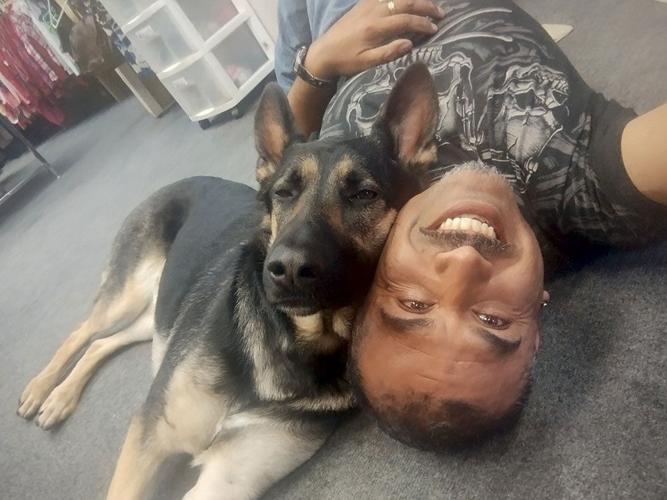
Juan Carlos Chavez’s April 2022 death at Monterey County Jail, which was ruled a suicide, involved “departures from best practices” by the jail’s medical and mental health staff, according to monitors.
DURING A SITE VISIT TO MONTEREY COUNTY JAIL IN MARCH 2023, the jail’s medical monitor met with Nieto and other Sheriff’s Office officials to discuss his findings. According to an email Barnett sent to attorneys involved in the settlement, Nieto and her team “clearly expressed their interest in participating in the process to promote compliance with the implementation plan.”
“I believe the Sheriff wants to be ‘kept in the loop’ regarding these matters,” Barnett wrote. During Board of Supervisors hearings this spring deliberating the County’s 2023-24 fiscal year budget, Nieto successfully lobbied for an additional $1.1 million to fund seven new positions mostly related to the jail’s operations.
That came after Rosen Bien attorneys had written a federal district court magistrate judge in March expressing concern over the Sheriff’s Office’s most recent staffing update – which accounted for eight fewer deputies than required under the implementation plan, as well as a decline in the number of active sergeants “whose job it is to supervise the day-to-day operations of the jail.”
County Supervisor Wendy Root Askew says the board was willing to fund the new positions after hearing Nieto’s appeals on how “addressing the settlement agreement is a priority for her administration.” But as far as the jail’s operations, Askew – who is on an ad hoc committee exploring the potential for a new Sheriff’s Office oversight entity – says the Board of Supervisors has little influence over how the sheriff uses that money or manages the facility.
As far as the County’s relationship with Wellpath, Askew notes the supervisors were not aware of the contents of the neutral monitors’ reports prior to their public release in August. She echoes a frequent observation on why Wellpath has continued to dominate the prison health care space despite its checkered record: “The options for health care providers in incarceration settings are extremely limited.”
Askew adds that Wellpath’s issues nationwide show that “this challenge isn’t necessarily unique to Monterey County or our jail.” She cites other counties that have brought jail health care in-house, only to have “quickly contracted it back out because they’ve found it’s too challenging… It costs more and the outcomes aren’t any better.”
However, a 2020 Reuters analysis of 500 jails across the country from 2016 to 2018 found that those relying on private health care contractors had higher death rates than those relying on public medical services.
On Aug. 24, attorneys on both sides of the Hernandez settlement met in federal U.S. District Court in San Jose. The inmates’ lawyers argued for a motion finding Wellpath in violation of up to 44 of the settlement’s provisions on medical, mental and dental care – potentially resulting in fines of $25,000 per violation. The fines would take effect six months after a court order if monitors find that the jail remains in noncompliance with the provisions.
Rosen Bien attorney Cara Trapani noted that just one month earlier, an inmate had died after failing to receive “simple wound care” for a leg injury. “He had an open leg wound and he never received antibiotics,” she told the court. “By the time medical staff realized that something was wrong, he had life-threatening sepsis and he died at the hospital a few days later.”
Peter Bertling, a Santa Barbara-based attorney representing Wellpath in the lawsuit, countered that the jail had recently made “substantial changes” lauded as improvements by the medical and mental health monitors, including the hiring of a new medical director. “Wellpath has recognized the need to engage the monitors more closely and directly [in] establishing the corrective action plans,” Bertling said.
Yet when Bertling argued Wellpath had indeed established “corrective action plans” at the jail, he was rebuffed by U.S. District Judge Beth Labson Freeman for Wellpath’s noncompliance with those plans’ requirements.
“You know, that’s why people die on the concrete floors at the Monterey County Jail – because you think your job is done by writing a piece of paper, and it’s not,” Freeman said. “You need those medical professionals right there with them doing those evaluations, not letting [inmates] drink themselves to death with water or die in detox.”
Freeman is expected to issue a ruling on the motion as soon as this month. A court order holding Wellpath and the County accountable would come too late for the likes of James Hall, David Sand, Sergio Gonzalez and other Monterey County Jail inmates who have found their basic human needs unmet during their time as prisoners. But it could help prevent many like them in the future from meeting a similar fate.
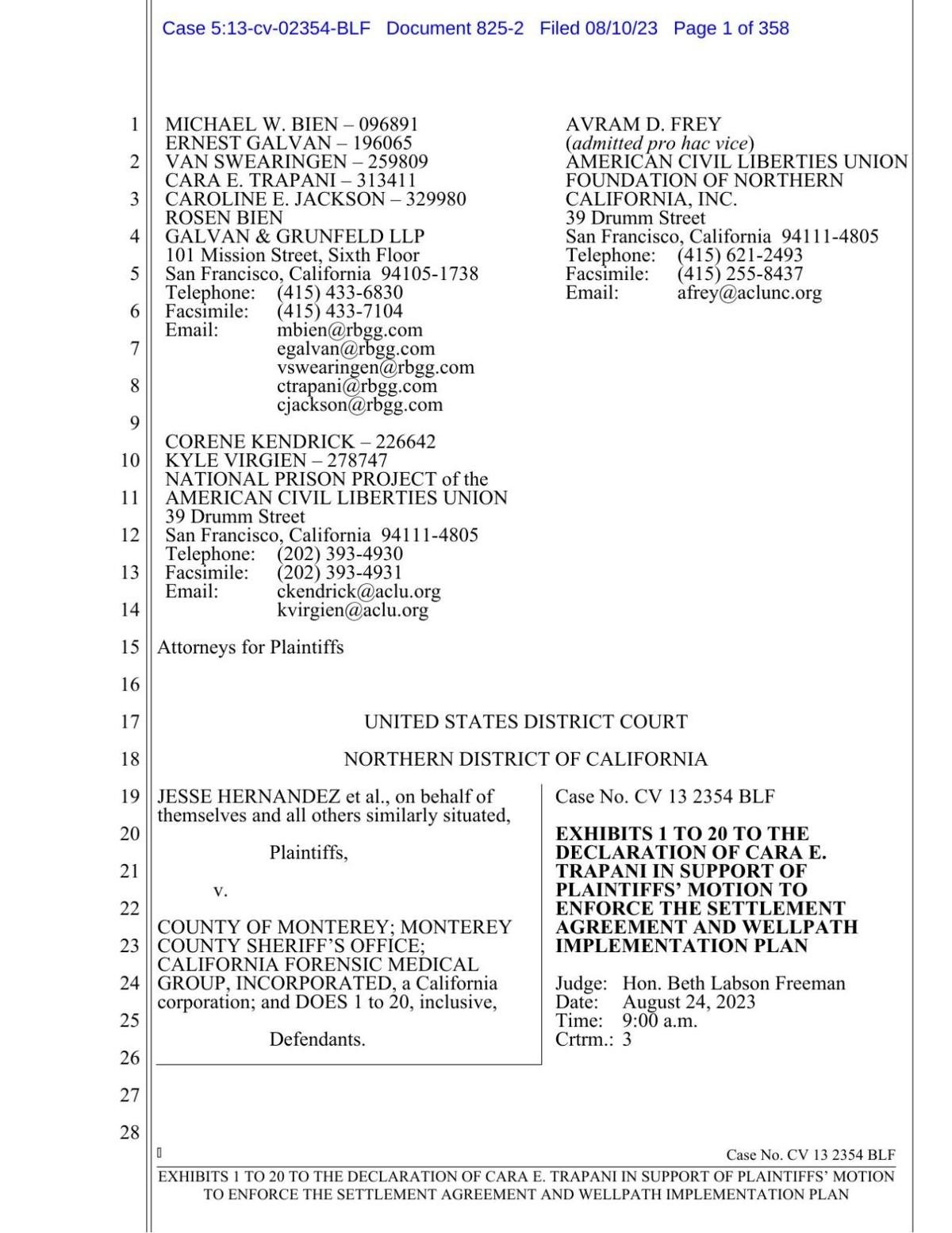
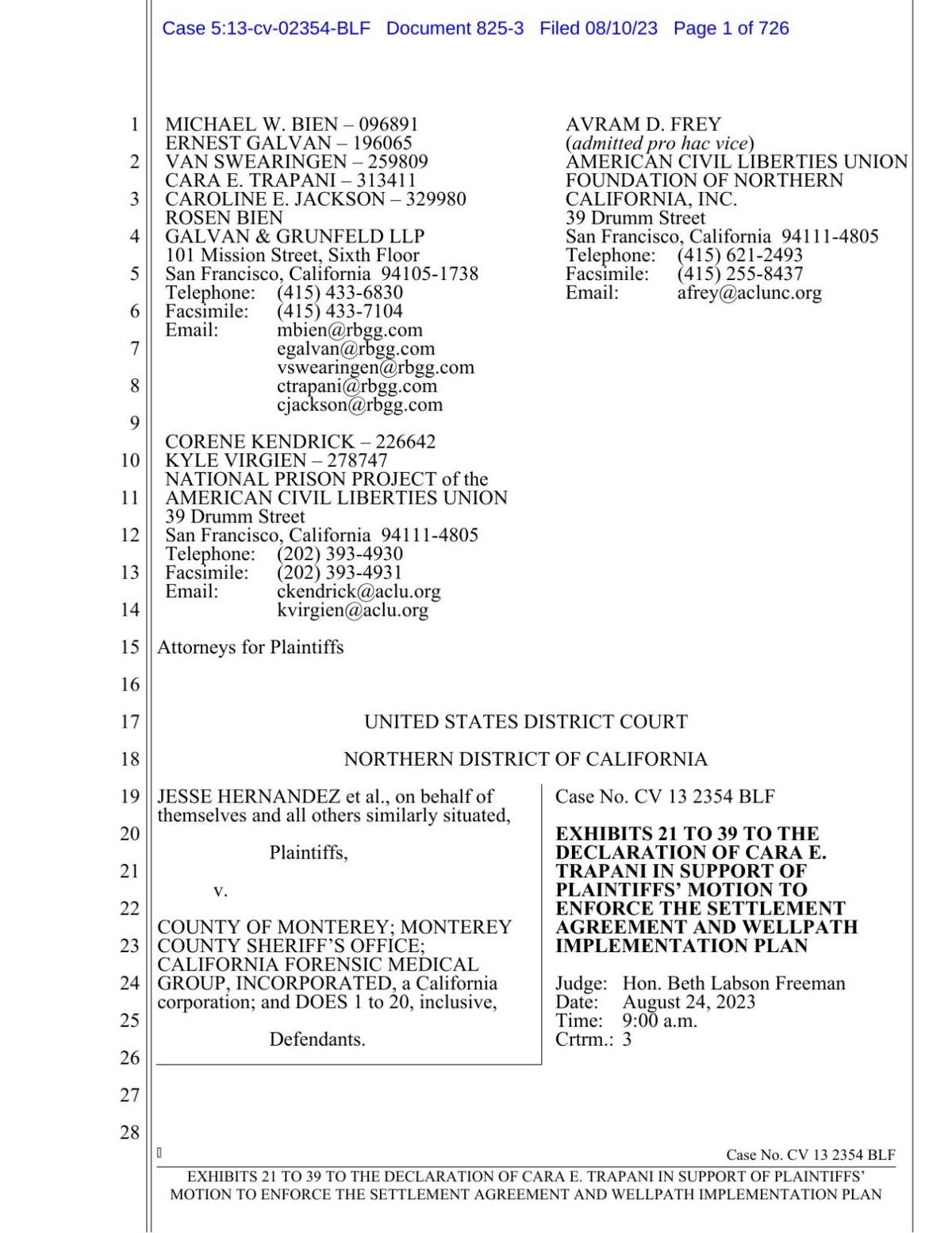
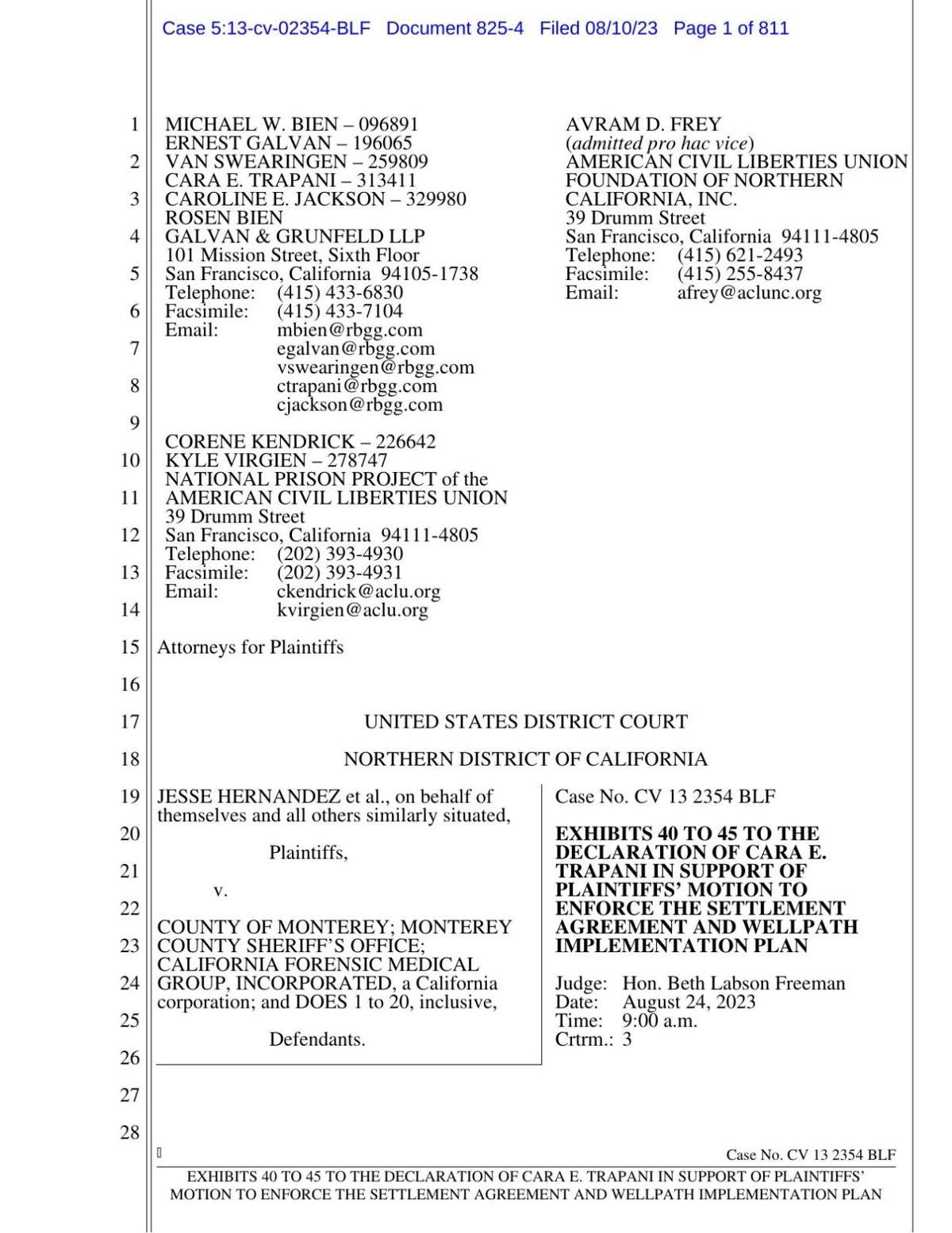
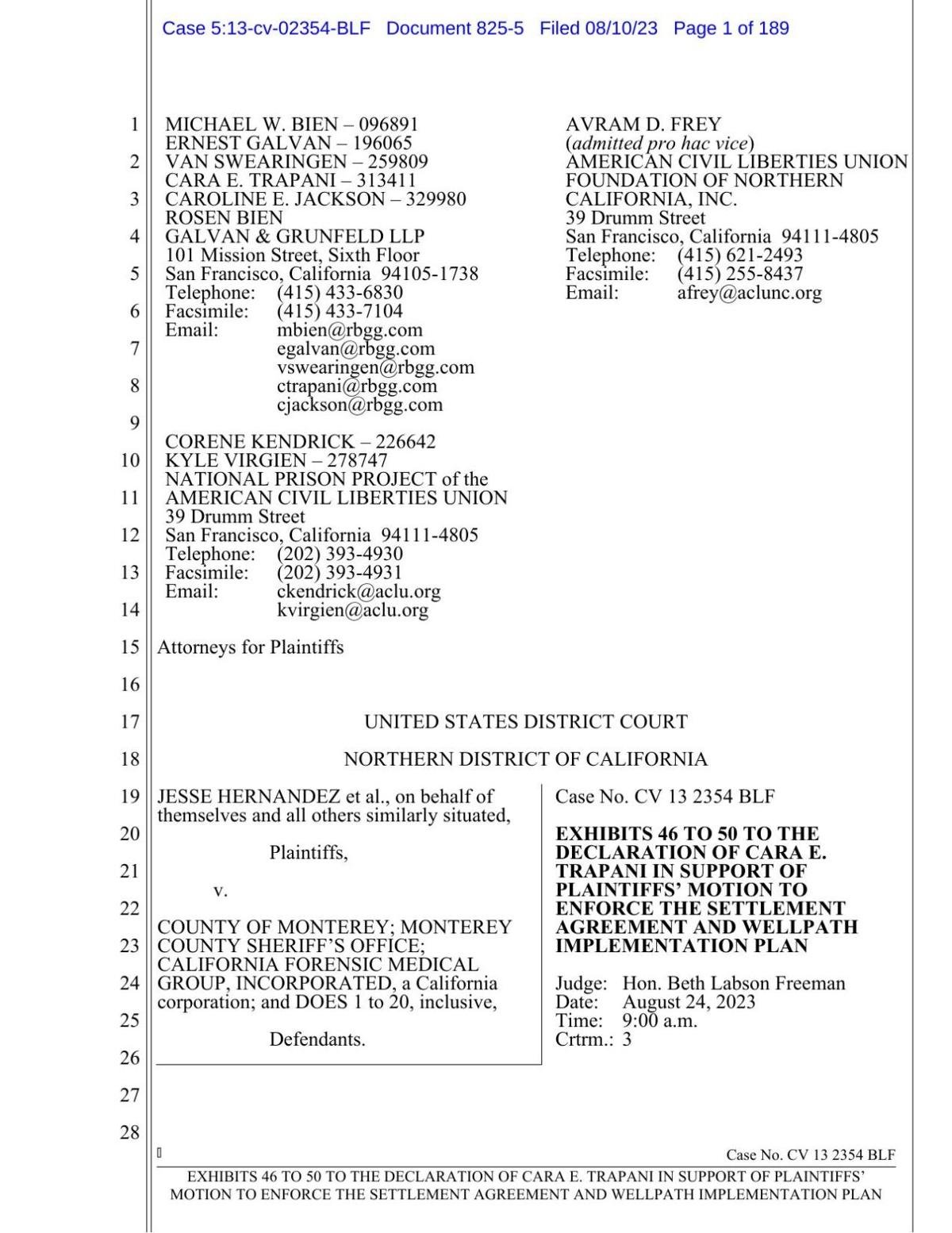
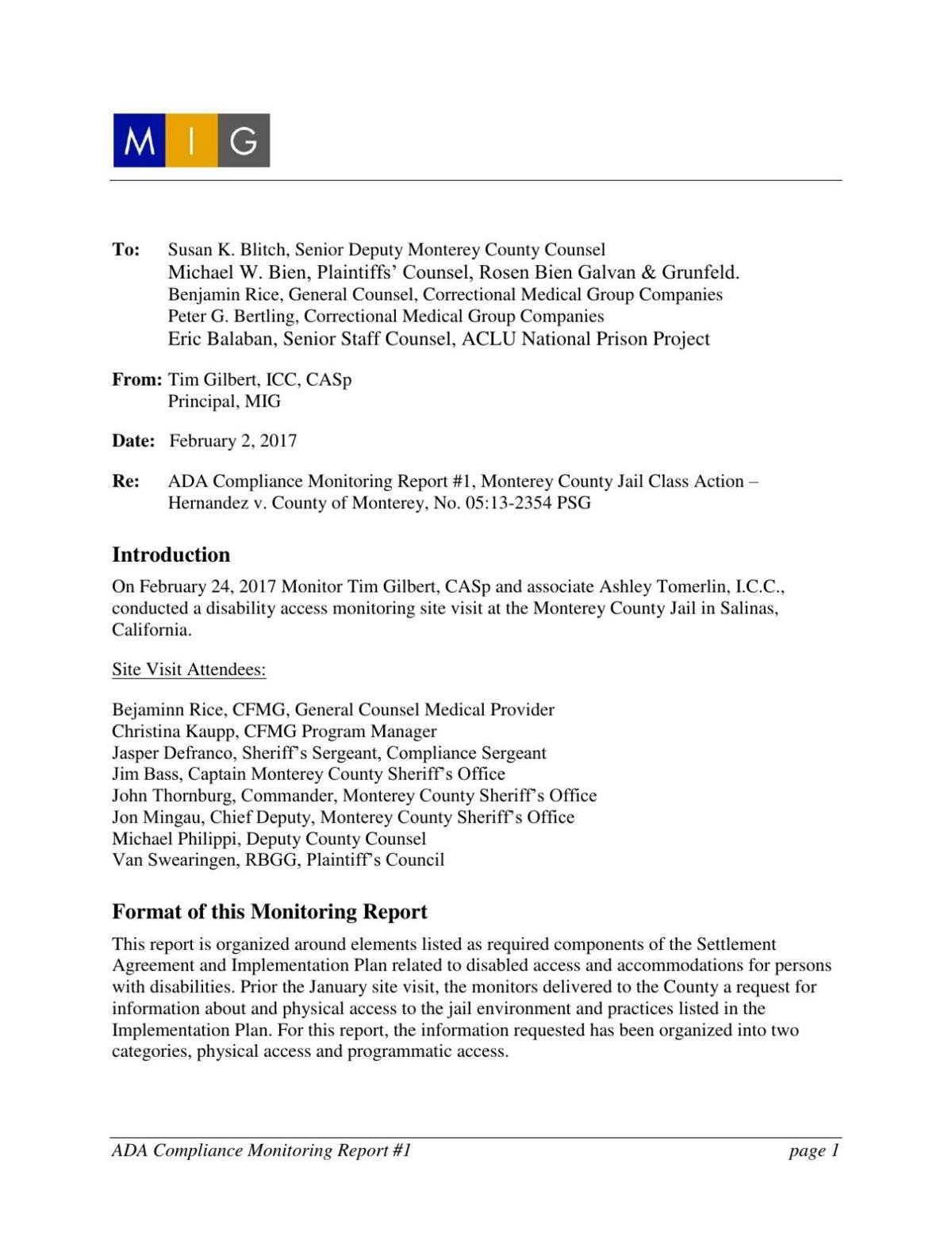
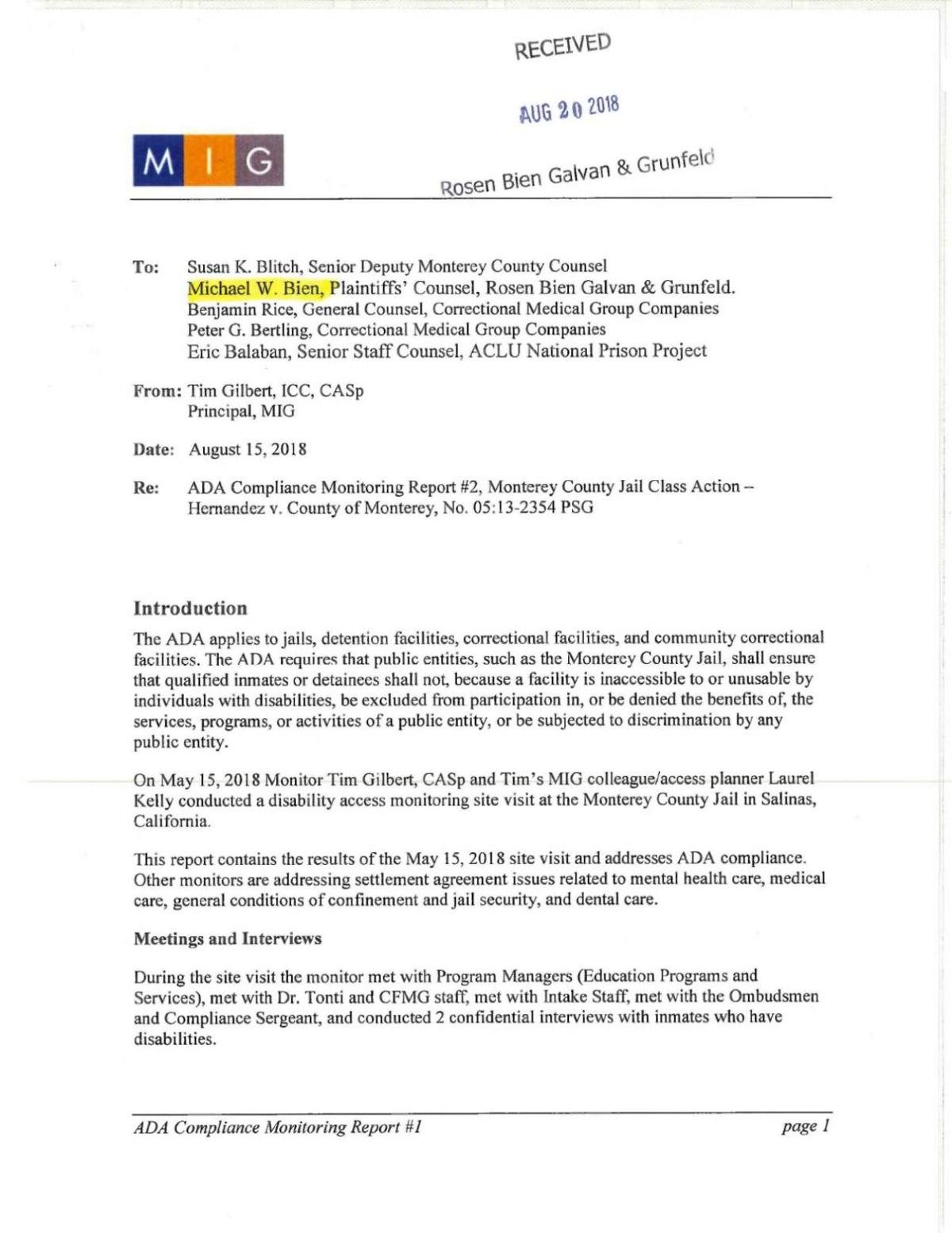
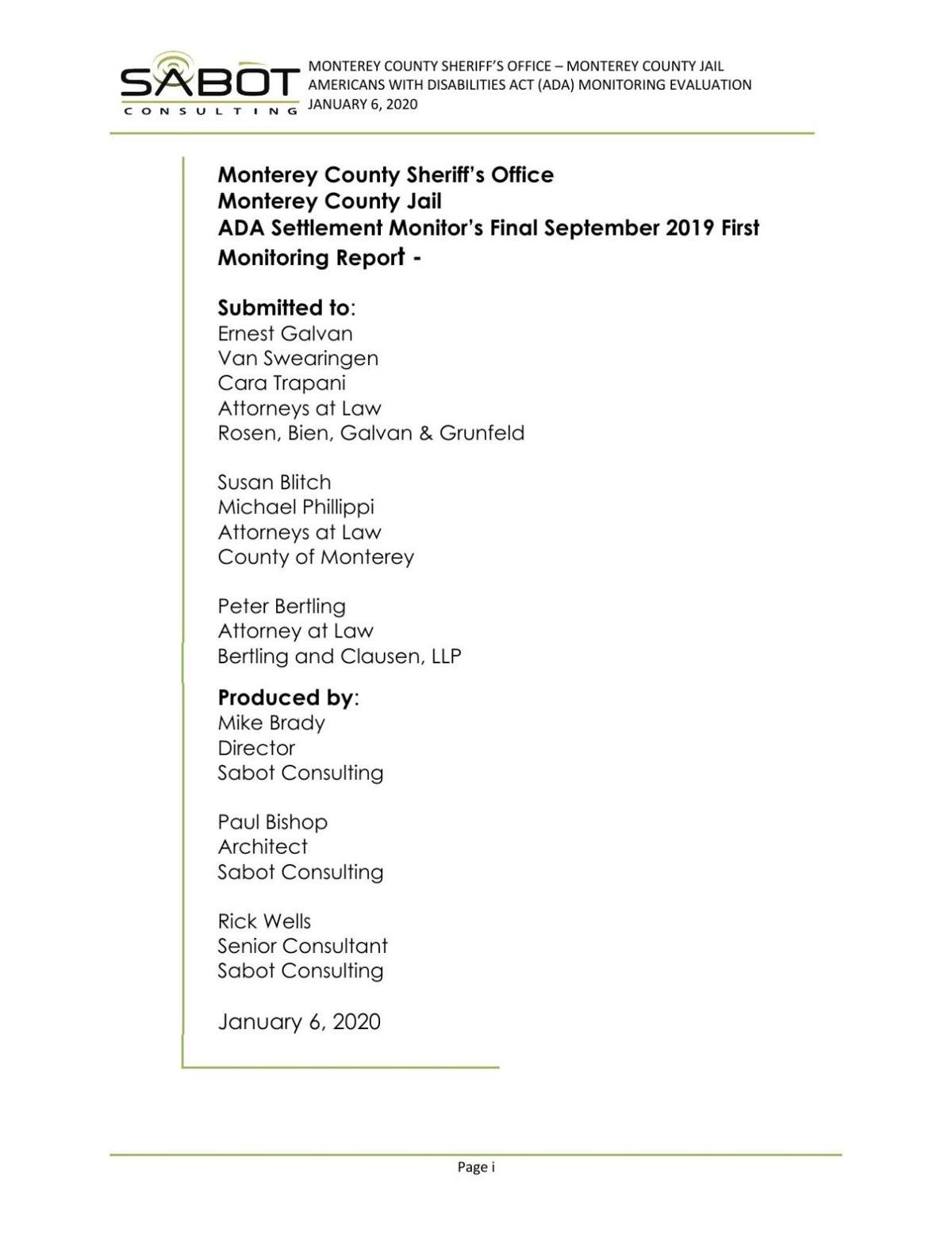
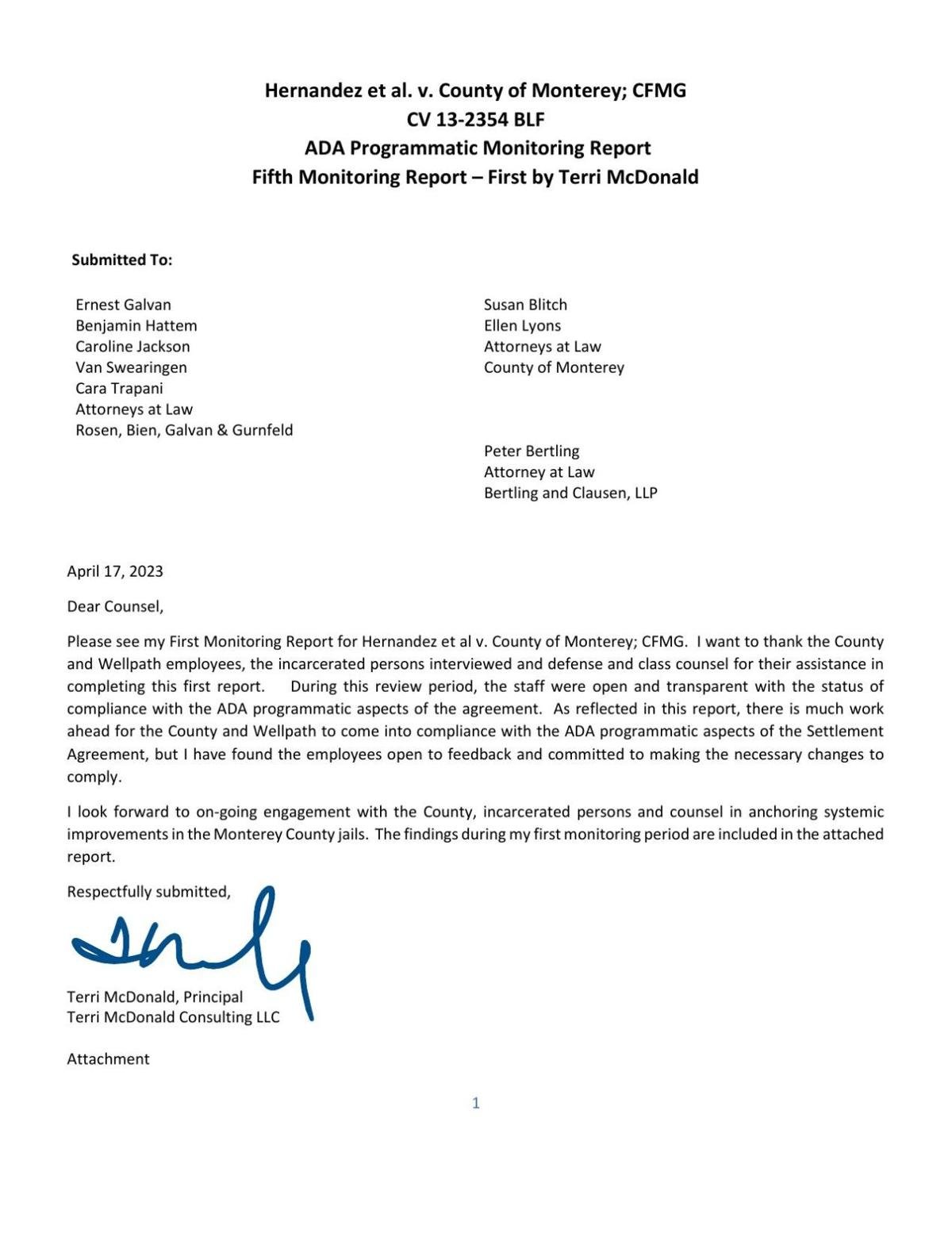
To view the neutral monitors' reports, click below. Exhibits 1-60 were filed by attorneys in the Hernandez v. County of Monterey court docket; the four ADA compliance reports were obtained by the Weekly from the County via a California Public Records Act request.
(1) comment
Monterey County Jail, it's deputies and its medical staff(WellPath) has been consistently noncompliant for years. Its to the point where, they are basically telling the Federal Courts "F U".7 people have died in the last 18 months, none of which, were being held on serious charges or were facing more than, probably, a few weeks.
When a person is arrested, all power, control and choice over their life and wellbeing cease and are surrendered to Law Enforcement, whom assumes total responsibility for everything that happens to that person, bcuz they have taken complete control over every aspect of their life.. All they have to do is keep them alive! It's not that hard. The human body can live thru almost anything. It's natural instinct is self preservation, that's why it take a force greater than yourself to kill you.
These people are dying while they are still in booking (the first cells they put you in for a few hours, while they put you in the computer and fingerprint you). Most are completely healthy or at least, healthy enough, where they should be able to sit there for a few days and not suddenly die.
I also find it interesting that they keep blaming mental health and claiming people are committing suicide (I'm horrible, painful ways), who have NEVER had mental health problem or been suicidal their whole lives. Suddenly they arrive there, on a minor charge or probation violation and they suddenly becaome desperate to die?
Ok, let's pretend for a minute, that these people are actually killing themselves. Inmates in safety cells are required to be checked every 15 min and they are . According to the Sheriff procedures, if an inmate attempts or claims they are going to attempt suicide, they should be taken to Natividad Medical Center. The hospital is literally next door to the jail. There is no reason that they can't get someone there in time.
The reason they don't is bcuz part of wellpaths multimillion dollar contract, if a person needs outside medical attention, wellpath has to pay the bill. That's money out of their pockets so instead of getting people the medical care they need, they turn a blind eye, like "if I ignore it, it'll go away".... and it does.... in a body bag.
It is clear that neither Wellpath or the Sheriffs office are going to make any changes at all. They are turning a blind eye just as they do to their patients/ inmates.
At what point does "negligence" become so negligent that's its intentional.... that it's murder. These people are highly trained, paid well and well aware that lives depend on them. When they disregard their duties, intentionally, knowing a person will die, they are killing them. Yet, it keeps happening and they have no consequences. They are killing people and the Feds need to stop enabling them to do it, by doing nothing.
If a person dies on their watch, they should be charged with murder and sent to prison. End of story. If they start holding murderers accountable and they see that letting people die is not ok, I bet there will not be another death, maybe ever.
This is unacceptable. These are human beings. They are there because they are being held accountable for their crime, as EVERYONE should.
My husband Juan Carlos Chavez was killed at Monterey County Jail last year on April 20th 2022. He turned himself in to clear up an old traffic ticket and that was the last time I will ever see or get to talk to him again.
They didn't just kill him that day, they killed me too... and his daughter and his mother. And 18 months later, I still don't have any answers.
Welcome to the discussion.
Log In
Keep it Clean. Please avoid obscene, vulgar, lewd, racist or sexually-oriented language.
PLEASE TURN OFF YOUR CAPS LOCK.
Don't Threaten. Threats of harming another person will not be tolerated.
Be Truthful. Don't knowingly lie about anyone or anything.
Be Nice. No racism, sexism or any sort of -ism that is degrading to another person.
Be Proactive. Use the 'Report' link on each comment to let us know of abusive posts.
Share with Us. We'd love to hear eyewitness accounts, the history behind an article.