
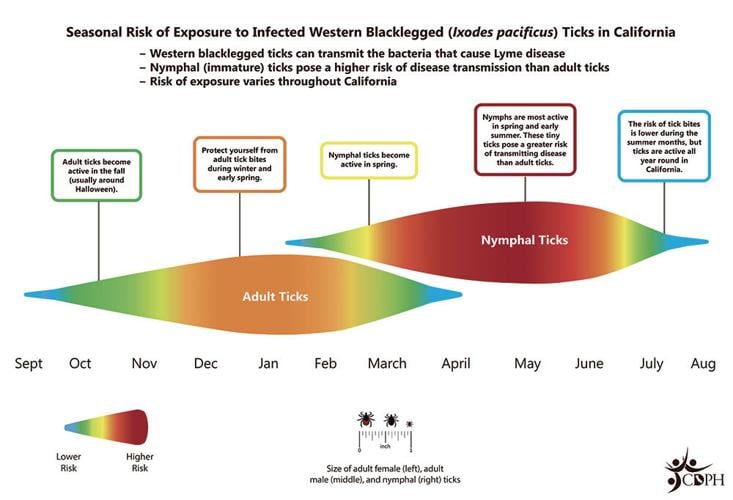

Average size of deer tick is about 3/16", when not feeding.
RANDALL ANDERSON WAS 9 YEARS OLD WHEN HIS KNEES STARTED SWELLING LIKE SODA CANS LEFT TOO LONG IN THE FREEZER. Fatigue knocked him flat for hours at a time. Red rashes ravaged his skin. Finally, the headaches began, the screams, the scans showing signs of brain inflammation. The adults didn’t know what was wrong with him. His elementary school worried that he might be carrying some contagion and sent him home with a private tutor for a month. Some nights during the ordeal he would sleep on his parents’ bedroom floor and squeeze his mother’s hand, afraid he wouldn’t make it to morning.
This was in the mid-1970s, in the little town of Old Lyme, Connecticut, a wooded enclave where active kids like Anderson could romp for hours in the gentle New England forest with little fear. Only later, after years in and out of clinics where doctors drained warm yellow liquid from his knees, did the true details of the disease that afflicted Anderson emerge. He had been infected by a corkscrew-like bacterium, a wily spirochete that we know today as Borrelia burgdorferi. Somewhere in the woods outside his home, a black-legged tick had injected the infectious organisms into his bloodstream. Anderson – who asked that his real name not be used in this article to protect his privacy – was one of the kids in that early cluster of childhood cases in the town that would give the infamous disease its name.
Lyme disease today, though less of a mystery, remains confounding, and it is spreading, sometimes to devastating effect. From that outbreak in New England, as well as a smattering of early cases elsewhere around the country, Lyme has been unrelenting in its march. Carried by the black-legged tick (often referred to as the deer tick), it is the most common vector-borne disease in the country. And its incidence is increasing, with some estimates placing the number of new cases as high as 476,000 each year.
“That is a huge number,” says Ben Beard, deputy director of the Centers for Disease Control’s Division of Vector-Borne Diseases. “And that doesn’t even include all the other tick-borne illnesses,” he notes, including babesiosis, the Heartland virus disease, the Bourbon virus disease, anaplasmosis, Rocky Mountain spotted fever, Colorado tick fever, Borrelia miyamotoi disease, and the deadly Powassan virus disease, which can cause encephalitis and has a case fatality rate of around 10 percent.
“For us,” he says, “that is very concerning.”
How did we get here? Why did Lyme disease emerge – or re-emerge – when it did? And why has it spread with such tenacity?
The short answer: heedless human meddling with Mother Earth. We pull at the strings of nature, and the consequences of its unraveling are impossible to reckon. Lyme, like Covid-19, is a zoonotic disease, which means it spills from animals into people. In Lyme’s case, the pathogen is passed to humans via a vector – specifically, by black-legged ticks, those sesame-seed-size arachnids with eight legs and anesthetizing bites. Like so many other zoonotic diseases, Lyme and other tick-borne pathogens have emerged from ecosystems that have been disturbed, fragmented, and fractured by intensive human development. Ballooning deer populations, second-growth forests, suburban and exurban growth, habitat degradation, predator eradication, wildlife extinction – these and other factors have set the stage for the surging presence of Lyme and its zoonotic cousins among us.
As a result, millions of Americans now live in a world where a simple walk in the woods may lay us low or even upend our lives. It’s a world in which ticks and the diseases they disgorge now seem as persistent and inevitable as a wave – moving, shifting, spreading to new places.

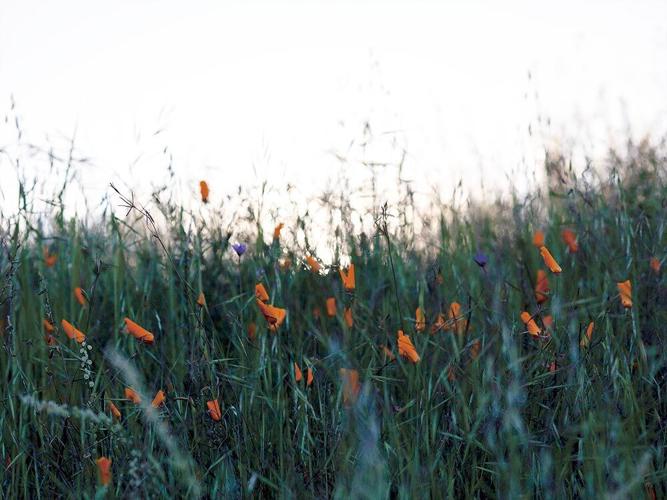
Ticks are commonly found in tall grass, or in areas with fallen leaves and logs. Ticks in California include the Pacific coast tick and dog ticks, which can carry spotted fever, as well as deer ticks, which can carry Lyme disease.
THOUGH TICKS WERE STILL RARE IN PARTS OF THE NORTHEAST when Randall Anderson was a kid, they were common in Lyme. His house was surrounded on two sides by forest, and Anderson liked to bike in the woods, so the sight of minuscule arachnids crawling up his leg was hardly a novelty. “When I was a kid, I’d just pull them off and flush them,” he says. No biggie.
Then everything changed. In the summer of 1976, the New York Times ran a story: “A New Type of Arthritis Found in Lyme.” Documenting the dozens of children, including Anderson, who were experiencing painful swelling in their joints, the article reported that doctors and scientists believed they had discovered a new “form of arthritis caused by a virus carried by an insect or other biting arthropod such as a tick.”
One of the doctors involved in early work on the disease was Allen Steere, an infectious disease epidemiologist and rheumatologist at Yale who took care of Anderson and other sick children during the initial years of the outbreak. Steere was instrumental in tracing the illness to ticks. Others made key contributions as well, including Willy Burgdorfer, a researcher at the National Institute of Allergy and Infectious Diseases’ Rocky Mountain Lab. Burgdorfer, after his team’s discovery, became the pathogen’s namesake; he died in 2014.
While Lyme disease was greeted as a novel phenomenon, there is now plenty of evidence indicating that Borrelia burgdorferi has been on this continent in various forms for thousands of years (as it has been in Europe). According to a 2017 study in the journal Nature, Ecology, and Evolution in which scientists sequenced nearly 150 different Borrelia burgdorferi genomes, the bacteria are “ancient.” They have been evolving in North America for roughly 60,000 years and were historically widespread across the Northeast and Midwest.
“Our finding of ancient B. burgdorferi diversification suggests that the recent Lyme disease epidemic does not reflect evolutionary processes,” the scientists wrote, “but rather was driven by the ecological change in North America beginning in the colonial period [roughly] 700 years ago.”
If the Lyme pathogen has been here all along, why was the disease absent during this country’s first two centuries? And why has it returned in such a ferocious fashion?
“Ecological change,” as the scientists say above, is a polite way to put it. “We messed up the ecosystem” is probably a better way to say it.
BLACK-LEGGED TICKS – specifically Ixodes scapularis, the species that lives on the East Coast, and a similar species and also a Lyme carrier, Ixodes pacificus, on pockets of the West Coast – are primarily forest creatures. These ticks need forests to survive and thrive in most of their range, which sits on the humid side of the 100th meridian. But beginning in the colonial period, the eastern forests fell rapidly as European settlers cut, burned, and girdled their way through the vast stands of oak, hemlock, chestnut, and other species that grew along the Atlantic littoral.
By the middle of the 19th century, roughly three-fourths of southern New England had been deforested, transformed into fenced pastures, farm fields, and settlements, as William Cronon recounts in his classic book Changes in the Land. What’s more, colonists rendered large areas of New England “devoid of animals which had once been common: beaver, deer, bear, turkey, wolf and others had vanished.”
The enormous destruction wiped out the black-legged tick’s habitat in many places. And without black-legged ticks, Borrelia burgdorferi cannot persist. Hence the apparently scant presence of Lyme disease during the first 150 years and more of this country’s history. But that began to change after the completion of the Erie Canal, as farmers and pastoralists left the Northeast’s depleted lands for the rich soil of the Midwest. The forests came back. By the mid-20th century, roughly 60 percent of Connecticut had returned to forest.
But the second-growth forests we live with today are not the same as those that preceded European colonization and conquest. The forests are back, but without the low-severity forest fires that Indigenous people used to burn away underbrush, possibly reducing tick populations. The oak trees too are back, but without the sky-darkening droves of passenger pigeons that once competed with rodents for tree nuts and possibly suppressed mouse and chipmunk abundance in the process. White-tailed deer are also back, but the wolves and cougars that helped keep their populations in check are not. The forests, in other words, are missing many ecological influences that may have played a role in regulating the various components of the Lyme disease system.
IN A FOREST OF MAPLE, OAK, AND PINE ON THE EASTERN SIDE OF NEW YORK’S HUDSON VALLEY, Rick Ostfeld and his team of research scientists march through the leafy undergrowth. They climb a small ridge and arrive at a forest plot studded with small metal traps. It’s early morning, and some of the traps, baited overnight with oats, are snapped shut. The team’s senior research specialist, Kelly Oggenfuss, opens one and reaches inside to reveal a small rodent, shivering, docile, its black eyes wide with fear.
White-footed mice, along with other forest rodents like chipmunks, are what scientists call reservoir hosts. They are the long-term hosts of the Lyme pathogen, the ultimate source from which the little corkscrew bacteria sally forth to infect new organisms. Oggenfuss points to the mouse’s paper-thin ears. Embedded in them are several minute black dots, no bigger than a pencil point: larvae, the first life stage of the black-legged tick.
The baby ticks are enjoying their inaugural “blood meal” at our rodent friend’s expense (female ticks will consume a total of three blood meals over the course of their lives, while males require only two). If this mouse is carrying the Lyme pathogen – and as many as 90 percent of the adult mice around here are carriers – then these larvae will grow into infected nymphs. By early next summer, as they search for a second blood meal to fuel their nymphal life stage, these ticks will pose a danger to human health. They might also go on to infect a new crop of mice with the Lyme pathogen, thus ensuring its continued presence in the reservoir host population. After that, in their third and final form, the ticks will be full-fledged adults, and the females will seek out one last blood meal, often from white-tailed deer, before reproducing. A single female tick can give birth to thousands of healthy offspring.
To simplify: Larvae pick up the Lyme pathogen from blood meal No. 1. Nymphs spread it readily during blood meal No. 2. Female adults reproduce during blood meal No. 3 and then die. Three life stages over about two years.
Ostfeld has been studying the relationships between ticks, rodents, deer, other mammals and their forest habitat for more than 30 years. A disease ecologist at the Cary Institute of Ecosystem Studies in upstate New York, he and his team have uncovered some of the key dynamics in the Lyme disease system.
In their studies, Ostfeld and his team have found that white-footed mice play a much greater role than deer – long linked with Lyme disease in the public imagination – in determining the density of infected nymphs in their study areas. And they have found that the presence in the landscape of a diverse community of midsize predators, including foxes, is associated with a reduction in the abundance of infected nymphs.
“It is kind of a perfect storm,” Ostfeld says. “We have inadvertently enhanced the proliferation of infected ticks and also increasingly encroach on those very areas that we have made more risky.”

The best prevention method is to cover up in tick territory, and to brush a tick off a person or a pet before it latches on. If the tick does attach, health officials recommend using tweezers to pull the tick straight off, without twisting. Then wash the bite area with soap and water.
ALLEN STEERE, THE RHEUMATOLOGIST WHO TREATED RANDALL ANDERSON and those other childhood cases back in the ’70s, was among the earliest witnesses to this fateful shift in both tick and human populations. Since identifying that original cluster of 51 patients – 39 children and 12 adults, all with a similar type of arthritis – he has gone on to publish more than 300 papers on Lyme disease, and from his current perch as a professor at Harvard, he still sees patients.
To help me understand how the town of Lyme came to be the epicenter of the first known outbreak, I called Steere up one day this winter. He took me back to the early days and described the landscape around Lyme and Old Lyme, where the pathogen spilled so readily into the human population.
“It is a lovely area, right at the mouth of the Connecticut River, where it flows into Long Island Sound, with estuary areas and lakes and rivers. And it is wooded, second-generation wooded growth, but it is also inhabited,” he says. “So it was a perfect environment for deer and for ticks, and there were a lot of cases.”
It was a perfect environment for ticks – and it was inhabited. In the world of wildfire prevention and suppression, there is a concept called the wildland-urban interface, or WUI. It is the transition zone where wild land and human development mix and mingle, and it is often in such areas where wildfire poses the greatest risk to human life and property.
One might think of the Lyme phenomenon in a similar fashion. It is in the wildland-urban interface, where residential development meets forest, that human health is at heightened risk.
The scientific literature on zoonotic diseases suggests that their emergence is often driven by land-use changes like deforestation, and residential and commercial development.
“What exacerbates the risk is the fragmentation and degradation of forest,” Ostfeld says, “because that is how we facilitate some species’ population growth, especially the weedy little rodents that are so important in the proliferation of the ticks and the pathogens.”
As the number of deer has surged over the past century, amid the rise of hunting regulations and replenished habitat, they have become a key conduit for the spread of ticks. And with their high tolerance for human disturbance and penchant for chopped-up landscapes, backyard browsing, and the like, deer bring ticks into the places where people live, even urban areas.
“You are going to have ticks where you have people,” says Jean Tsao, a professor at Michigan State who has extensively studied Lyme disease. “[Deer] will bring ticks to the next subdivision – they are in the woods, the farm fields, and the neighborhoods.”
Randall Anderson spent years battling Lyme disease. Since the doctors didn’t yet know what they were dealing with, it was a long time before he went on antibiotics. Eventually the sporadic brain inflammation stopped, but the swelling in his knees kept him out of gym class throughout middle school. By the time he was in high school, he says, it was mostly over.
“It just ran its course,” he says.
DEER, WHITE-FOOTED MICE, DISAPPEARING PREDATORS, ENCROACHING HUMANS, FRAGMENTED FOREST – they all have a role in the Lyme disease system. And there’s another force at work, one that can never be ignored these days: climate change. “We have a good record of warming at the Cary Institute through our weather station here, and there has been a significant upward trend – it is warming here,” Ostfeld says.
He and postdoc Taal Levi have found that tick larvae and nymphs are initiating their search for blood meals about a week and a half earlier each year because of the warming climate. Climate change may also be contributing to the expanding range of black-legged ticks, especially to the north.
And then there are all those other diseases, all those other ticks, that are grabbing headlines of late. The lone star tick, once mostly confined to the South, seems to be becoming more prevalent in the Mid-Atlantic and the Northeast due to a warming climate. With it has come the alpha gal syndrome, which causes some people to become allergic to red meat. Scientists have also documented the emergence of a new invasive species, the Asian longhorn tick, which was first reported in the U.S. in 2017. The females of this species can reproduce without mating, which means it can become incredibly abundant. In the U.S., these ticks have not yet been found to carry Lyme or similar diseases, but they could become a huge problem for livestock and wildlife. And the other diseases – anaplasmosis, babesiosis, Powassan virus, Rocky Mountain spotted fever, and more – are still out there too, infecting people each year and with increasing frequency, though far less frequently than Lyme. What to do?
“It is an intractable, difficult problem,” Ostfeld says. “I am beginning to unfortunately come to the conclusion that there are going to have to be non-ecological solutions.” While he tries to stay optimistic, Ostfeld recognizes that preventing habitat fragmentation, keeping large forest ecosystems intact, getting deer, tick, and rodent populations under control, scaling back the WUI lifestyle that puts so many people at risk – all that can seem an insurmountable challenge in the United States today.
Ostfeld is putting his primary hope in vaccines. While an early vaccine, developed in the 1990s, was discontinued in 2002, scientists are again at work on vaccines that could protect people from the ravages of tick-borne illnesses. At Yale and other institutions, for instance, they are developing mRNA vaccines that hamper bacterial transmission and also trigger an intense skin reaction to tick bites themselves, alerting humans to the presence of the tick and allowing them time to pull it off before the little critter can inject its pathogens. It’s not particularly sexy. It won’t necessarily address the root cause of the problem. But that’s where things stand in the battle against these bloodsuckers: Upended ecosystems come with enduring costs.
(0) comments
Welcome to the discussion.
Log In
Keep it Clean. Please avoid obscene, vulgar, lewd, racist or sexually-oriented language.
PLEASE TURN OFF YOUR CAPS LOCK.
Don't Threaten. Threats of harming another person will not be tolerated.
Be Truthful. Don't knowingly lie about anyone or anything.
Be Nice. No racism, sexism or any sort of -ism that is degrading to another person.
Be Proactive. Use the 'Report' link on each comment to let us know of abusive posts.
Share with Us. We'd love to hear eyewitness accounts, the history behind an article.