




When Assemblyman Luis Alejo, D-Watsonville, and his wife, Watsonville City Councilwoman Karina Cervantez Alejo, arrive at the Weekly’s office for a December interview, they’re dressed in what look like perfectly color-coordinated outfits: He in a dark suit, crisp white shirt and royal blue tie, she in knee-high black boots and a royal blue dress.
They say they didn’t plan to match, though. And maybe they couldn’t have, since they’re currently living apart, a condition their current political ambitions demand of them. Alejo moved to a rental house in North Salinas in November, and Cervantez Alejo stayed behind in their Watsonville place, where she will remain so she can complete her City Council term, which lasts until the end of 2016.
Their plan is to reunite under one roof at the house in North Salinas, 11 months from now after Election Day on Nov. 8.
There is no Plan B.
“We’re not planning for anything except for victory,” Cervantez Alejo says.
She is seeking her husband’s state Assembly seat for District 30. Now mid-way through his third term, Alejo is terming out, and can’t run for re-election.
Alejo, meanwhile, is running to represent District 1, which encompasses most of urban Salinas, on the Monterey County Board of Supervisors.
Team Alejo comes across as polished and ambitious, resembling a Bill and Hillary Clinton duo of the Central Coast. They’re well-connected to powerful political machinery in Sacramento, but they’re also each facing stiff competition from similarly well-connected candidates, whose connections have deeper local roots.
It might just depend which establishment voters prefer: state or local.
Alejo is taking on County Supervisor Fernando Armenta, a four-term incumbent who was first elected in 2000, and served for a decade on Salinas City Council before that. Salinas City Councilman Tony Barrera, who challenged Armenta for supervisor in 2012 and came in second place in that three-way contest, is again running for the position.

Peter Leroe-Muñoz
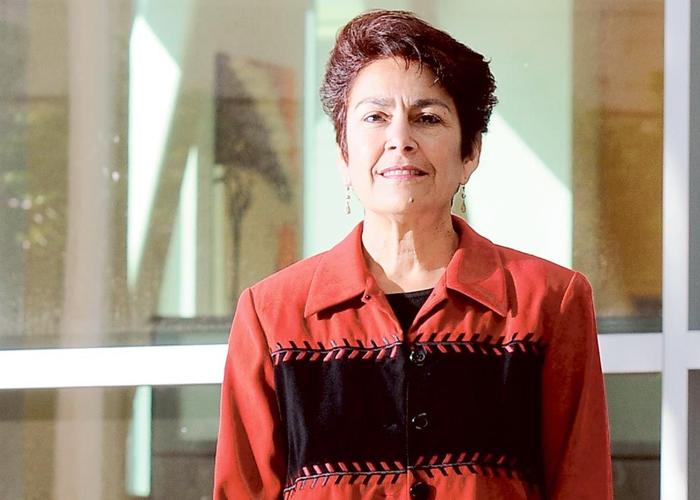
Meanwhile, in her race for Assembly, Cervantez Alejo is going up against her husband’s predecessor, Anna Caballero, a former Salinas mayor – and the former two-term assemblywoman who already held that seat from 2006-10. Gilroy City Councilman Peter Leroe-Muñoz, a former deputy district attorney for San Benito County and political up-and-comer, is in the Assembly race too.
Six Democrats, two seats, one incumbent – plus lots of overlapping political ambitions in 2016, and even 2018, are going to make for some tough-to-call races, and battles that are shaping up to be both political and personal.

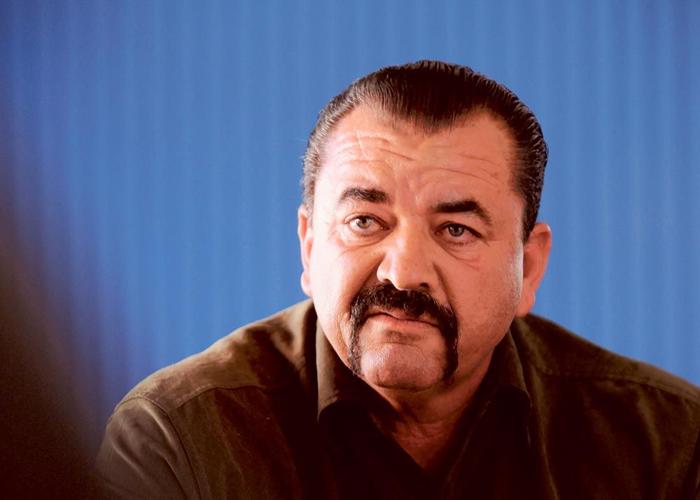
Fernando Armenta
Fernando Armenta’s memory is a little hazy about a conversation he had with Alejo some three years ago. Back then, he might’ve told Alejo he didn’t plan to seek a fifth term on the Monterey County Board of Supervisors.
By the time the two talked about their political plans again in April 2015, Armenta says his mind was made up: “I was firmly decided, I’ve got to run for re-election, I’ve just got to do this.”
So when Alejo announced via a YouTube video his campaign for county supervisor on Dec. 7, Armenta was fuming. “I said, ‘Luis, why didn’t you tell me to my face you’re going to run?’” he said by phone within an hour.
“Why doesn’t he hold a live press conference? He probably doesn’t want to be seen with a bunch of political troublemakers he’s affiliated with.”
Alejo made his announcement seated in front of a Christmas tree and fireplace, below a framed jersey of Giant’s pitcher Sergio Romo. He said he’d thought hard about running for Congress as Rep. Sam Farr, D-Carmel, retires, but decided on supervisor instead. (So far, only one Democrat, Deputy District Attorney Jimmy Panetta, is running for Congress; other rumored contenders, Alejo included, decided not to challenge him.)
“I am having a press conference a week from today, a real press conference,” Armenta said. “It’s going to be short, brief and to the point.”
When Armenta’s supporters gathered for the announcement a week later at his campaign headquarters in the Creekbridge Village shopping center on Constitution Boulevard in North Salinas, there was no shortage of ceremony. Alejandro Chavez, Armenta’s chief aide and a Soledad city councilman, greeted supporters, and then they opened the press conference with a prayer for farm workers. “We will never tire of the struggle,” some two dozen people recited in unison. “Help us to love even those who hate us, so we can change the world.”
Armenta stood in front of a Christmas tree decorated with “Armenta for Supervisor” ornaments to announce his campaign. “Eight months ago, I decided to seek a fifth term,” he said. “Why am I having a press conference, eight months later? People are saying, ‘People are not taking you seriously. You need to have a press conference. You need to have a press conference. You need to have a press conference.’”
He went on to speak about his opposition, without naming Alejo or Barrera. “I will be asked, ‘What is your vision, Armenta, what is your platform?’ It’s a very simple answer: I intend to win, no matter what kind of forces get sent my way.”
Those “forces,” broadly speaking, are political actions committees, or PACs, backing Alejo, who holds the powerful position of chair of the California Latino Legislative Caucus. And his campaign donations prove it.
Early donors include the campaign committees of Assemblyman Henry Perea, Assemblywoman Nora Campos and State Senator Ricardo Lara. They also include corporations – Sprint, Verizon, DirecTV, Syngenta, Monsanto, eBay, Hewlett Packard and the Del Mar Thoroughbred Club – and PACs and trade groups like the California Cattlemen’s Association PAC, the Cigar Association of America, the California Almond Industry PAC, the California Nurses Association PAC.
Alejo’s campaign announced he’s transfering $100,000 of remaining funds out of his Assembly committee to his supervisor committee, giving him a significant early advantage
Armenta has historically excelled at fundraising with Salinas Valley agribusiness donors, and like all candidates, will file his latest campaign finance documents by Feb. 1.
Armenta and many of his supporter have roots in an old guard of pioneers in Salinas politics. Armenta was a plaintiff in a successful 1987 federal Voting Rights Act lawsuit against the City of Salinas, responsible for converting City Council positions from at-large to district elections, intended to help Latinos win fair representation. Simon Salinas, now a county supervisor and a former assemblyman (and also a plaintiff in that lawsuit), became the first Latino elected to Salinas City Council in 1989. Armenta and Caballero became the second and third when they were elected in 1991.
Some critics have derided Alejo as a carpetbagger, seeking a strategic out-of-town seat to fill a gap until he runs for State Senate District 12 in 2018, when State Sen. Anthony Cannella, R-Ceres, terms out. “He’s going to have to prove he’s really here to stay,” Armenta says of Alejo’s recent move to Salinas.
But Armenta’s beef cuts deeper: “He makes a joke of district elections,” Armenta says. “You don’t see us Latinos in Salinas moving to Watsonville to run for seats. It dilutes the whole intent and purpose of district elections.”

Anna Caballero
When Anna Caballero attended the Forbes ag tech summit, a gathering of hundreds of growers, investors, and entrepreneurs in Salinas in July, she says elected officials quietly swarmed her, pleading with her to run for the Assembly again. “They said, ‘We really need you to come home.’ I said, ‘I’ll look at the numbers, and see what’s going on politically in the area.
“Their pitch to me was, ‘We need someone with experience,’” she says.
It wasn’t the first time that supporters courted Caballero to resign from her post in Gov. Jerry Brown’s cabinet and run for local office. She contemplated returning to Salinas from Sacramento to run for county supervisor in 2014, when Lou Calcagno retired. (John Phillips ran for, and won, that county seat.)
Caballero is by far the most experienced candidate in the contest for Assembly District 30. She’s challenging two one-term city council members, and she has already represented this district – slightly altered in 2012 by redistricting to now include Morgan Hill – twice. She would, however, have a maximum of one term in the Assembly, due to term limits; Leroe-Muñoz and Cervantez Alejo, elected under a new system, would each have up to 12. (For more on the change to term limits, visit www.mcweekly.com/news.)
Caballero served as Secretary of the California Business, Consumer Services, and Housing Agency, and brings a bold vision for increasing affordable housing stock locally, and implementing some of the programs she helped administer from her cabinet position. But she also brings a vision for restoring civility to Salinas politics, something she says has been lost, and is the reason why long-time supporters – whom she declined to name – urged her to run.
“I’ve worked really hard, as others have, to treat everybody with respect and make sure there’s civil discourse and inclusiveness,” Caballero says. “That’s what I did as a mayor. And that’s kind of broken down, and created this sense of despair in electeds that want to be taken seriously and treated with respect, and aren’t.”
She’s referring to Salinas City Councilman Jose Castañeda – who’s not running for county supervisor or for state Assembly, but who is viewed by some electeds as so toxic that even a loose alliance with him is cause for alarm. He and his supporters are the “political troublemakers” Armenta was referring to.
Castañeda succeeded Sergio Sanchez, who worked for Luis Alejo’s district office in Salinas. And Castañeda formerly served on the Alisal Union School District board, where Fernando Armenta’s wife, Noemi Armenta, is now a board member. Armenta supported a state takeover of the flailing school district, fueling the rise of the May 1 Alliance, a separatist political group in the Alisal that has resulted in heated board meetings and several recalls, and eventually, the removal of Castañeda from the board by court order. The city of Salinas sued the newly elected councilman in 2013, arguing he could not hold both offices simultaneously. He now faces felony charges of domestic violence against his former girlfriend.
While there are no May 1 Alliance candidates in the Assembly race, Caballero says she and her supporters are invested in improving the political culture in Salinas. “I need to be a mentor in a much more deliberative way, so people feel like they can move up the political ladder,” she says. “That’s one of the commitments I am willing to make.
“I want people to like politics, I don’t want them to be disgusted,” Caballero says. “Quite frankly, in our district, it’s ‘Who do I know that likes you?’ not ‘Who in Sacramento likes you?’”
Caballero comes from Sacramento, but Cervantez Alejo already has a longer list of Sacramento supporters: Donors include the California Latino Caucus Leadership PAC, International Paper PAC, California Dental PAC and others.
Some are also donors to her husband’s 2018 fundraising effort for State Senate. Alejo got an early advantage thanks in part to his plans to run for State Senate in 2018, for the district currently represented by Anthony Cannella.
Before announcing his intent to run for county supervisor in 2016, Alejo raised more than $72,000 toward his Senate campaign committee, money he’s now allowed to use in his race for county supervisor.
He’s still mulling a run for the State Senate in 2018, in a race that could pit him against Caballero. (Caballero says she’s also considering other options, like county supervisor, City Council or simply re-opening her Salinas law firm. She ran against Cannella and lost in 2010, despite a Democratic registration advantage in the Senate district.)
If Alejo ran and won in both races, he would resign midway through a term on the Board of Supes and the governor would appoint a replacement.
Asked whether he will pledge to serve a full four-year term if elected as county supervisor, Alejo is evasive.
“I’m committing to coming back to local government,” he says. “Local government is where you can make important things happen. I see it as a new chapter of my life in public service.”

Tony Barrera
On a brisk fall morning in 2014, Tony Barrera is showing off his East Salinas neighborhood and the improvements he’s most proud of there. He counts 13 new ramps over steep curbs in the neighborhood, improving accessibility for people with disabilities, and approaches a brand-new kiosk in Closter Park, which he hopes will become a hub of community events. “As a city, we just have to provide the resources, then get out of the way,” he says.
Barrera’s platform is a lot like those of his competitors: They all pledge to improve the strained working relationship between the city of Salinas and Monterey County, to expand affordable housing availability and to address Salinas’ exploding homeless population.
Barrera is willing to take a hard look at his own policy decisions; for example, he’s now questioning the effectiveness of the $1.4 million Salinas has spent on homeless services in Chinatown. After Alejo visited Chinatown for the first time Nov. 5 and released a press release about it, Barrera responded, “Well, this is his seventh year.”
Armenta visited Chinatown just a few weeks later, and dismissed Alejo’s visit as a press stunt: “I walked around. I didn’t tell the media what I was up to.”
Armenta also says he’s fighting to make a year-to-year case manager for the homeless a full-time salaried position, but Alejo says it’s too little too late: “The incumbent has been there 15 years and has not addressed the growing homelessness crisis.”
Similarly, all three candidates for Assembly lay out parallel plans with relatively minor differences for what they’d do if elected. Cervantez Alejo, an associate professor at CSU Monterey Bay, is running largely on education: She wants to expand access to college and early childhood classes. “I believe in the educational pipeline,” she says. “Education is a critical part of making sure we have these vibrant communities.”
Leroe-Muñoz, a Harvard-educated attorney, would launch a program to support the state’s most troubled schools, providing educational, legal and health support to teachers, parents and students. To fund it, he would ramp up enforcement for collections from delinquent taxpayers, who short the state some $25 million every year.
“I’m running on the value of these ideas,” he says.
To compete, his ideas will have to be very valuable: As of June 30, the most recent campaign finance reporting period, Leroe-Muñoz raised just $25,000 compared to $150,000 by Cervantez Alejo. (Caballero has yet to report.)
Then again, money doesn’t necessarily determine the direction of the political winds. When he ran four years ago, Barrera raised $16,000, paltry compared to Armenta’s $200,000 war chest, which he spent down to hold onto his seat. Still, Barrera won 46 percent of the vote, just 1,005 votes shy of his opponent.
Despite his fundraising disadvantage, Barrera is well-liked. He’s long been active in supporting services for older adults. Salinas Mayor Joe Gunter is debating whether to endorse his City Council colleague, Barrera, or the incumbent, Armenta. Barrera expects to be outspent again, but he doesn’t seem to care. “This is in my heart,” he says. “I’m looking forward to see how much money I’m going to run against.”
(1) comment
As a person who lives in Watsonville and has suffered under both Alejo's I urge those that care to not vote for any Alejo.
When Alejo was on our city council he ignored the will and votes of our town's citizens when we voted NO to having Fluoride placed into our water. Despite our votes (we won in a majority) Alejo conspired with one of his huge political donors (the Calif Dental Assn), took huge amounts of money from them and then tried to force Watsonville to put the chemical in our water despite voters voting NO and the NO's being a majority of our votes. It's as if Alejo wanted to ignore what the voters wished.
Alejo and his friend Oscar Rios, formed and created the Brown Berets in Watsonville, a group that doesn't support our local police or our US Military. The Brown Berets have done some serious trouble in our town. When Alejo ran for state office, he tried to delete all the information on the web associating him with his Brown Beret association. Currently the Brown Berets are trying to attack a great business in Watsonville that supports thousands of people in the Ag industry. He has the Brown Berets picketing Driscolls for something that's going on in Mexico which has nothing do to with the Monterey Bay.
I also don't support his wife, karina Cervantez, who only started using his name when she wanted to run for his Assembly seat. In Watsonville city council meetings if anyone dared to call her Mrs. Alejo, she corrected them and said that's not her name.
I think Anna Caballero is much better qualified for the job of Assembly member due to her very extensive and experienced background. I am voting for her.
Thank God Alejo is now trying to spread his bad politics in Monterey county.
If you're smart, you will not vote for either of these two. Listen to the voice of someone who had to live under the Alejo's politics. They are both disgusting.
Welcome to the discussion.
Log In
Keep it Clean. Please avoid obscene, vulgar, lewd, racist or sexually-oriented language.
PLEASE TURN OFF YOUR CAPS LOCK.
Don't Threaten. Threats of harming another person will not be tolerated.
Be Truthful. Don't knowingly lie about anyone or anything.
Be Nice. No racism, sexism or any sort of -ism that is degrading to another person.
Be Proactive. Use the 'Report' link on each comment to let us know of abusive posts.
Share with Us. We'd love to hear eyewitness accounts, the history behind an article.