
IN THE LATE 1990S AND EARLY 2000S, the music industry was rocked by the invention of peer-to-peer music file sharing platforms such as Napster, Kazaa and Limewire. Almost overnight, record labels lost their means of making money off of the artists that produced albums, leaving consumers with a paradox of how to ethically support the artists that they loved. Technology continues to grow in the music scene – now exacerbated with artificial intelligence through streaming services that have embraced it – but purist forms of discovering music endure, including in the form of DJs, who dissent against AI-generated elements in music.
Even for the growing number of local DJs who rely on digital (not vinyl) for their collections, they are responding to the presence of technology in music with something different than an algorithm: their own taste.

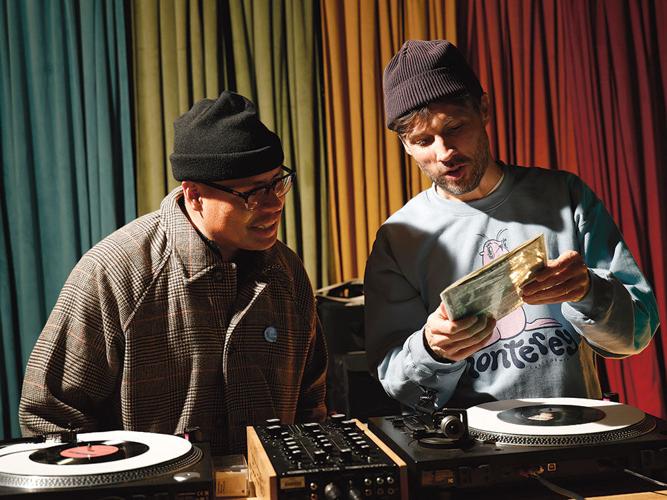
DJs Alex Ramirez and Dan Terndrup spin 45s, which have only one to two songs each, from their collection during their set.
For Dan Terndrup, a transplant from Los Angeles to Monterey County, an old way of discovering what was happening in his new town came in the form of a print copy of the Monterey County Weekly on a spring day in 2025. A pop-up roller rink event at the Monterey County Fairgrounds piqued his and his wife’s interest, and gave him an idea too: to convince the organizer to let him DJ for an event that honors the history of roller boogie.
Terndrup – who goes by the name Daniel T. when he performs – had been DJing professionally since 2006 until the Covid-19 pandemic began in 2020. Shortly after moving to Monterey County, he walked into the Pacific Grove record store and bar Pop & Hiss to browse the collection, where he met local musician and fellow DJ Alex Ramirez working at the front. Ramirez noticed a pin representing the kraut rock band CAN affixed to Terndrup’s jacket.
“A number of people come in every day and ask for gigs. I just spotted something on him that triggered a conversation that went adrift from talking about DJ gigs,” Ramirez says. Terndrup regularly wears pins on his jacket, but it serves as a signal to other audiophiles; this one was intended to help him look for a gig. “I relate it to skateboarding,” Ramirez says. “When you see a skateboarder and his shoes are scuffed, it’s a sign that this guy’s with it.”
The pin worked. Having linked up, the two spoke with the organizers of Monterey Skates, who agreed to let them kickstart a groove-machine event, now known as Night Glide, during the roller rink pop-up. Ramirez and Terndrup spin 45s – records meant to play at 45 revolutions per minute – but live-curate the playlist of music to fit the vibe, shaped with physical media. Night Glide became a monthly occurrence (the next is March 8), and there is an opportunity to create more events now that the roller rink plans to move to a space at the Del Monte Center in Monterey.
WITH OVER 700 MILLION USERS, Spotify remains a giant in terms of music sharing, even among DJs. But in September 2025, NPR reported that several artists – such as Deerhoof, Xiu Xiu, King Gizzard & the Lizard Wizard and Hotline TNT to name a few – pulled their music from the streaming service because of Spotify’s CEO Daniel Ek’s financial ties to AI technologies used for advanced weaponry and fighter aircraft like the HX-2 AI Strike Drone. Meanwhile, AI-generated music is also gaining a foothold.

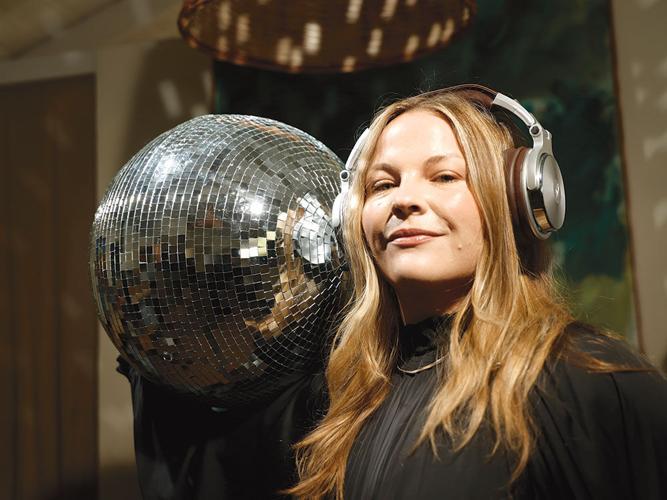
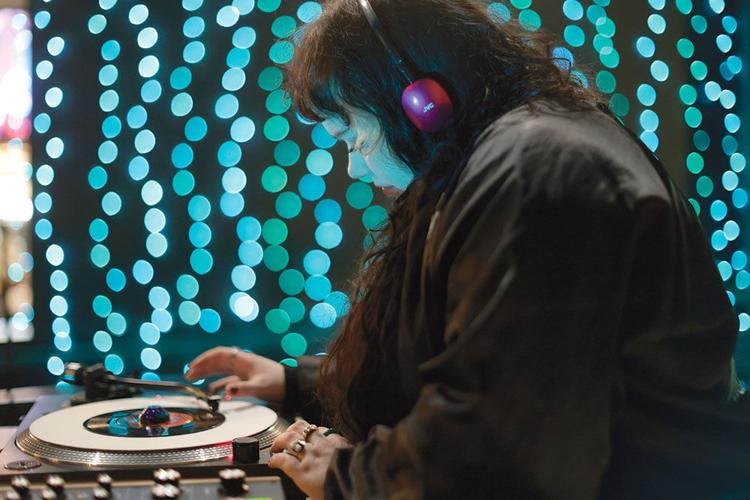
In addition to curating playlists for restaurants, Gwynneth Alldis DJs a signature event called Italo-Discoteque, featuring music inspired from her time in Florence, Italy.
Despite concerns, services like Spotify remain one of the most seamless platforms for exchanging songs.
“If you know of a better way to share music, please let me know,” says Gwynneth Alldis with a laugh. Alldis, who goes by the mononym GWYNNETH when she performs, DJs with digital music files known as FLACs, which she says have better sound quality than MP3 files. But even the digital realm can give DJs a way to capture the highly curated vibe that vinyl DJs prefer, and local DJs are establishing their own niche in various genres. Still, the human element of music and DJing is not lost for Alldis.
“We’ve got to experience space together,” she says. “People notice bad music almost immediately.”
Alldis began DJing in 2009 while studying oil painting in Florence, Italy. After nights out, she and her art school friends would frequent an exclusive after-hours club run by her housemate, where she first learned to use the Pioneer CDJ: a device similar to a turntable that plays, mixes and even imitates scratching sounds while playing CDs. Though there was a language barrier between her and her Sardinian housemate, the two bridged the gap through the music. Alldis says when she first started learning how to DJ with him, he’d give her either a thumbs up or thumbs down based on what she played.
Bringing her experience home, Alldis now curates playlists for restaurants in Carmel, but occasionally performs a signature Italo-Discoteque event, featuring tracks from Italian artists like Donatella Rettore, Mina, Raffaella Carr and Pino DiAngiò. She’ll usually start her sessions with classic Italian cinematic scores and then blend disco music later into the evening. She reads the room to see what guests are enjoying. “People love familiar music too,” she says. “I now fuse American disco with Italian disco, and may even pivot to ’90s house.”
The initial idea was inspired by her painting. “I look at it as an extension of my art practice,” she says. Alldis’ first iteration of the Italo-Discoteque was pitched to Katie Blandin, the owner of Pearl Hour in Monterey, to pair with an amaro tasting at the bar in 2021 when social distancing was still mandatory. The two held the event as an innovative way to connect Alldis’ music to the bars to help Blandin at a time when bars were forced to be creative.
“It’s almost like a somatic release,” Alldis says. “We’re vibing and having a good time; it’s joyful. That’s what I’m trying to create.”
She noticed that people would stand up and dance in place when they liked the song during the socially-distanced amaro tasting event. Alldis says that being intentional about the music she selects digitally contributes to her connection with her audience, and by extension her community.
“When I first start my night, it’s an announcement of who I am,” she says, explaining that she structures her sets like acts in a play. The “crescendo” happens when people get into the music and dance. “It’s not about being cool,” Alldis says. “It’s about, ‘let’s get into it and have a good time.’”
SHARING AND RECOGNIZING INTERESTING MUSIC is the keystone of a DJ’s mission. As is well documented, this is what led to movements like house music – a genre identifiable through a consistent 4/4 beat – but also bears “house rules” since those who went to hear its original form would be guests in someone’s home. This music was largely underground in the 1970s because it was played by marginalized groups like the Black and gay populations in New York City, where someone – a disc jockey – would bring records to share.

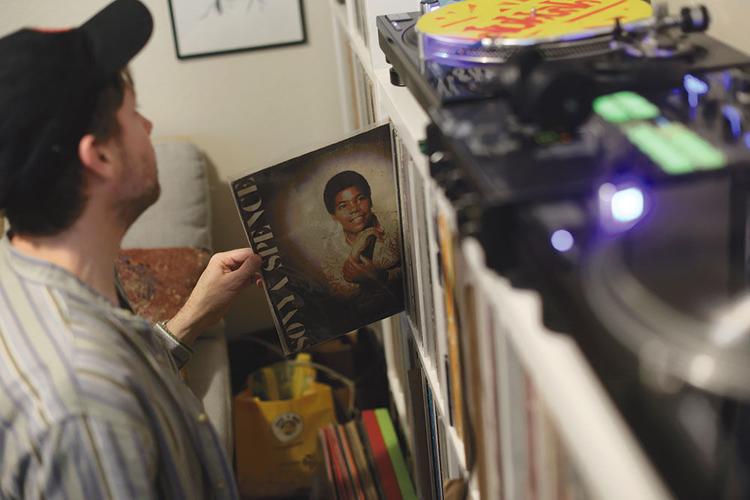
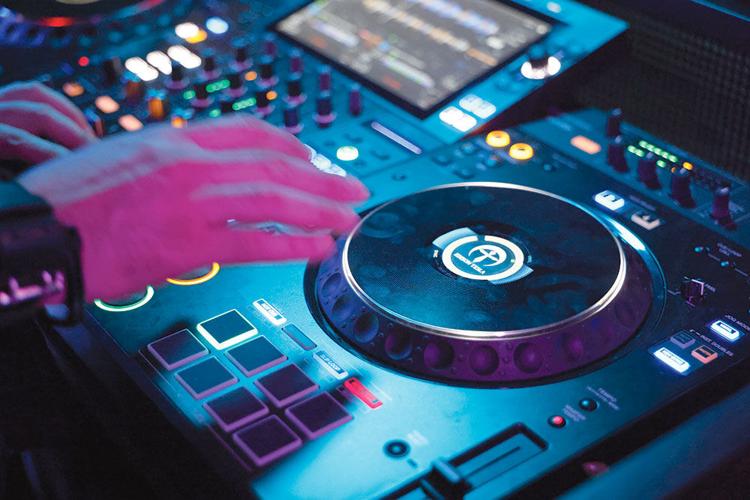
(above) Dan Terndrup aka DJ Daniel T. “digs” for vinyl records to play during sets. (below) DJs play and mix music through digital or analog turntables. The mixers enable them to queue songs, blend beats and seamlessly transition during their sets.

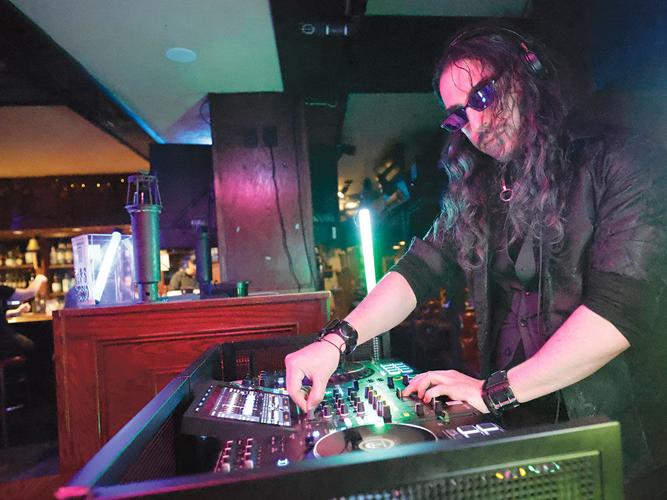
Salty Seal Dj Frank Padilla
Streaming and AI seek to replicate this in the 21st century, curating playlists based on the listener’s history and similar artists. But removing the human element has led to a rebellion of sorts. Members of Gen-Z and millennial generations choose to discover music through records, CDs and cassette tapes, and the only way to share physical media is to experience it in a physical space.
“There’s always been a culture here, but it’s never had any attention,” says Ramirez, who has been DJing with vinyl since 2019. He believes the legacy of live music from the Monterey Pop and Monterey Jazz festivals lends its influence to the rising DJ scene in Monterey County.
DJing isn’t limited to analog, but even in digital form stands in contrast to algorithmic playlists. Since new ownership took over the Cannery Row sports bar The Salty Seal last year, the venue has been holding regular electronic dance music nights, featuring local DJs like Joey Camacho, Tiko Sanchez and Frank Padilla, aka Edison Tesla. Camacho says the nights can draw in anywhere from 100-200 young people to dance. “You can go into a room of strangers and connect with them through EDM,” Camacho says. The music is paired with colorful neon lights that match bass intensity as the songs play.
Music heard at The Salty Seal usually falls into the Top 40 category, curated to the environment. Camacho says DJing is like conducting an orchestra. Songs are the medium and attendees are the movements – but it depends on the space they’re in, which the DJ creates. A growing number of those spaces and local DJs are modernizing this way of connecting to others through music, and in some cases preserving the stories behind it.
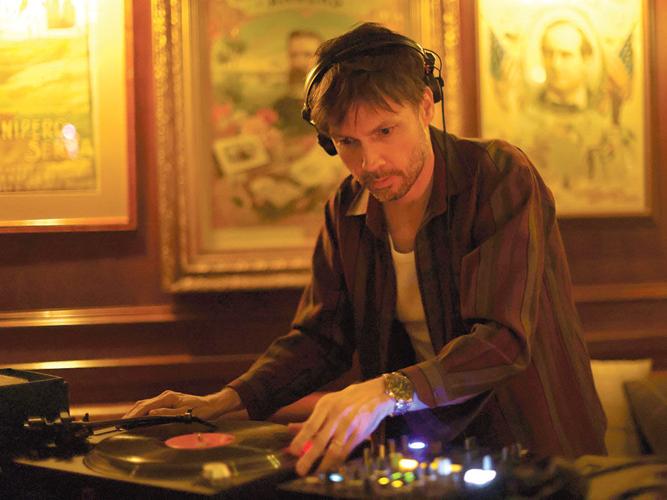
BUD’S AT LA PLAYA HOTEL IN CARMEL is host to the Fadeaway sessions, booked by production company FolkYeah. The event brings DJs in to set the vibe of Bud’s bar with a three-hour music set on Thursday nights, and gives them a complimentary stay for the night. Ramirez and Terndrup are both alumni of those vinyl sessions, joining world renowned music talent like British goth rocker David J. of Bauhaus, who spun a set a week before Terndrup’s last gig. The DJ sets up in a corner by the dimly lit bar, intermingling with attendees who often come up to the turntable to ask about the records they’re playing.

People often come up to ask DJs (including DJ Daniel T,) about the music they’re playing during the Fadeaway sessions at Bud’s at La Playa Hotel in Carmel.
Terndrup’s selection for his night included some obscure rare tracks that fit the classy vibe of the bar, but with an intent. In one instance, Terndrup brought out a rare Bob Darin record, bearing the same name as the artist known as Bobby Darin, famous for the song “Somewhere Beyond the Sea.” But this record is a different side of Darin, and Terndrup explains why he chooses it for this session.
“In the ’60s, I think [Darin] was going through some troubles and he relocated to Big Sur,” Terndrup explains. Darin got into the weird party scene in Big Sur and put out a country funk record under the pseudonym Bob Darin. “It was a totally different vocal delivery than what you get from a crooner record,” he says.
Ramirez adds, “We like the hits but we also like to slide things in that are undeniably good.”
Terndrup says he wouldn’t have found that record unless he was connected to the music scene himself. Being a newcomer to the DJ lineup in Monterey County, he respects the people who have been spinning here, like Travis Carter, aka DJ Trapps, a homegrown Monterey County DJ who’s also performed at gigs in the Bay Area. “He’s rooted in the hip-hop tradition of DJing,” Terndrup says. “He’s also actively still digging all the time.”
With a music legacy that Ramirez spoke about stemming from big artists like Janis Joplin, Jimi Hendrix and Bob Dylan performing at the Monterey Pop Festival, or Bobby Darin on a drug-fueled discovery of self in Big Sur, thousands of vinyl records are scattered throughout Monterey County, several of which end up in thrift stores, estate sales or even locked away in houses of people who have passed away.
Thrift stores and record shops are the places where those orphaned albums often land. But in order to find treasure, one must dig – a term often used by audiophiles that means thumbing through record stacks to find something good. DJs dig all the time and share with friends, making the experience hands-on. Terndrup learned about the rare Darin record through Carter, who told him about finding an extremely rare funk rock record at Last Chance Mercantile in Marina. After Carter alerted Terndrup, he and Ramirez beelined it to the thrift store, where they found the Darin record.
BEFORE THE ADVENT OF COMPUTERS AND USB DRIVES, DJs would often have to carry their entire music collection for the evening before any event. This cumbersome task meant lugging hundreds of records to a club for the night, but this was made slightly easier by the 45 vinyl disc because they are smaller than 12-inch long play (LP) discs.

DJ Edison Tesla mixes and plays electronic dance music weekly at The Salty Seal on Cannery Row in Monterey.
DJ Kim Sollecito – who goes by her DJ name Kim the Beat – carries about 200-250 45s with her to Pop & Hiss every Wednesday for her DJ set, along with a few 33 rpm LPs.
Dressed in a black pleather skirt sporting a vintage Playboy belt buckle with a faux fur around her shoulders, the 28-year-old spins a collection of doo-wop, northern soul and garage rock and roll music from the 1950s and ’60s. Some of the artists heard include The Seeds, The Mamas & The Papas, Johnny Cash and Bo Diddley. By 8:30pm, several Gen-Zers and Zillennials start filing into the back of Pop & Hiss and begin dancing to the old-time music.
“I feel like a lot of people my age don’t know where to find this music or they don’t know it exists,” Sollecito says.
Sollecito started DJing in 2020 when she was living in New York City. She would use her government stimulus money to collect records – primarily 45s – which went for anywhere from $3 to $10, outside of rare collectibles which she also owns. But she was introduced to this musical era before that.
In addition to some LP records she got from her father, Sollecito linked up with DJ Jonathan Toubin, modernly nicknamed “father of the rock and roll scene” in New York, who got her into DJing.
When Sollecito came back to the West Coast in 2025, now seasoned in the genre, she was looking for a similar scene. Locally, she found it at Pop & Hiss, and in the Bay Area she linked up with Neil Pacheco – known as DJ Hitone – and Kevin Lehman, aka DJ Kevin Arnold, together who form the duo called Late to the Party. Toubin, Sollecito, Pacheco and Lehman are part of a movement gathering young people around rock and roll music from the bygone era.
“I love to see people my age and younger understanding and loving this music. It’s kind of a lost art,” Sollecito says. “I think all DJs are amazing though.”
Sollecito says there’s something special about owning a song in a tangible form like vinyl and sharing it with friends. “There’s magic in it,” she says. Proof of that exists with the people showing up to these sets or simply to chat about music – something that occurs regularly at record stores.
TERNDRUP AND RAMIREZ talk about music with each other on a regular basis, but see something more happening locally as older generations leave their music collections behind, eventually to be picked up by thrift stores and record shops. “I’m noticing younger generations are starting to rebel against devices,” Terndrup says.
Contemporary artists also press their new music onto vinyl that can be found at record stores or even larger retailers like Target and Walmart. But consumerism is alive and well in some of these tactics, prompting debate in the audiophile community. One of the most infamous releases was Taylor Swift’s album Midnights, which came with four different covers that, if arranged correctly on the wall, forms a decorative analog clock – the catch being one has to purchase four copies of the same album to assemble it. Ramirez even comments that he’s now seeing AI-generated music pressed onto vinyl and available for purchase.

DJ Kim Sollecito, aka Kim the Beat, spins her collection of garage rock and roll, northern soul and doo-wop 45s at a weekly event at Pop & Hiss.
Ramirez and Terndrup aren’t sure if AI technology will eventually take over DJing, but the invasion of AI into physical media continues, even fooling them sometimes when they attempt to share music with each other. In addition to the vinyl records now for sale with AI-generated music, Spotify debuted an AI DJ in 2023, with AI-voice-generated announcements that are able to introduce songs like on a radio station. Terndrup admits that he’s unable to hear a new song – especially one that’s sent to him via a streaming service like Spotify or Apple Music – without wondering if AI was involved.
But at the same time, Terndrup and Ramirez notice more young people keeping their phones put away at shows or even not using them for GPS directions in public, signaling a rebellion against the internet. Ramirez believes that the ripple effect of that rebellion is now hitting smaller communities like Monterey. “There’s a resurgence in appreciating music and discovering more that’s out there,” says Ramirez, explaining that the mutiny was already present in major metropolitan cities across the U.S. He thinks that eclectic DJs in Monterey County are shouldering that rediscovery of music at their gigs and performances, and both of them agree that digging for a record, either on stage or at a record store, is irreplaceable by bots.
Ironically, Ramirez credits TikTok and Instagram videos for bringing vinyl up from the underground because old music is often used for videos. “People are exposed more to jazz, like Bill Evans,” Ramirez says, referring to the pianist who died in 1980. He often sees vanity TikTok videos, which showcase beauty routines, accompanied by old jazz music like Evans and Herb Alpert of the eponymous Tijuana brass band from the 1960s playing in the background. DJs hold physical representations of that kind of media that people can experience in actual reality though, either heard through a curated playlist or on a physical copy of vinyl itself.
To Ramirez, that means that the culture is no longer underground – DJs who make selections (whether vinyl or digital as their medium) based on their taste and not an algorithm have growing relevance in the local music scene. Terndrup adds, “I’m starting to think that the modern version of the ‘underground’ are people who are not on social media.”
(0) comments
Welcome to the discussion.
Log In
Keep it Clean. Please avoid obscene, vulgar, lewd, racist or sexually-oriented language.
PLEASE TURN OFF YOUR CAPS LOCK.
Don't Threaten. Threats of harming another person will not be tolerated.
Be Truthful. Don't knowingly lie about anyone or anything.
Be Nice. No racism, sexism or any sort of -ism that is degrading to another person.
Be Proactive. Use the 'Report' link on each comment to let us know of abusive posts.
Share with Us. We'd love to hear eyewitness accounts, the history behind an article.