




As is routinely the case, the candidates at the top of the ticket – in 2024, that would be the office of President of the United States – tend to get a lot of attention in the media in the lead-up Election Day. This year, the presidential race was all but decided well before primary season even began.
Instead of focusing on the presidential election, our focus here at the Weekly is on local elections. In a government of and by the people, it is our neighbors who are asking for your vote and seek to represent you.
In our endorsement process, we invite candidates to answer questions in in-person forums or by email, and make choices about who we recommend based on those interviews as well as past records. These decisions are made by our editorial board, not our editorial staff – the news section includes continued coverage of all of these elections.
Whether or not you agree with our endorsements, we hope you learn something about each of these races and most importantly, that you vote on March 5. This is a chance for all of us to help chart the future. We also welcome your opinions, including disagreements – reach out to letters@mcweekly.com any time.
Monterey County Weekly’s editorial board comprises Founder & CEO Bradley Zeve, Publisher Erik Cushman and Editor Sara Rubin.
United States Congress
Zoe Lofgren for District 18 Jimmy Panetta for District 19
The U.S. House of Representatives is in a world of hurt. While its foundation is solid – the House comprises 435 members representing all 50 states and is divided proportionally into districts that have approximately 700,000 residents each – in our lifetime, there’s never been such a divided body. To say the partisan rancor is off-the-charts dysfunctional is putting it mildly – it’s more in the wackadoodle, WTF zone. For example, the current Speaker of the House is a right-wing extremist who believes dinosaurs were on Noah’s Ark (we’re not kidding).
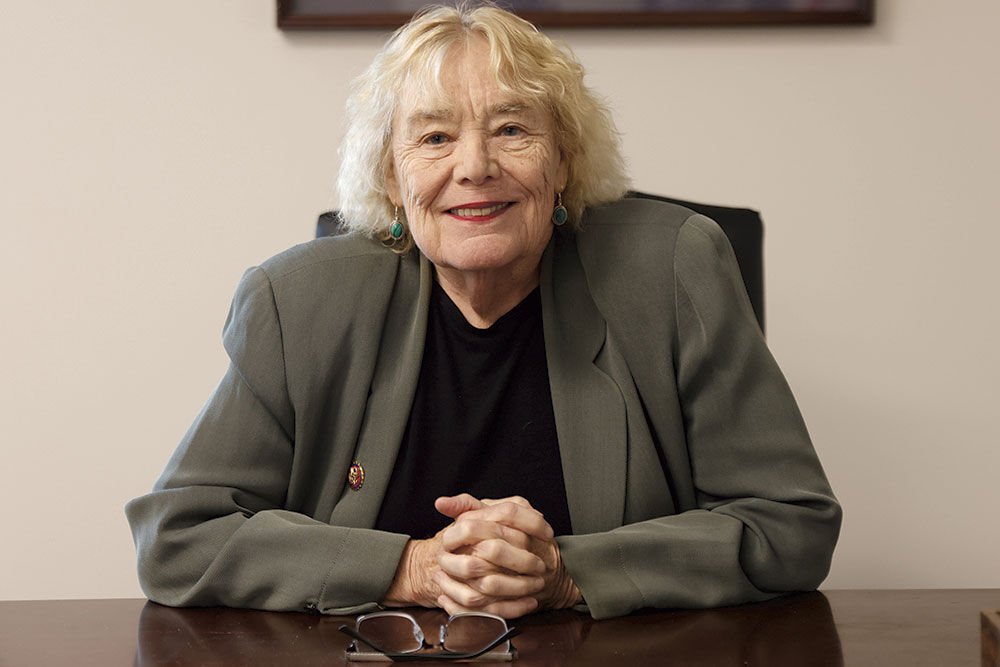
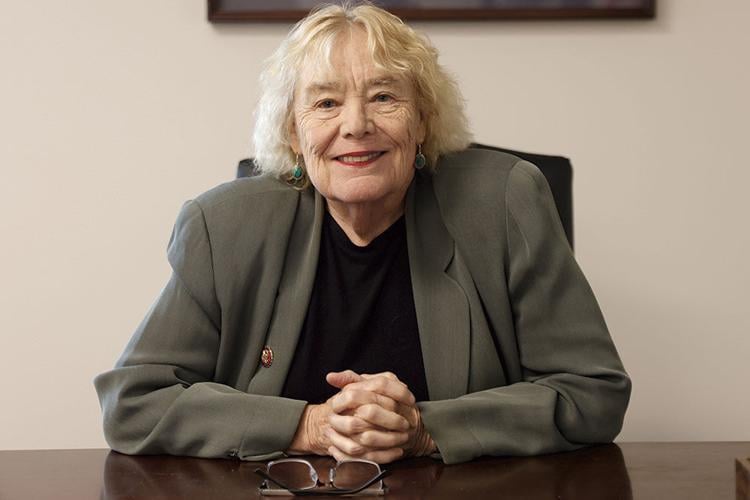
U.S. Representative Zoe Lofgren (Democrat) seeking another term in Washington - faces Republican challengers, as well as challengers from the left.
Perhaps worse is that the current leadership is hell-bent on undermining any effort to build compromise between Democrats and Republicans – which we believe is the essence of the job requirement.
To put the ineptitude in perspective, in 1995 – when Newt Gingrich led the Republicans as speaker and Bill Clinton was president – 430 bills became law. In 2019 when Democrats had the majority and Trump was president, 235 laws were passed. Then in 2023, a grand total of 27 bills passed by the U.S. House of Representatives that became law.
No wonder there is growing disapproval for government leadership.
Hopefully that will change course this November if pragmatic Democrats take control of the House. While not everyone will agree with their policies, at least they are interested in restoring order and sanity.
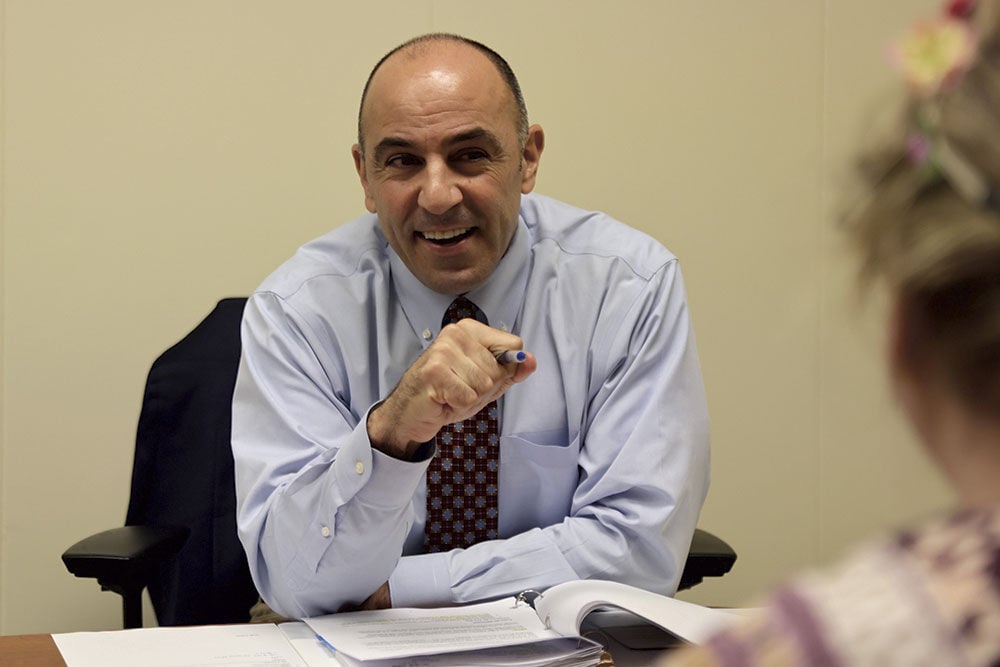
U.S. Representative Jimmy Panetta (Democrat) seeking another term in Washington - faces Republican challengers, as well as challengers from the left.
Thankfully for our community, we have two great representatives, Jimmy Panetta and Zoe Lofgren, both Democrats who are pragmatists rather than idealogues. They are smart, dedicated public servants, and both deserve your continued support. It’s hard to conceive of why these two are even willing to fly coast to coast every other week to deal with the chaos.
Both are important advocates for good government, holding the mantle for accountability for elected officials. Considering that Panetta’s district stretches from south San Jose to northern San Luis Obispo and Lofgren’s is a similarly unruly district to the east, we ought to not only re-elect them but send them neck pillows, seat cushions and slippers for their under-appreciated work and long-distance sojourns. Hopefully this November, their hard work and patience will be rewarded with a return to the House majority, enabling them to accomplish more.
State of California
John Laird for State Senate District 17
First elected to represent parts of Monterey County in the Assembly in 2002, John Laird is a known quantity. He has a long and impressive track record advocating and legislating on behalf of the environment, LGBTQ+ rights and education priorities. Since 2020 he has represented the sprawling 17th district, which goes from south San Jose to the desert west of Bakersfield, in the California Senate.
In his first tour as a state senator, Laird has held leadership positions in budget and labor committees, but his expertise in the burgeoning field of battery storage also stands out. His bill to enhance safety standards at lithium-ion battery storage facilities – like those in Moss Landing – was signed into law last fall. In a related exercise, Laird assumed leadership to get the decommissioning of the Diablo Canyon nuclear reactor extended for an additional five years in order to wait until sufficient renewable energy sources are available to replace its output by the time it is fully shut down.
Laird also had an outsized leadership role in securing state money to get the Watsonville Community Hospital under local ownership and state funds to cover what had been presented as residents’ share of the levee restoration project in Pajaro.
Laird’s comments during a Carmel Residents Association forum last fall – when he seemed to suggest that a workaround with a housing bond to allow Carmel to pay to have affordable housing built elsewhere – left us nonplussed.
Laird is being challenged by two Republicans and one Libertarian. Republican Eric Tao, a professor of computer science at CSU Monterey Bay, came to this country from Taiwan and is raising his kids as a self-proclaimed Tiger Dad. Tao supports Pure Water Monterey expansion and says he favors accountability measures on municipalities to meet housing obligation numbers. He champions traditional family values, parents’ rights and private property rights.
Veterans advocate Tony Virrueta has earned the endorsements of Republican Party entities in this race. He’s well known for creating the Salinas Veterans Day parade in 2010. Like Tao, however, he lacks in elected experience. They might start local before aiming for Sacramento.
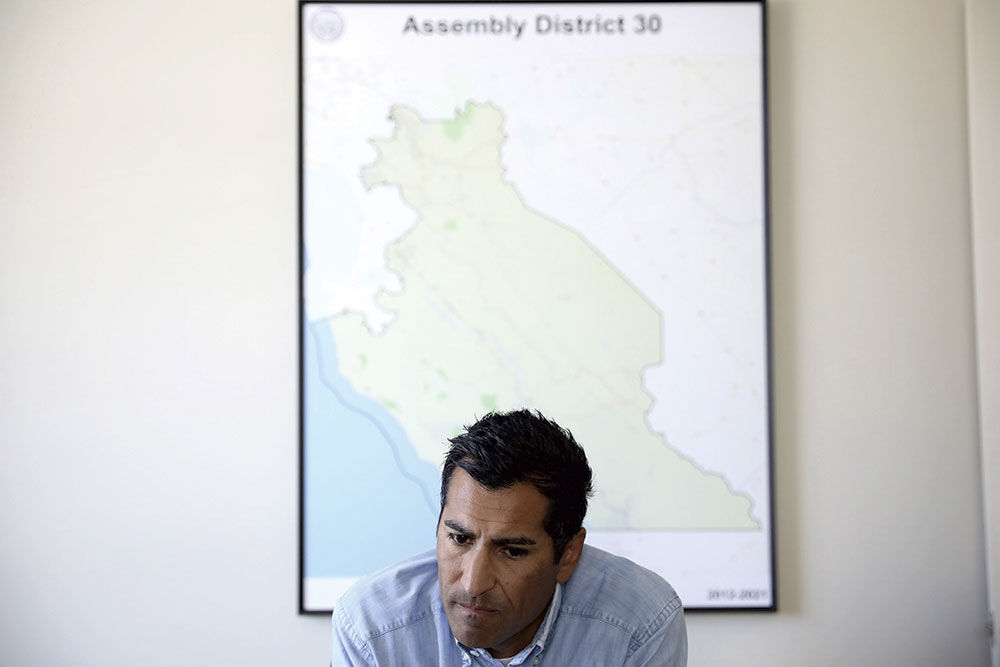
Robert Rivas is seeking re-election in Assembly District 29, but his role also has implications for the entire state. Last June, he was sworn in as the Speaker of the California Assembly.
Robert Rivas for Assembly District 29
It has been a very eventful two years for Robert Rivas, whose district runs the length of the Salinas Valley, plus Prunedale, Watsonville, Gilroy and Hollister in the north. First elected in 2018, Rivas has demonstrated during his time in the Assembly both the ability to get things done and political ambition. During the Covid pandemic, he successfully got a series of enhanced health and safety protections for farmworkers signed into law. As chair of the powerful Agriculture Committee and vice chair of the Latino Caucus, he wielded his influence on behalf of farmworkers and the ag industry both.
In November 2022, Rivas announced that he had the votes to ascend to the speaker’s chair and in a slow, protracted and ultimately successful hostile takeover, he unseated the former Assembly Speaker Anthony Rendon and took the gavel in June.
Rivas has now named the chairs of all the Assembly committees and he has put in place a young and progressive leadership team which may be in those positions of power alongside him as long as he remains speaker. With this authority, Rivas has the opportunity to shape the future of the state. His longstanding commitments to the environment, farmworkers and agricultural prosperity will make California better for all who call this place home. We think he deserves to be re-elected to get that accomplished.
Dawn Addis for Assembly District 30
In her first two years in the Assembly, Dawn Addis has already proven to be an impressive legislator. A former special education teacher and city council member from Morro Bay, Addis has is a forceful and smart representative for the recently redrawn district which now includes parts of the city of Santa Cruz in the north, the entire Monterey Peninsula and the coastal region all the way south to Arroyo Grande and the inland expanses of San Luis Obispo County.
As a rookie Assemblymember, Addis authored three housing bills that were signed by the governor – to increase funding for senior housing, eliminate red tape in building housing for community college students and protecting mobile home residents. Perhaps more significantly she boldly told a gathering of the Carmel Residents Association last fall that the tony town by the sea, just like Marina and Seaside, will have to meet its state mandates to increase housing, and specifically low-income housing. Addis has also assumed the leadership of the brand-new Central Coast Caucus in the Assembly and chairs a committee on wind power.
Addis has done a commendable job getting to know the issues and people of Monterey County: She was in Pajaro last winter and helped to get state emergency funds released, helped secure funding for Elkhorn Slough to combat sea level rise and has taken an active role in Pure Water Monterey expansion. She writes that she is committed to getting clarity from the State Water Quality Control Board to determine if that expansion can lead to the lifting of the cease-and-desist order on the Carmel River.
Yes on Proposition 1
Nobody in California, including Gov. Gavin Newsom, is going to tell you they’ve figured out exactly how to solve the thorny issues of mental health and homelessness. But Newsom is committed to trying big ideas, even if the solutions are many years in the making – these are not quick fixes. His latest proposal, Prop. 1, asks voters to authorize $6.4 billion in bonds that would be used to build facilities to treat people with mental illness who have substance abuse challenges, and to build housing for people with mental health and addiction challenges.
Prop. 1 would shift a portion of Mental Health Services Act funds to the state, diverting some $140 million annually that currently goes to counties. For counties, the measure would mean less money and also less latitude on how to spend MHSA funds – some would be required to go to housing units.
If passed, state officials estimate it would build enough beds for 6,800 people to receive mental health or drug/alcohol treatment at any given time, and build 4,350 housing units, with roughly half of those set aside for veterans. Like all of Newsom’s programs, it’s something, but far from everything. These numbers and a change in MHSA spending will not solve everything, nor do they promise to. But it’s a chance to solve some of the problem for some of the people – and that’s progress.
Countywide
Monterey County Board of Supervisors
In talking to candidates for county supervisor, we were surprised by the range of optimism and cynicism expressed. Is the job simply to keep the doors of government open and fill potholes? Or is it a chance to tackle big issues, even if solutions are elusive?
We understand that local government isn’t the vehicle to fix a lot of challenges. Economic headwinds and the cost of living, for example, are subject to global influence.
The County of Monterey does deliver all sorts of services – it runs health clinics, a sheriff’s office and jail, handles natural disaster response and more. The Board of Supervisors is the government agency responsible for unincorporated areas, with responsibilities for filling potholes and the like.
But the County Board of Supervisors also sets policy on big issues and, if willing to work collaboratively, can take on some of the most intimidating things: housing, health care, water supply and advancing equitable economic opportunity. We believe the next board will have the right mix of fresh perspectives and experienced supervisors to get big things done – if they’re willing to take them on.
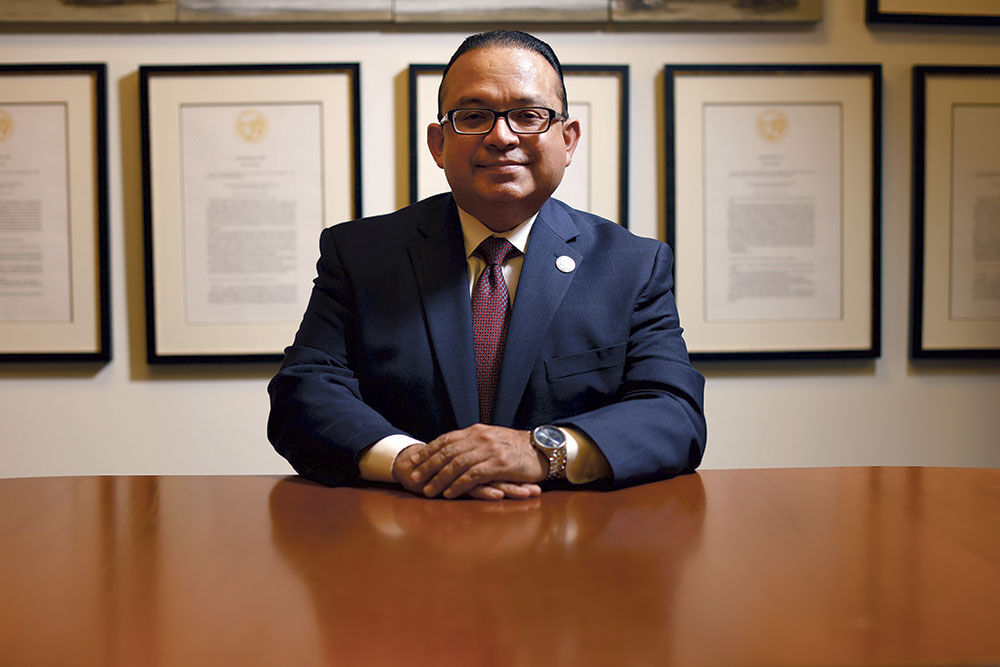
County supervisor Luis Alejo (District 1) is seeking re-election, and is running unopposed.
Luis Alejo for District 1
Luis Alejo calls this his “most enjoyable” role yet as he approaches his third term (unopposed) as county supervisor after serving in the State Assembly and on Watsonville City Council. “I really love this job,” he says, and it seems genuine – he is everywhere there is a crisis, eager to learn about the issue and propose a solution. (To some of his detractors this looks like opportunism, but we don’t blame him for being good at politics.)
Alejo is good at politics, but also getting things done. During the devastating storms of winter 2022-23, he was out door-knocking in Pajaro to get the word out about evacuations. Since then, he’s advocated for a better-organized disaster response mechanism so government can step in instead of relying on volunteers.
Alejo is interested in results. He’s also interested in doing what is politically expedient. For example, last fall he introduced a resolution expressing solidarity with Israel amid its ongoing war against Hamas, seemingly Democratic Party-aligned grandstanding. In 2022, he toed Big Tobacco’s line when he suggested adding an exemption for Modified-Risk Tobacco Products to the county’s ban on sales of flavored tobacco products and one-time-use e-cigarettes. Alejo also supported expansion of rural cities into farmland, embracing a slow outward creep for new development rather than smart growth.
Still, Alejo continues to be a voice for the little guy, sharing his own uplifting story and encouraging others in his Salinas district to find and embrace their own. “I want to focus on the inspirational, positive, good work that is happening,” he says. “Every young person in Salinas, I want them to be proud of the community they live in.”

County supervisor Wendy Root Askew (District 4) is seeking re-election, and is running unopposed.
Wendy Root Askew for District 4
As she seeks a second term, Wendy Root Askew faces a challenger, but she may as well be unopposed. Jeremiah Pressey is not a serious candidate and has no government experience. (“My goal is not necessarily to win,” he told the Weekly in December, and has ignored our inquiries since.)
Askew has focused on achievable, tangible wins for her district. Last fall, she celebrated the award of state funding to the County so it can move forward on plans for a new (and much needed) health clinic in Marina. This spring, County officials will be unveiling plans for a new campus in Seaside located where the Department of Social Services is now; it will include social services as well as a Monterey County Free Libraries branch, a hub for the District Attorney to offer victim services, and more.
She also partnered with Salinas Mayor Kimbley Craig to push the SHARE Center for homeless families – a joint project between the city and county – to completion. That shows the art of the possible, where things could just as easily have fallen apart amid political conflicts.
And that’s where we hope Askew follows her own advice about dreaming big but still finding paths toward achievement. The nuts-and-bolts stuff must get done – things like new county buildings, roads, responsive government offices – but as she enters a second term, she’s in a unique position to advance some of the big-picture stuff. Can she help lead on housing solutions and a water solution? We hope so.
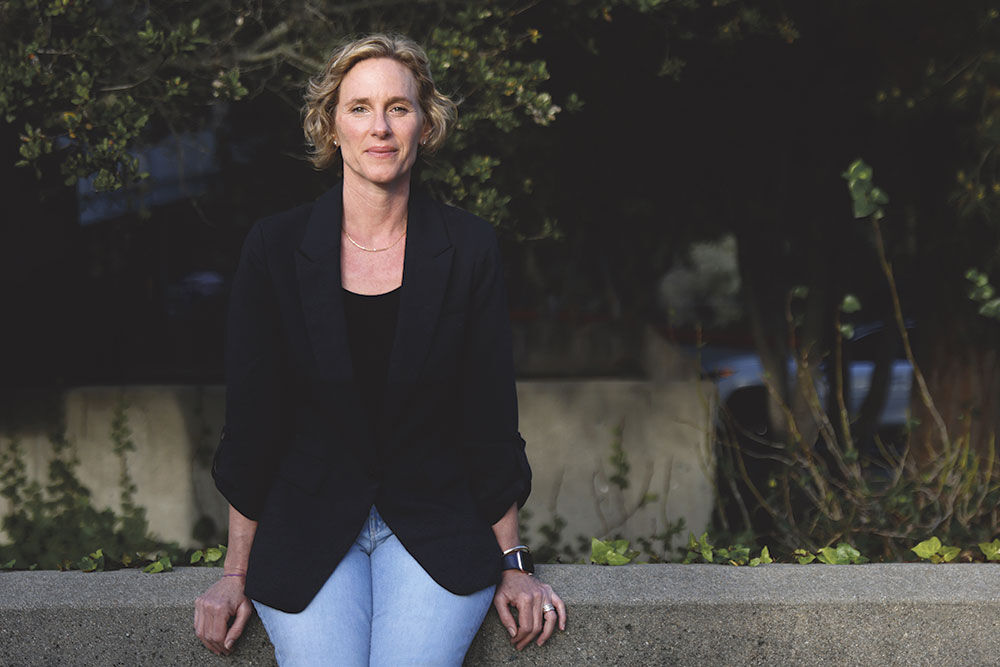
“We have big problems ahead of us that require real political will, especially housing and water supply,” says District 5 supervisor candidate Kate Daniels. “I want to give it a shot, and bring that attitude of not worrying about what people think about me. I really think there’s an opportunity for a different kind of leadership in Monterey County.”
Kate Daniels for District 5
Mary Adams is retiring, and that means there will be at least one new county supervisor next year. And that’s good news for constituents. Adams was elected eight years ago, ousting incumbent Dave Potter, on the promise of big change. Instead, the issues that matter in this district have stalled, and stalled again. (Look no further than Monterey Peninsula water supply, still in limbo, or short-term rentals. Finally, eight years later, the county has circulated a draft environmental impact report with a sensible compromise proposal to regulate these commercial units instead of kicking the can down the road even further.)
There are three candidates in this race, and two would bring energy and good ideas to this seat. Alan Haffa is a member of Monterey City Council, a professor at Monterey Peninsula College and a longtime, progressive, local Democratic Party leader. Kate Daniels is a Monterey County planning commissioner and works as a staffer to State Sen. John Laird and formerly was chief of staff to Adams. (The third candidate, Bill Lipe, who works in agriculture, is interested primarily in one issue – an important one, but singular – of Salinas Valley water supply. The job demands a bigger scope, and we do not believe he’s up to the task.)
Haffa and Daniels both have good ideas and energy to lead. Haffa has a track record of supporting infill development and tackling homelessness in a humane but real way in Monterey; he’s running because of his interest in housing and to advocate for more transparency in county government.
These are important issues, but getting anything done requires relationships. And Daniels is running largely on a platform of relationships. “We need leadership that is not only willing to call it out and have lofty goals, but bring all voices to the table and come up with solutions,” she says.
We agree, and we believe she’s the best candidate to do that.
Daniels is new to campaigning and still learning. We’re concerned about her deference to public sector unions; she doesn’t seem to understand the supervisors are the ultimate boss of labor groups, who are paid with taxpayer money. “I don’t think we can control the public sector [wages],” she says. “The issue we have is the private sector isn’t paying enough.” (One of her largest donors is the SEIU Local 521, which gave the max of $5,500.) As for creating better-paying jobs in a region powered by agriculture and hospitality, she suggests recruiting more tech companies – good luck with that.
When it comes to big problems of water and housing, Daniels and Haffa have some different ideas. She’s open to desalination being part of the portfolio to persuade the state water board to lift the cease-and-desist order that’s long tied the region’s hands when it comes to adding water meters; Haffa believes recycled water is enough to get there. Daniels supports urban growth boundaries to protect farmland and open space while building in existing city limits, while Haffa opposes such lines. We do need housing, unquestionably – but at what cost?
Both Daniels and Haffa would be good leaders for District 5. But Daniels is more likely to forge relationships that will enable her to lead most effectively, helping the next Board of Supervisors take on the big things.
Yes on Measure N
That Watsonville Community Hospital is still open for care and governed by the public Pajaro Valley Health Care District is a minor miracle.
Former owner, Halsen Healthcare, filed for bankruptcy in December 2021, and announced plans to close the hospital, which serves over 30,000 patients a year in its emergency room. For some 6,500 North Monterey County residents, it is the nearest hospital.
A desperate attempt to save the hospital succeeded, with last-minute legislation by State Sen. John Laird to create the new district, and a fundraising campaign that generated more than $60 million in public and private contributions.
But the little hospital that could is still subject to the same challenges of running a small, rural hospital that its former for-profit owner faced, and the board voted to put Measure N on the ballot, asking voters in the district – which includes the Pajaro Valley, straddling Monterey and southern Santa Cruz counties – to approve a $116 million bond. (This equates to about $24 per $100,000 in assessed valuation, meaning a property owner whose home is worth $1 million would pay $240 per year.)
Hospital leadership says priorities are renovating the emergency room, upgrading imaging systems like CT scanners, purchasing land to save money on rent ($3 million a year to an Alabama property owner), facilities upgrades like the roof and ventilation, and modernizing the hospital to help better serve patients and minimize the need for transfers to other hospitals.
City of Soledad
No on Measure P
At-large elections for local government – in which voters choose their top two or three candidates, from anywhere in a jurisdiction – are on their way out. City by city, challenges under the Voting Rights Act are forcing a transition to district-based elections. The concept is that candidates from minority communities are more likely to run, and to win – they need to campaign in a smaller region, or district, rather than an entire city (or hospital district, etc.).
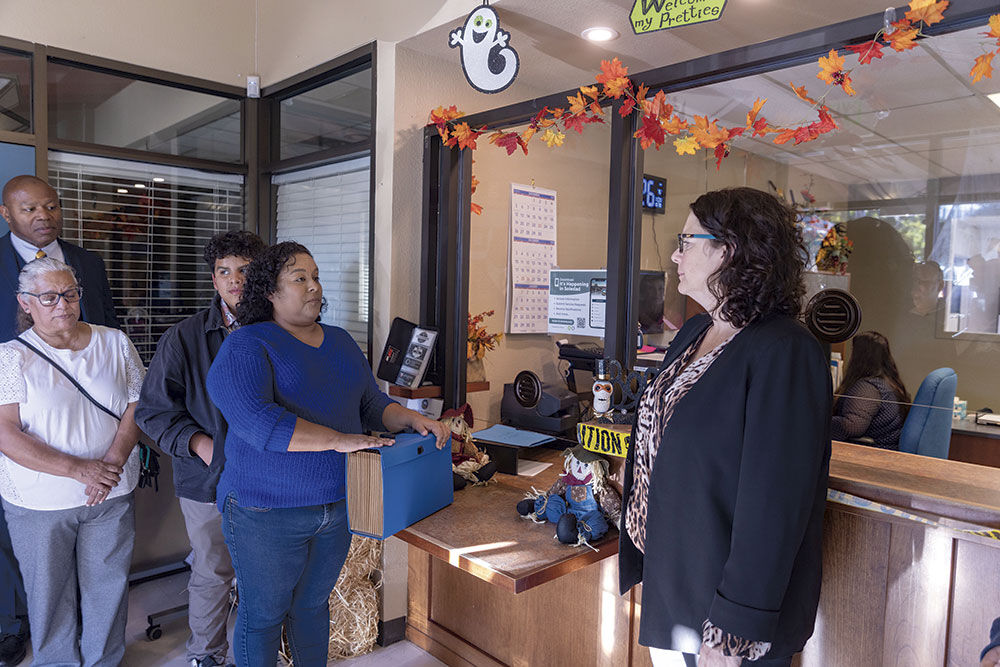
Monica Andrade of the Soledad Committee for Voting Rights (in blue), delivers the signatures needed for a referendum on the city’s district lines to City Manager Megan Hunter (right) on Oct. 30. A no vote on Measure P supports the referendum.
When it comes to the process of drawing districts, a process meant to be based purely on demographic data and keeping “communities of interest” together, it can be hard to keep politics out of it. Soledad was no different and not just in the drawing of the lines, but in how many lines to draw.
In one concept, there were four districts for council and one mayor who would be elected at-large. In another, there were five districts; the mayor would serve on a rotating basis, meaning no candidate is elected at-large by voters citywide.
From step one, this process has followed political lines. That’s meant a 3-2 vote with a majority faction aligning to support a map that has five districts, not four, and has no at-large mayor. The map was drawn by former mayor Fred Ledesma – who was ousted by current Mayor Anna Velazquez – and notably, under this map, Velazquez could not seek re-election in 2024. There is no longer a mayor’s chair to run for, and she lives in the same district as her sole political ally on council who is midterm, so that seat is not on the ballot this year. The five-district map has the effect of forcing Velazquez out. And it’s the map that council approved on the predictable 3-2 line.
Of course, to argue in support of the four-district option (plus an at-large mayor) is in Velazquez’s political favor. But there are other reasons to support that concept. One, it’s a common practice – consider Salinas, Monterey and Marina for examples. Two, the outcry from the community has been vociferous. Voters quickly organized a signature-gathering campaign seeking to overturn the five-district concept – they want to elect an at-large mayor. The result of their effort is Measure P, a referendum on the district map.
If passed, it would uphold the five-district map. A no vote on Measure P means repealing that concept, giving City Council another shot at drawing the lines in a way that more effectively empowers the city’s voters.
Fernando Ansaldo for City Council
Despite the politically charged 3-2 divide on redistricting (see Measure P, above) Soledad City Council is often aligned on the issues. But after former councilmember Alejandro Chavez moved away, it shifted to a 2-2 divide, and created one open seat that’s on the ballot this March.
Fernando Ansaldo, a Soledad native, sees priority areas as investing in infrastructure and affordable housing, but he has a practical understanding of the limitations. He suggests prioritizing sidewalks and roads in the budget, and encouraging city staff to apply for grants to go beyond. On housing, he wants to see policies that support multi-family housing and developing partnerships with nonprofits that may be keen to develop affordable housing there – housing accessible to the people who live here now.
Ansaldo, who works as an admissions counselor at San Jose State University, is also experienced in local government. He served on the contentious redistricting advisory committee (where he supported a four-district map) and is currently vice-chair of the Soledad General Plan Advisory Committee.
(0) comments
Welcome to the discussion.
Log In
Keep it Clean. Please avoid obscene, vulgar, lewd, racist or sexually-oriented language.
PLEASE TURN OFF YOUR CAPS LOCK.
Don't Threaten. Threats of harming another person will not be tolerated.
Be Truthful. Don't knowingly lie about anyone or anything.
Be Nice. No racism, sexism or any sort of -ism that is degrading to another person.
Be Proactive. Use the 'Report' link on each comment to let us know of abusive posts.
Share with Us. We'd love to hear eyewitness accounts, the history behind an article.