


IN THE U.S., EACH NEW DECADE BEGINS WITH A CONSTITUTIONALLY REQUIRED FRENZY.
First, teams and reams of surveys are sent to households in each community to collect census population data. Once we know who is where, each state’s citizens are reorganized into freshly drawn districts that determine their political representation in all levels of government, from Congress down to the local school board.
Known as redistricting, this process puts significant political power in the hands of those who draw and approve the district boundaries. Such great power comes with great responsibility, attracts great skepticism and opens up opportunities for corruption.
Historically, as redistricting processes across the country saw accusations of gerrymandering – manipulating districts to clearly benefit or disenfranchise one political party or group – and lawsuits levied, Monterey County was one of three California counties able to dodge much of the political brouhaha thanks to special federal protections offered by Section 5 the Voting Rights Act. The provision required any and all changes to voting districts in the county be approved by the U.S. Department of Justice to ensure no groups were disenfranchised. For decades, it helped keep Monterey County together in a single congressional district and maintain a strong Latino voice in elections.
That is, until 2021, the first redistricting process in 50 years in which that DOJ protection no longer applies. Through three drafts of congressional maps and two drafts of state Assembly maps, Monterey County, which was once viewed as untouchable in the redistricting process, has been diced up in ways previously unimaginable.
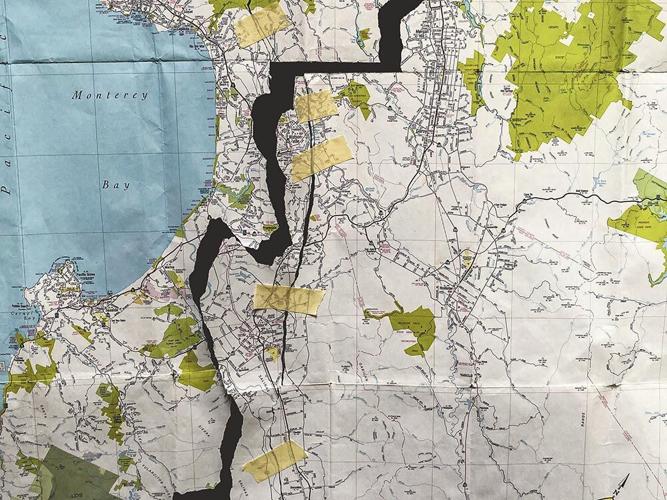
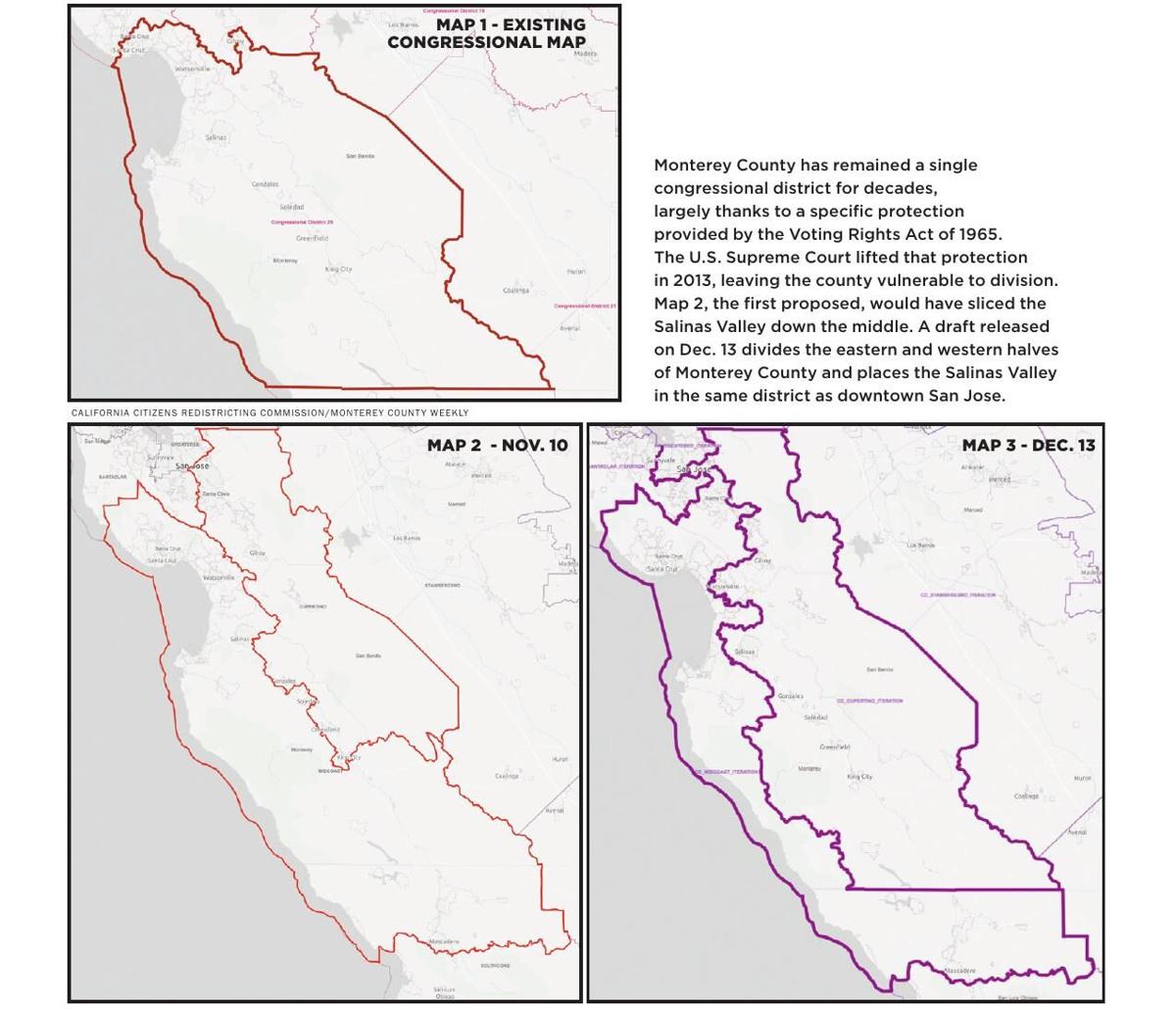
The first draft of the congressional maps, released Nov. 10, sliced the Salinas Valley down its spine and placed neighbors in different districts with different representatives. Latino representation in the existing Congressional District 20 – today represented by Jimmy Panetta and encompassing all of Monterey County – would have been cut in half and ceded its majority to white voters. Soledad and Salinas would have been in a different congressional district than Greenfield, King City and Gonzales, South County cities that would have been in a district reaching all the way up to Santa Clara County and part of San Jose.
The idea horrified local officials and community members, and ignited a pressure campaign of press conferences and organizing to ensure their voice was clearly heard: Keep the Salinas Valley together.
“To segregate our communities down here in South County is unimaginable,” says King City Mayor Mike LeBarre.
The commission responsible for drawing the lines listened and took the first draft maps off the table. Yet, updated draft maps released on Friday, Dec. 11 and Monday, Dec. 13 have only heightened the region’s anxiety. The Salinas Valley is back in one piece with San Benito County, in a congressional district with a voting age population that is majority Latino; however, it now sits in the same district as downtown San Jose, more than 140 miles away.
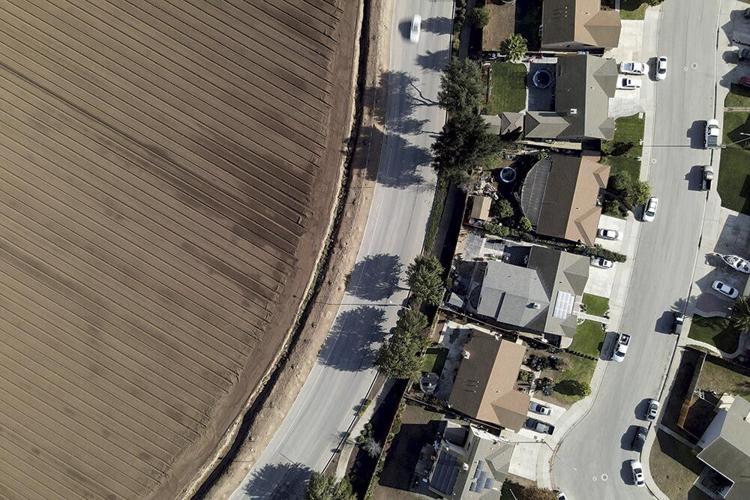
The division now lies between the county’s coastal communities to the west and rural and agricultural communities to the east. It’s a cultural and political divide long known as the Lettuce Curtain; one which local officials have worked for decades to erase in an effort to bind the county as a community.
“These maps are just devastating, they separate our communities in half,” says Cesar Lara, executive director of the Monterey Bay Central Labor Council. “It’s going to be hard to see agriculture getting a congressional candidate. So much of politics is run by money, and Silicon Valley has the money.”
So, what happened in this county whose Latino voice was once protected with the full force of the federal government? Somewhat of a perfect storm of shifts in the redistricting process over the last 13 years, highlighted by the 2013 Supreme Court vote in Shelby County v. Holder to throw out Section 5 of the Voting Rights Act. That decision meant, come 2021, Monterey County would be left vulnerable to changes that could disenfranchise voters for the first time since 1971. Add the fact that the 14-member California Citizens Redistricting Commission, the group tasked with drawing boundaries, had no Central Coast representation, and a pandemic-era public engagement process done exclusively through the phone, mail or videoconferencing, it becomes clear why Monterey County is facing an uphill battle in having its voice heard.
The maps could still change before the state’s redistricting commission makes its final approval on Sunday, Dec. 19. Commissioners are welcoming ideas from the community until then, but when it comes to mathematical balancing, they say they are running out of options.

Downtown San Jose, the country’s 10th largest city and heart of Silicon Valley, is 76 miles up Highway 101 from Gonzales and 86 miles from Soledad, two rural agricultural communities in South Monterey County. If the maps proposed by the California Citizens Redistricting Committee are approved, these communities, as well as the rest of the Salinas Valley, would be in the same congressional district, today represented in Congress by Rep. Zoe Lofgren from San Jose.

FORTY-TWO SQUARES ARE ON THE SCREEN AND THE ATMOSPHERE, THOUGH VIRTUAL, IS TENSE. Lara of the Central Labor Council is explaining the initial map proposals to labor union delegates attending the monthly meeting on Wednesday, Dec. 1. An air of frustration and uncertainty dominates the discussion: How and why did this happen? How do we change it? Can we change it? The group is confident about one thing: If the maps are adopted as is, the unions, which have all been in the same congressional and Assembly districts for decades, will be split up. The delegates refer to one another as “brother” and “sister.”
“They are trying to silence us,” said Debbie Narvaez, a delegate from Service Employees International Union Chapter 521. “They will continue to attack and we can’t give up. Whatever plan we come up with, we need to move together with one voice.”
“These are all bullshit and we should battle it back,” said Steve McDougall from the Salinas Valley Federation of Teachers.
“[These maps] disenfranchise people of color in the Monterey Bay area,” Labor Council President Daniel Dodge said. “This is an attack on working people. We’ve been talking about redistricting in front of this delegate body for months, but we never imagined we would be put to the test.”
Less than two weeks later, the maps would change significantly; however, Lara says the latest proposal is not an improvement.
“These maps have gone from bad to worse,” he says. “We have no connection to Santa Clara County. The Latino working class now has to go against a rich Silicon Valley that has no interest in what we’re fighting for.”
All politics are local, so the saying goes, and that idea drives one of the marquee mandates in redistricting. Those redrawing the boundaries are advised to maintain “communities of interest,” which is redistricting speak for a contiguous population that shares common social and economic interests. Communities of interest “should be included within a single district for purposes of its effective and fair representation,” say California’s own redistricting guidelines.
FORMER MONTEREY COUNTY CONGRESSMAN SAM FARR, who retired in 2013 after serving in Washington for 20 years, says the redistricting commission’s initial proposal – that which sliced the Salinas Valley down the middle – failed to meet the communities of interest requirement, and represented the “most radical line drawing for the Central Coast that’s happened in the last 50 years.” With the first maps, Farr was concerned that most of the Salinas Valley would lose its voice by getting lassoed into a district with San Jose. The latest maps tie in the entire Salinas Valley with San Jose.
“In politics, the most important thing you have is a base. You always play to your base. If your base is in an urban area, that’s where your emphasis will be,” Farr says. “The least understood economy in America is the rural economy. The culture of rural America is probably the strongest culture. I worry that gets lost by electing urban voices. You need a really strong, effective, defending voice wanting to protect rural interests.”
Some of the concerns are more immediately tangible. Norm Groot, executive director of the Monterey County Farm Bureau, says growers in the Salinas Valley have been working on first-ever groundwater sustainability plans to manage the Salinas Valley’s groundwater basin. Although the congressional proposals now maintain the Salinas Valley, the Assembly district boundary still splits it down the middle, which Groot says will complicate efforts to secure funding.
“Different districts require different applications, and that will make it much more difficult to implement their plans,” Groot says. “It adds another layer of complication onto this process.”
Salinas Mayor Kimbley Craig says she is most concerned with accessibility to and availability of her congressional representative. Under the latest proposal, Salinas would go from being the nucleus of its district to having to battle for air time against the heart of San Jose; from having a representative from Carmel Valley to having a representative from Silicon Valley.
“[Congressman] Jimmy Panetta takes my calls all the time. He’s very accessible and he is in Salinas a tremendous amount. [Former Congressman] Sam Farr was always in Monterey County and I never had the sense he wasn’t accessible,” Craig says. “You need someone who is rallying for Monterey County. I look at the map and it tells me we will have no one representing our area for the life of this district.”

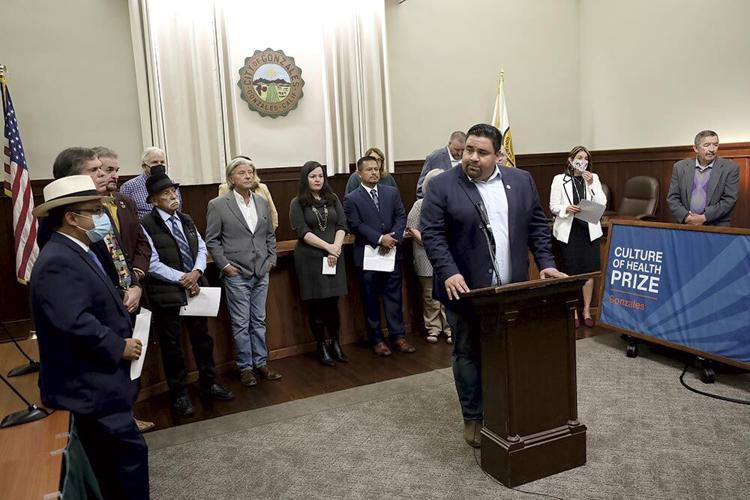
After the initial maps proposed splitting the Salinas Valley in half, Monterey County Supervisor Chris Lopez (at the podium) organized a heated press conference with leaders from across the Salinas Valley and San Benito County to voice their opposition and make it clear the proposals would harm the agriculture and farmworker communities. Lopez says the new maps are barely an improvement.
ALMOST IMMEDIATELY AFTER THE COMMISSION RELEASED ITS PROPOSED MAPS ON NOV. 10, Monterey County District 3 Supervisor Chris Lopez, who represents the Salinas Valley, was working to organize a protest against the new boundaries.
With only 31 days left to push for changes before the redistricting commission’s Dec. 19 deadline, a group of county supervisors, mayors, city council members and industry leaders from Monterey and San Benito counties gathered Nov. 18 inside Gonzales City Hall – a city that might soon be represented by Zoe Lofgren, a congresswoman from San Jose – to speak with one voice against the proposal. The message was shock, disappointment and condemnation: The citizens redistricting commission failed to protect the Salinas Valley.
With the updated congressional maps released on Dec. 13, Lopez and his rural and agriculture colleagues find themselves embroiled in a similar fight, but now they only have six days. Lopez says the battle has extended beyond the Salinas Valley – it’s now about a unified Monterey County.
“We’ve worked for generations to break down the Lettuce Curtain and tie the coastal and agricultural communities of Monterey County together,” he says. “These lines separate the coast from inland and further entrench the interests that want to see us divided.”
The phrase “Lettuce Curtain” has long been used to describe the cultural, political and economic divide between the western and eastern halves of the county – largely the coastal, tourism-based Monterey Peninsula versus the more rural, agriculture-based Salinas Valley. Vinz Koller, former chair of the Monterey County Democratic Party, says if Section 5 of the Voting Rights Act still applied, the latest maps would not pass muster.
“These maps have gone from randomly bad to intentionally bad. They almost codify the Lettuce Curtain,” Koller says. “Splitting the valley and coast apart hurts the bridge that has been built over the years to maintain that we are one piece, and distinct from the Bay Area.”
The Salinas Valley has not had a congressional representative from its home turf since Rep. Burt Talcott, R-Salinas, who preceded Leon Panetta from 1963 to 1977. Koller says the proposed changes still create a radically different landscape. Political up-and-comers from the Salinas Valley who have been building name recognition among Monterey County voters would have to start almost from scratch in a district now dominated by Santa Clara County voters. According to data from the redistricting commission, Salinas Valley’s latest proposed congressional district has roughly 760,000 voters: 362,658 from Santa Clara County, 265,578 from Monterey County, and the rest from San Benito and Santa Cruz counties.
PEDRO TOLEDO, ONE OF 14 COMMISSIONERS ON THE CALIFORNIA CITIZENS REDISTRICTING COMMISSION responsible for drawing the lines, largely led the push on the commission to restitch the Salinas Valley. The commission has no representatives from the Central Coast – a fact made clear when most commissioners refer to Castroville as “Castro Valley” during their virtual meetings. Toledo, who is from Sonoma County and says he understands farmworker communities, is now perhaps the Central Coast’s last hope in putting all of Monterey County back into a single congressional district.
Toledo says the top three priorities – equal population, representation for Voting Rights Act districts, contiguity – have tied the commission’s hands. The crux comes down to San Benito County and Section 2 of the Voting Rights Act, which unlike Section 5, is still intact. The commission found that, statistically, ethnicity still plays a role in elections in parts of San Benito County. Because of this, Section 2 requires minority populations be given a fair chance, which means including San Benito County in a district where the voting-age population is majority Latino.
Toledo explains that to do this, they could include San Benito County in the same district as Fresno, but the commission feels that would equate to “packing” since the Central Valley district already has a majority Latino voting-age population. Since districts have to be contiguous, the Salinas Valley got pulled into San Benito’s district. Since all congressional districts need to be roughly 750,000 people, the district needed to expand to larger populations. The most obvious option to ensure San Benito County would remain a Latino-majority district, Toledo says, was to grab downtown San Jose and some heavily Latino neighborhoods in Santa Clara County.
Toledo hears the concerns about San Jose loud and clear, even from within San Jose. The city’s mayor, Sam Liccardo, issued a statement that he was concerned the districts dilute the city’s voting power.
However, Toledo says the options are limited and the maps released on Dec. 13 represent the draft the commission is most likely to approve, unless someone from the public can present a map that is better and meets all mapping standards.
“Any member of Congress elected to this district would have to be responsive to the needs of the whole district,” Toledo says. “It’s focused on whether the Latino community’s candidate of choice has the opportunity to be elected. We believe they will, but determining where that person comes from is less our role.”
BILL MONNING, A FORMER STATE LEGISLATOR FOR THE CENTRAL COAST, says he doesn’t believe the proposed maps would have been drafted if the process was still in the hands of a more experienced legislature, but California voters decided in 2008 to put the redistricting responsibility in the hands of a bipartisan citizens’ commission. That the Central Coast had no representation on the commission – when Monterey County was one of three previously protected counties – raises questions about how the commission values geographic diversity, Monning says.
Twenty years ago, legislators who drew bad boundaries would have to face voters at the ballot box or in their own neighborhoods; however, the current commission has operated entirely remotely with no ties to the Central Coast. Once the job is complete, the commission will dissolve until a new roster is appointed 2031.
“The folks we’re dealing with now are not responsive to anyone at this point except the Secretary of State, who will have to approve these maps,” Lopez says.
Farr doesn’t believe the maps could be successfully challenged in court as long as the redistricting commission is following the law. That lack of accountability, combined with the dissolution of Section 5 of the Voting Rights Act, are weaknesses of the current system; however, it’s the system California voters wanted.
There is some time left. The redistricting commission must approve the maps by Sunday, Dec. 19. The maps will be published by Dec. 23 and certified by the Secretary of State by Dec. 27. Toledo says the commission is still seeking public feedback on the proposed boundaries and may try a few last-ditch efforts to put Monterey County into a single district. One idea Toledo is testing to remove the Lettuce Curtain boundary is to combine all of Monterey County with San Benito, and then move the southern boundary of the district further south to include more of San Luis Obispo.
However, the deadline is days away. Toledo encourages anyone with any mapping solutions to submit their ideas to the commission.
(0) comments
Welcome to the discussion.
Log In
Keep it Clean. Please avoid obscene, vulgar, lewd, racist or sexually-oriented language.
PLEASE TURN OFF YOUR CAPS LOCK.
Don't Threaten. Threats of harming another person will not be tolerated.
Be Truthful. Don't knowingly lie about anyone or anything.
Be Nice. No racism, sexism or any sort of -ism that is degrading to another person.
Be Proactive. Use the 'Report' link on each comment to let us know of abusive posts.
Share with Us. We'd love to hear eyewitness accounts, the history behind an article.