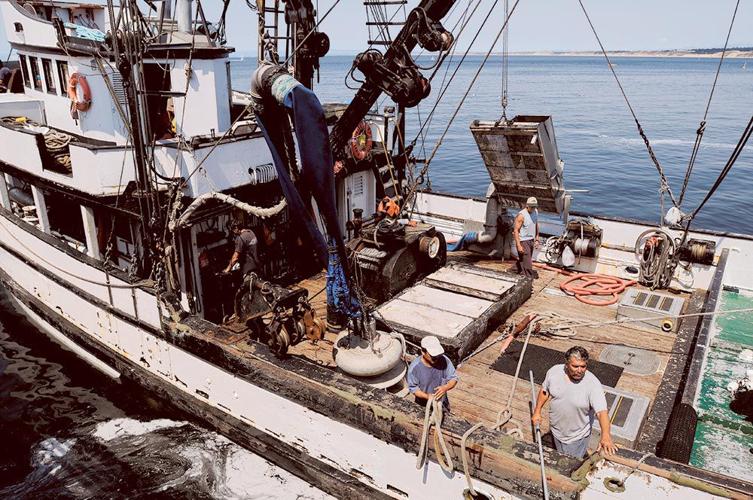

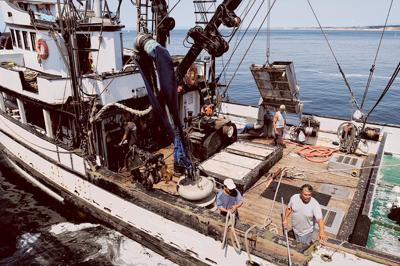
Nearly 30,000 watts of stadium lights hang from the rigging of a light boat off the Channel Islands in Southern California. Once flipped on, the lights slowly increase their illumination. After five minutes, the 2am darkness on deck has transformed into a gleam resembling a San Francisco Giants night game at AT&T Park.
Squid fishing in California is done at night with one boat equipped with lights to attract and hold the squid in one spot, partnered with another larger boat with a seine – a 1,000-plus-foot-long fishing net – to bring in the catch.
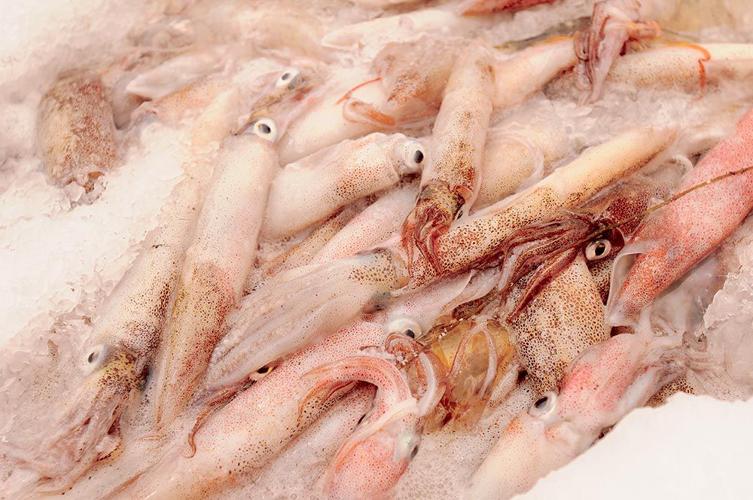
I peer into the calm ocean and see a milky mass rise to the surface, as hundreds of thousands of squid emerge from the depths – translucent, with large eyes reflecting light like a cat’s would.
It’s a beautiful sight, but the beauty is not what consumes my mind. It’s the thousand dollars I hope to earn that night.
Fishing’s good for a few days and I’m excited about the money I expect to receive, even though I’m only a greenhorn.
When we arrive to Ventura Harbor and I’m about to be set free from my duties for the evening, my captain tells me that if I tell anyone how much squid we saw or where we saw them, he would fire me.
A few weeks later, I’m fired for refusing to dump waste oil overboard, and the skipper then stiffs me on the few grand he owes me.
Never trust a fisherman, they say.
Having logged more than 800 days at sea the past seven years in a dozen fisheries from Southern California to Alaska, that saying comes with both a knowing grimace and loving admiration.
The stereotype that “fish stories” blend fact and fiction is not without reason: Fishermen typically speak with great understatement or complete hyperbole – rarely in the middle.
The phenomenon is nothing new. Writer Mark Kurlansky speculated in his 1997 best-selling book, COD: A Biography of the Fish that Changed the World, that Basque fishermen discovered the Americas a century before Columbus.
Yet they told no one about the bountiful fisheries so there would be no competition for their lucrative catch.
Over years of writing about and working in the fishing industry, I have often found it difficult to substantiate many things told to me – often as gospel – on fishing boats and in salty bars.
Many of those stories aren’t of much consequence – that most fishermen found dead in the water have their fly unzipped, or that whistling in the wheelhouse will blow up a storm. But another story represented enough potential injustice that I had to learn more.
A year ago, while working as a fisherman and freelance journalist in Alaska, I heard California seafood companies that buy and sell product were buying up squid permits – permanent fishing rights, limited in number, bought and sold on a market – from independent fishermen. The implication: They were trying to corner the market, creating squid cartels where they could control prices paid to fishermen, causing ripples down the supply chain to the consumer. (More on the system of fishing rights later.)
I filed a California Public Records Act request with the state Department of Fish and Wildlife to obtain the names of the businesses and individuals who owned the 68 transferable commercial squid permits in California. I also requested details of every permit that transferred in ownership over the past five years.
That information is public in Alaska, Oregon and Washington. But in California, under Fish and Game code section 8022, “Receipts, reports or other records… shall not be public records.”
Basically, the names of those who own the right to fish in state-managed fisheries are not public information.
“While it’s good for people like me who sold out, others are going to end up being sharecroppers.”
~ ~ ~
Commercial fishing permits are worth more than $100 million in California, and fishermen buy and sell them like real estate, stocks or bonds. What makes California an outlier on the West Coast and among federally managed fisheries is that the names of the people and companies who own rights to harvest the public resource – and speculate in a market largely unknown to those outside commercial fishing – are not publicly available. This all stems from an anachronistic bill authored by a lawmaker named William B. Hornblower in 1933.
Large seafood processing companies are taking advantage, buying out independent fishermen to secure their supply over competing buyers, reducing competition – as well as money potentially earned by fishermen and fishing families.
The secrecy can be as scary as working on a slippery deck in a storm after 24 hours on your feet. But the danger with this secrecy is that independent fishermen are becoming sharecroppers – essentially tenant farmers of the sea, indebted to processing companies – and there’s almost no way to prove it.
For decades, Dave Beaudin, a Washington-based captain, has fished up and down the Pacific Coast from California to Alaska, but he now sees a troubling shift in California that’s different than most other states.
“I don’t think there are many independent fishermen left in squid,” says Beaudin, who sold his squid permit in 2014 for seven figures – 13.33 times what he paid for it in 2007. By selling, he traded an annual six-figure revenue stream for a one-time payment.
“While it’s good for people like me who sold out, others are going to end up being sharecroppers,” he says. “When a company owns boats, captains make less and the crew makes much less. Plus, once you’re tied to a company, you can’t complain.”
What makes the story so fishy is that it’s quite easy to determine who owns what on land. The names of people and corporations that own businesses, real estate, mining and drilling rights are all public information in California.
This is surprising as it comes from the same state that has often set the benchmark for open government, with the Brown Act of 1953 and the California Public Records Act of 1968.
The search to get to the bottom of a story that I first heard at a rough-and-tumble fishermen’s bar, Kito’s Kave in Petersburg, Alaska, brought me to the docks of Monterey, then to the state Capitol in Sacramento, and finally, a phone call to Mexico.

~ ~ ~
The effects of confidentiality in commercial fishing go beyond the curiosity of a journalist. Influential industry players have been frustrated by not having the information they need to make informed decisions.
Diane Pleschner-Steele, executive director of the California Wetfish Producers Association, which promotes the interests of harvesters and processors of squid, anchovies, sardines and mackerel, among other species, has also requested the names of permit owners. Her request was also denied.
In 2005, 75 boats with at least a 20-year catch history were issued permits by the Department of Wildlife. That gave fishermen private ownership of fishing rights in perpetuity. As an advocate of the industry, Pleschner-Steele wanted to know who those permits went to. She was surprised to find it confidential.
“We’ve asked the Department of Fish and Wildlife and they won’t even change [the law],” she says.
Until the 1990s, all one needed to get into squid fishing was a boat, gear, a market to sell the catch to and a rubber stamp from Fish and Wildlife. This was neither ecologically sustainable for squid, nor was it economically sustainable for fishermen with too many boats going after a scarce resource. So the government limited the number of those who can fish by closing the fishery to new boats in 1998 with a moratorium, and then issued 75 transferable permits in 2005.
Squid permits are tied to a vessel’s carrying capacity. Fishermen with boats that had a 100-ton squid capacity in 2005 were issued a 100-ton permit; those with a boat that could hold 40 tons were issued a 40-ton permit.
A fisherman who was issued a 100-ton permit for free in 2005 can now sell it to a seafood processing company or another fisherman for more than $2 million.
The lack of transparency can also dissuade others from investing in California. Fishermen often consider themselves as much businesspeople who navigate complex and policies that differ from jurisdiction to jurisdiction, all of which have high costs of entry. To buy into commercial fishing, fishermen typically have to come up with more than a million dollars.
Justin Peeler, an Alaskan fisherman who has worked as both a deckhand and a skipper for squid in California for nearly two decades, says California’s law makes it difficult to do business in the state.
“I made the same [Public Records Act] request a few years ago,” says Peeler, who sold his California squid permit for seven figures in 2014, but declined to give an exact number. “It makes it more difficult to do business down there, when records are open, everything is more up front. It’s hard for you to track down who you’re in business with in California.”
A fisherman who was issued a 100-ton permit for free in 2005 can now sell it to a seafood processing company or another fisherman for more than $2 million today.
~ ~ ~
The year 1933 must have been a good year for the Republican Assemblymember William B. Hornblower from San Francisco. He was known as “a vigorous and occasionally emotional anti-prohibitionist,” according to one obituary, and that year was the first he could have a drink without fear of getting popped by the feds.
He also championed gambling in the state of California, and it was also 1933 when he successfully carried a bill through the Legislature that legalized thoroughbred horse racing in the state.
If advocating for the right to drink and gamble didn’t make him enough of a friend to fishermen, Hornblower also introduced a bill that same year to take “receipts, reports and other records” for commercial fishing out of public view. Those are the same words that today block the public from knowing who owns what in California’s waters.
A few decades after Hornblower’s law, secrecy was again upheld in regard to the fishing industry. In 1957, AB 616 established Fish and Game code section 8022. The bill completely overhauled the Fish and Game code, covering everything from dams and mines to regulations on frog-jumping contests and the prohibition of trapping wild boars in Monterey County.
Since 1957, Fish and Game code section 8022 has been amended six times – twice in the past 16 years, once in 2000 and another time in 2007.
In 2000, AB 2941 added 8022(b) to allow the Department of Fish and Wildlife to share confidential information on commercial fishing records with the federal government – but not the public.
In 2007, a lengthy bill, AB 1729, was introduced at the request of the Department of Fish and Wildlife to update its code. Instead of updating for transparency, buried in the bill was a provision, 8022(c), that made even more records confidential: It expanded the law to make electronic records exempt from disclosure.
Tracking down an explanation for why there is still confidentiality in commercial fishing has been difficult, even with dozens of calls to politicians, bureaucrats, fisheries managers and commercial fishermen.
John Laird, currently the Secretary of the California Natural Resources Agency, represented the Monterey Bay area in the State Assembly from 2002-08 and voted in favor of AB 1729. He was responsive to inquiries, until asked whether he knew why the 2007 bill kept the names of those who owned fishing rights in California confidential. He then stopped returning emails.
State Sen. Bill Monning, D-Carmel, and Assemblyman Mark Stone, D-Scotts Valley, were both unaware the provision existed. Their aides said the state Senate’s Natural Resource Committee and the Assembly’s Water, Parks and Wildlife Committee might have the desired information.
I then called Bill Craven, the chief consultant for the Natural Resources Committee, and asked him why the names are confidential.
“Ever since this popped up, I’ve been asking myself the same question,” Craven says. “It’s been on the books for a long time.”
When I asked how it “popped up,” Craven said it was probably me calling around Sacramento asking questions no one had the answer to.
It’s still unknown if the continued confidentiality in commercial fishing is the result of some powers-at-be pressing for continued secrecy, or if one paragraph in tens of thousands of pages in of California policy has just been overlooked and forgotten.
But when Hornblower introduced his bill 83 years ago, long before fishing rights were privatized, it was likely to protect what fishermen considered their intellectual property.

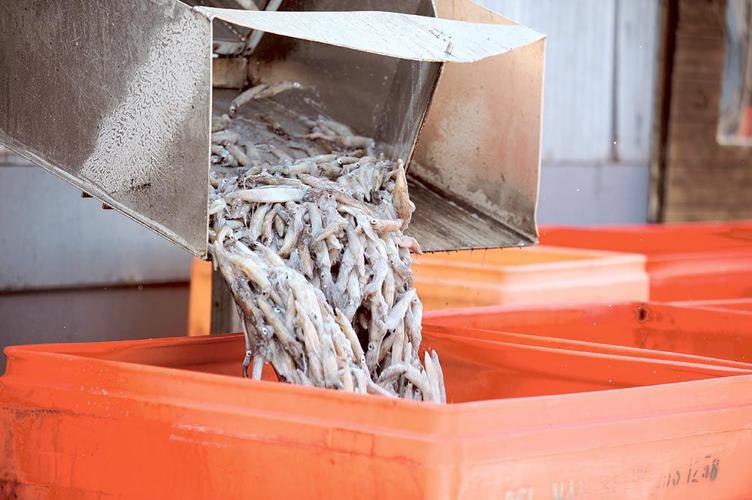
Squid is pumped from a boat’s fish hold into totes where it is then iced and shipped to processing facilities.
~ ~ ~
We come back to port after a one of my biggest days fishing ever and we’re dangerously overloaded with salmon. The deck is awash and the stern precariously low in the sea – a sizable wave could sink the boat. But the waters, protected by barrier islands in southeast Alaska, are calm, and the giddiness of having made five grand before lunch makes the safety hazards seem negligible. Catches like that aren’t a regular occurrence.
We wait an hour idling in the harbor before we can offload our catch as another overloaded boat is already at the dock in Craig, Alaska. Once we’re tied to the pilings, it’s my job to keep track of the offloaded weight; seafood buyers are known to try to lowball the total tonnage.
To help my cause, I go to ask the dock boss how much the previous boat caught and where they caught it.
I see a fish ticket – the receipt that relays that information – on a makeshift desk of plywood and barrels. With no one around, I walk over to fulfill my curiosity.
The moment I see the information I want, the captain of the previous boat snatches up the ticket and says, “Mind your own fucking business.”
In Alaska, reports of who caught what where are confidential, and for good reason. It’s important for fishery managers to know what areas fish are being harvested from, but the local knowledge and intuition can be considered a trade secret.
This is likely the original intent of Hornblower’s bill in 1933 – to legally protect the trade secrets of an inherently secretive bunch of fishermen. In that time, no one owned fishing rights. There were no names of permit and quota owners to be kept confidential.
“When seafood buyers have too much control, fishermen lose bargaining power.”
~ ~ ~
Fresh off the links in Cabo San Lucas, Mexico, Joe Cappuccio, president and CEO of Del Mar Seafoods gives a friendly greeting by phone. He’s taken some time off from running one of the largest seafood companies in California, located in Watsonville, to enjoy the Baja sun and work on his golf swing.
Cappuccio is known as one of the most powerful players in the California squid business. While some fishermen might begrudge his market dominance, most say he’s affable, honest and fair. There’s another trait mentioned when Cappuccio’s name is brought up: his shrewd business acumen. He inherited a multi-million dollar seafood company from his father, and under his watch the company has grown by expanding both processing capacity and market share.
We talk shop for a few minutes, swapping sea stories and name-dropping mutual acquaintances before I get to the point of my call. I’m following up on a rumor I heard that Del Mar, along with other seafood processors, are buying permits to take control of the market. While these rumors abound I can’t prove anything because the names of permit holders are confidential in California.
“There’s a reason why we started buying boats and permits: We got as low as three Monterey Bay-based boats fishing,” Cappuccio says. “When I was a kid there used to be 50 boats fishing in Monterey, but then we had an industry flight. There were no young people making the investment so we had to to secure our supply.”
Fishermen in California, as is true throughout the Pacific Northwest, often get into the trade because of their families, Cappuccio adds, and recent generations of fishing families have left for other industries.
In 2005, Del Mar’s two boats, the Ocean Angel I and III, were issued permits, he says, but over the next decade they purchased another seven, to reach their present total of nine. That brings the company’s share of s permits to just under 14 percent of the total California market. In federally managed halibut and black cod fisheries in Alaska, for a point of comparison, no person or company can own more than 2 percent.
“The fleet is not that big. If boats decide not to fish, we go broke,” Cappuccio says. “We weren’t gobbling up permits to control the market, it was more to make an investment. I’d rather not be in the business of owning boats.”
Other companies have followed suit, he says: Seafood processors in a competitive market have bought boats and permits to secure their supply against others. He also says he’s unaware that the shift in the squid market from independent fishermen to corporate dominance is confidential, exempt from public oversight.
While seafood companies now have a de facto cartel in the squid market, Cappuccio says it’s been motivated by necessity, that he had no choice.
Dave Beaudin, the former squid fisherman who sold out a few years back for big bucks, speaks well of Cappuccio and considers him a friend. “He is a very savvy businessman and is no dumbshit,” Beaudin says. “He’s also not looking to rip anyone off.”
But Beaudin has a different take on the changes in the squid business.
“It’s a grab for the resource,” he says. “When seafood buyers have too much control, fishermen lose bargaining power.”

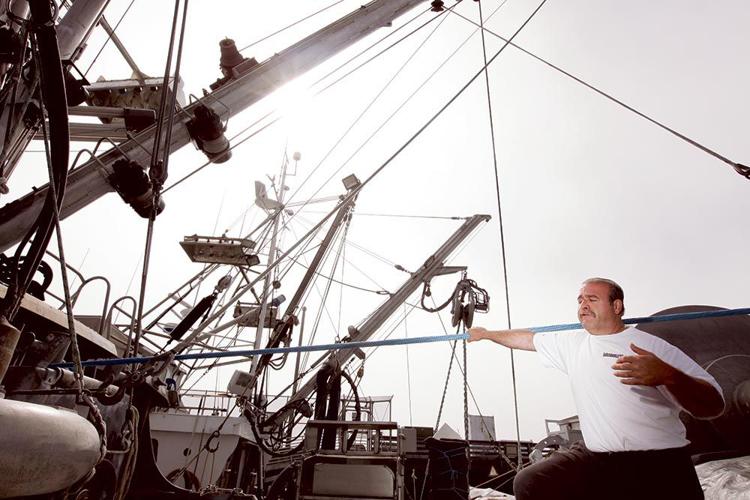
Third-generation Monterey fisherman Sal Mineo talks about the fishing industry on his boat the Mineo Bros – one of just three independent squid boats remaining in the Monterey Bay.
~ ~ ~
While transparency alone won’t reverse the trend of consolidation in squid, as well as other state-managed fisheries, it will allow the public to fully assess the state of local fishing economies. Understanding who owns what would be the first step to supporting independent fishermen in California’s working waterfronts.
The current move to create community-supported fisheries – where consumers buy locally harvested seafood directly from fishermen – won’t get very far if there aren’t any independent fishermen left.
In 2015, Governor Jerry Brown signed 807 bills into law. Most of those laws are passed with little fanfare and attention, as they update code and weed out parts that haven’t kept up with the times. That’s the case with the 2007 amendment to the Fish and Game code first authored by Hornblower back in 1933.
The 1933 bill was just one page long. It would only take a similar one-page bill or amendment to bring more transparency to Californian ports and waters.
(0) comments
Welcome to the discussion.
Log In
Keep it Clean. Please avoid obscene, vulgar, lewd, racist or sexually-oriented language.
PLEASE TURN OFF YOUR CAPS LOCK.
Don't Threaten. Threats of harming another person will not be tolerated.
Be Truthful. Don't knowingly lie about anyone or anything.
Be Nice. No racism, sexism or any sort of -ism that is degrading to another person.
Be Proactive. Use the 'Report' link on each comment to let us know of abusive posts.
Share with Us. We'd love to hear eyewitness accounts, the history behind an article.