

Sheltering in Place
Rancho Cielo residents | Sheltering in place in Salinas
Under normal circumstances, the young adults living on the 100 acres that make up Rancho Cielo in North Salinas already feel somewhat isolated. Now, the usually bustling campus is empty, and only eight students and one resident staff member remain. Students are only allowed to leave campus for work and to go grocery shopping as a group once a week because of Covid-19, leaving some of them feeling disconnected from friends and family in the outside world.

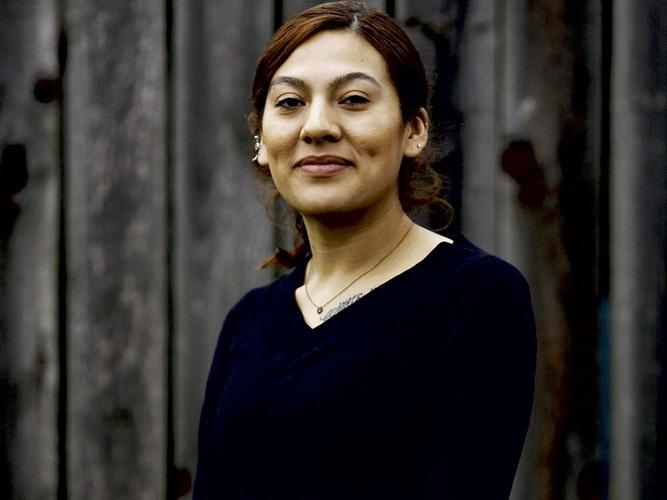
Brenda Narvaez (above right), 19, has lived at Rancho Cielo for almost a year. Throughout the shelter-in-place order she has continued her job as a cashier at Walmart (currently, students can only leave the property for work). Having a job and living with roommates has helped keep her distracted over the past two months: “It’s been different in the way we are distanced from loved ones. It kind of gets depressing, but with roommates it makes it a little easier.”
“They all feel like we’ve grounded them,” says Stacie Simmons, the transitional housing supervising case manager. “They already feel isolated and separated from the rest of the world living out here, and now all the programs on campus are canceled or online, campus is empty. It’s eerie. We are usually always busy.”
Rancho Cielo is a nonprofit that offers alternative paths to completing a high school diploma or certification program for young adults who weren’t succeeding in the traditional high school system. There is housing on-site for up to 16 students from the ages of 18-24. Currently, the eight residential students are taking online classes as they shelter in place on campus.
Simmons and the rest of the staff are trying to make sure students stay busy and provide opportunities that create a sense of community while meeting standards for social distancing.

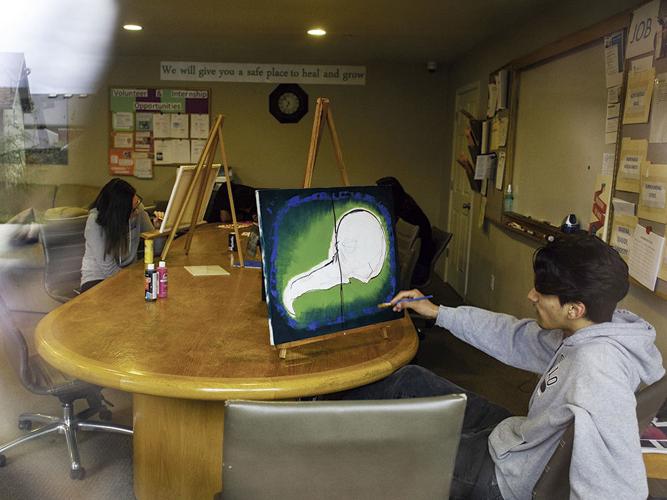
Since the start of the shelter-in-place order, Stacie Simmons has been trying to keep Rancho Cielo residents occupied. If they find a craft they want to do she will make sure they have the supplies. “We’ve been doing a lot of painting, but now with everyone crafting, canvases are on back order at a lot of places,” she says.
“We have to be more intentional about community stuff, what we are doing and how we are doing it,” Simmons says. “For Easter, since they weren’t able to be with their families we did a barbecue in our big barbecue pit. We typically do a community meeting on Tuesdays, but they can’t do that anymore. So we’ve been doing a lot more outside stuff. We spend time walking the campus, or they’ll run to the end of the gate and run back. We just try to do it in smaller groups.”
Ariella Simke | Sheltering-in-place and working from home in Marina
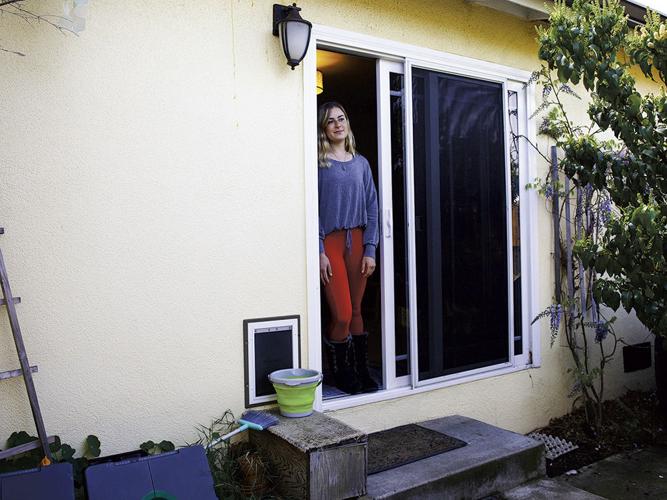
Ariella Simke prefers to take her daily walk to the beach before the sun rises and she has to worry about social distancing when the rest of the world is awake and beaches might get more crowded. Besides, Simke has always been an active person and the early start gives her more time to do the things she loves. Before the pandemic deemed two of her three jobs inessential, she spent her days balancing work as a freelance science writer for Forbes, a cocktail server at Stillwater Bar & Grill in Pebble Beach and a scuba diving guide at Bamboo Reef.

Ariella Simke is the opposite of a homebody. Multiple jobs and her love of the outdoors usually keep her from spending much time at home. Since the quarantine she and her two roommates have each made their claim to different parts of the home; for her that includes a desk in the living room where she spends her mornings writing.
Now she is just working as a freelance writer from home – a big contrast to her normally very active life. “I don’t spend time at home, like never. I think I’m home maybe eight hours a day, when I’m sleeping,” she says.
“When I’m working freelance, I’ll typically bike into town, sit at a coffee shop and write. If I’m diving, I’m in the water, and if I’m working at Pebble, I’m at Pebble. In my free time, I’m outside because I don’t watch TV or anything. It’s been an adjustment. Working from home is so challenging for me because there are constant distractions. I’m kind of going crazy, but I’m walking a lot.”
Simke’s biggest challenge isn’t the lack of work, it’s the lack of outdoor activities. Her draw to move to Monterey Bay in the first place was outdoor recreation. “It’s everything from physical and emotional well-being to all my friends, that’s what we do. I’m not a big talk-on-the-phone person, I’m more, ‘let’s go do the activities,’” she says. Simke describes her friends as an “outdoorsy group of people,” regularly mountain biking, hiking, backpacking or scuba diving together. Her daily walks and occasional scuba dives have helped, but she misses backpacking and camping in a group.
Despite the frustration, she’s using this time to rest and also to heal physically. “Since January, I’ve been in the mode of go, go, go and beating my body down,” she says, pointing out an injury from a bike accident, a cut on her toe from diving and other minor injuries that haven’t had a chance to heal. “I have been ignoring all of these, and now I’m watching myself physically being forced to heal. It’s kind of a nice little metaphor, I guess: There’s some good.”
Essential Workers
Mike Perry | Working at Chevron in Seaside
It’s the day after a new order requiring Monterey County residents to wear masks in public went into effect, and almost all of the customers walking into the gas station are abiding by the rules. Except one. When he is told he can’t come in without a mask, he pulls his shirt up over his face.

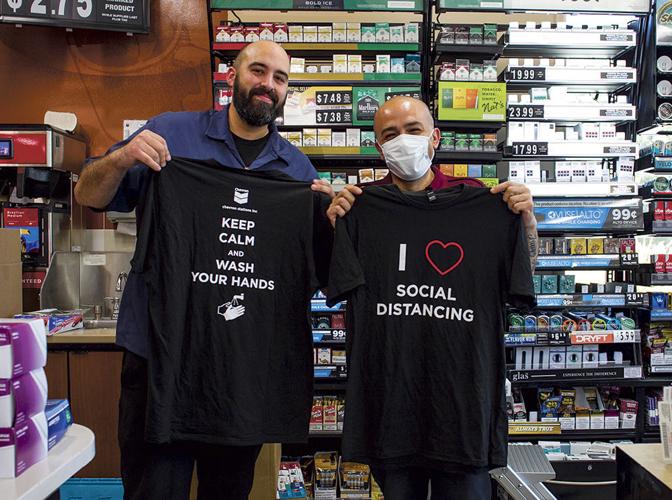
Chevron Manager Nick Howder, far left, and Mike Perry hold up T-shirts that they recently received to wear at the store.
“Nah man, it’s gotta be an actual mask,” Mike Perry says from behind the counter. “People are pretty much complying with it, some people are like, ‘Well, where am I supposed to get one?’ I say they should check Walgreens or Safeway, but that’s the best I can tell you,” he says. Then, he adds: “Corporate wasn’t requiring it, until the order at midnight last night.”
Perry understands the need for masks, the plexiglass barrier put up between him and customers, and amped-up cleaning measures such as wiping down gas pumps every 30 minutes, plus sanitizing counters and cleaning the floors more frequently. That’s why even though he finds wearing a mask uncomfortable, he does so anyway. “I’m not a fan of the mask, but I want everyone to see me doing it so they can catch on, because I don’t want to have to write notes all over the door telling people what to do,” he says.
The extra cleaning measures and working with other employees he trusts to follow the rules has helped make Perry feel safe going to work and coming home to a house he lives in with his 82-year-old father. “I don’t have underlying conditions so I’ve been OK, I’m not really worried. But I literally go from work to home and back and nowhere else, unless we need to go grocery shopping. My dad is 82, so I don’t need to take that risk. Plus, when I get home I sanitize my whole self.”

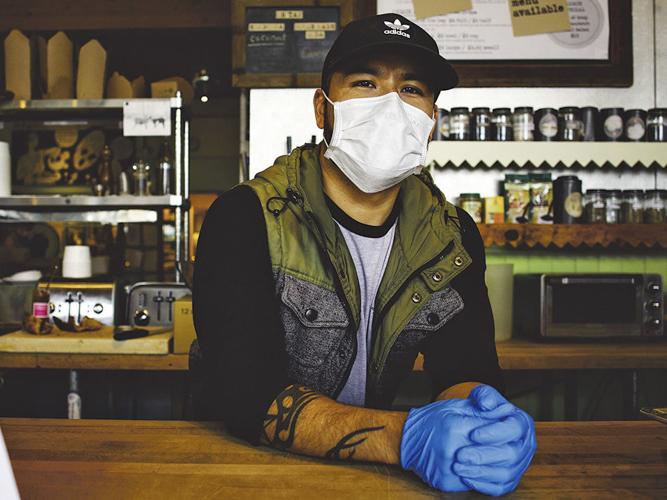
Luis Nunez, an employee at Happy Girl Kitchen, says the pandemic has reminded him how quickly life can change, and not to take things for granted. “I’m just trying to be positive. I feel so grateful to have this job and I’m grateful for these folks I work with. Lots of people don’t have a job or savings,” he says.
Luis Nunez | Working at Happy Girl Kitchen in Pacific Grove
Luis Nunez has known his bosses for nearly 12 years. Even though they are his employers, they feel more like family, something Nunez says makes a difference when you’re working closely together during a pandemic. “It doesn’t feel like a job,” he says. “It feels like home.
“The people that work here are so nice and kind and we always try to support each other. We are always asking how we can help each other. The people here care about other people here and it feels like it’s not even work.”
For about eight years, Nunez worked as the kitchen manager at Happy Girl Kitchen. Now, he works wherever he is needed. One recent morning, he was helping prepare pasta and destemming strawberries for HGK’s to-go grocery boxes – their offering during the pandemic and a way to stay open.
“There are way less customers,” Nunez says. “It gives you an idea how quickly life can change. For me, it felt crazy at first and now it feels a bit more normal. Everything changed; now we wear a mask and gloves all the time.
“The work is going great. I think the boxes are helping people. We are supporting people and people are supporting us too. I think everybody needs to be a bit more positive. Sometimes we complain about little things and now we see what is important in life: health.”
(0) comments
Welcome to the discussion.
Log In
Keep it Clean. Please avoid obscene, vulgar, lewd, racist or sexually-oriented language.
PLEASE TURN OFF YOUR CAPS LOCK.
Don't Threaten. Threats of harming another person will not be tolerated.
Be Truthful. Don't knowingly lie about anyone or anything.
Be Nice. No racism, sexism or any sort of -ism that is degrading to another person.
Be Proactive. Use the 'Report' link on each comment to let us know of abusive posts.
Share with Us. We'd love to hear eyewitness accounts, the history behind an article.