

A Saturday around noon in early May, and the woman cleaning the windows on the inside of Villa Azteca offers a half-smile and a nod to the pair of masked passersby walking south on Main Street through Oldtown Salinas.
In the before time – that is, before the pandemic shuttered restaurants for in-house dining – on any Saturday at this time of day, the line for a table would be out the door as customers waited to eat some of the most innovative Mexican food in Monterey County. Think squash blossom quesadilla, mango aguachile and chilaquiles verdes, and tortillas and beans prepared from generations-old recipes.
And think of a chef-owner – Susana Alvarez – who is so exacting about what she serves customers that she once told her daughter, Adilenny “Adi” Alvarez, to “start over” when she was found chopping the wrong type of onion for a batch of salsa.
When restaurants were ordered to close for in-person dining, Villa Azteca opened for takeout only. Salmon tacos and rib-eye tacos were still on offer, along with vegetarian huarache huitlacoche (corn smut served with pureed black beans, poblano peppers and crisp red onions on a thick corn tortilla), cauliflower tacos and egg-topped avocado toast with roasted tomato and tomatillo salsas on the side. The takeout business was initially pretty good, says Adi Alvarez, but has slowed a bit because the city’s Main Street redevelopment project has the streets torn up.
But as the reopening of Monterey County restaurants for customers to sit at tables, order from a server and eat on premises has arrived, Villa Azteca plans to remain takeout-only, at least for a time.
“We’re not going to open right away for the public. We’re going to continue doing takeout for three weeks or a month and make sure we have everything ready,” Adi Alvarez says. “As a family, we decided to see how other places are responding. We want to see how others are doing it.”
Doing it looks like this: Fewer tables and fewer seats available in the dining room, to allow for social distancing. Tables outside – and for many restaurants, that’s something they’ve never done before – to allow for better air circulation. Orders taken and food and drinks delivered by servers wearing masks. Amped-up sanitation procedures, and those procedures laid out, in big type, posted around the dining area for guests to see.
On May 27, Monterey County Health Officer Edward Moreno presented what’s called a “variance attestation” to the Board of Supervisors, outlining the county’s plan for a phased reopening of a variety of services and businesses The supervisors unanimously approved it, and it was forwarded to Sacramento for the California Department of Public Health’s approval.
And as of Saturday, May 30, when state officials gave that variance attestation a stamp of approval, dine-in restaurants – with very specific protocols in place – are once again allowed to welcome guests in Monterey County.
In an industry where the margins are already razor thin, and where the pre-pandemic failure rate was 60 percent in the first year of business, the stakes have never been higher for restaurants.
The question is, now that they’re allowed to reopen their dining rooms, is anyone showing up?

Chris Shake, a co-owner of Old Fisherman’s Grotto and other Monterey restaurants, including The Fish Hopper, brought in a consultant to train all 300 of his restaurant group’s staff members, in English and Spanish, on how to operate safely with social distancing protocols in place.
BASED ON WHAT HAPPENED AT THE TUCK BOX, a Carmel restaurant that opened in defiance of Gov. Gavin Newsom’s stay-home order and the county’s shelter-in-place order, you’d think that would be an easy question to answer.
When manager Jeffrey LeTowt, whose father owns The Tuck Box building and whose name is on the liquor license, decided to open the dining room and patio for table service, people flocked to it – social distancing, wearing masks and warnings from the Carmel Police, the District Attorney’s Office and the California Department of Alcoholic Beverage Control be damned.
Misdemeanor citations followed, and LeTowt remained open. A GoFundMe campaign was launched to pay for his defense, and he remained open. Then the DA filed for a restraining order that would force LeTowt to close the dining areas (takeout service would still be allowed) and the law firm headed by the former vice-chair of the California Republican Party signed on to represent him. Superior Court Judge Lydia Villarreal granted the restraining order. Hours after the court hearing, defiant customers filled the patio anyway, fully aware the District Attorney might show up and ask them to leave at any moment.
If the The Tuck Box is an outlier among Monterey County restaurants, then Carmel is an outlier in Monterey County. While discussions were ongoing about allowing restaurants to open outdoor seating for customers, Carmel just went ahead and did it over Memorial Day weekend. Pictures from around town show crowded seating areas, no semblance of distancing and few people wearing masks while waiting for tables. Some restaurants allowed alcohol at tables (not allowed by the city).
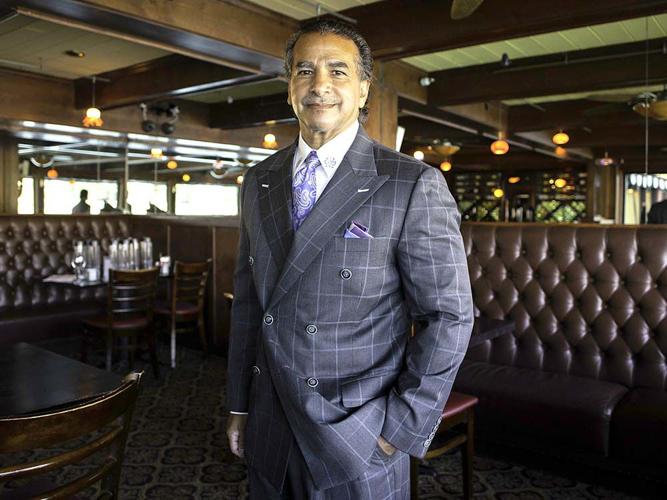
It’s safe to say that Cannery Row Co. Chairman and CEO Ted Balestreri, a 40-year board member of the National Restaurant Association and co-owner of The Sardine Factory, is the county’s biggest hospitality booster. Cannery Row tenants account for 25 restaurants, including swank hotel establishments like The C Bar at Hotel Intercontinental The Clement.
Balestreri’s mantra for diners at The Sardine Factory long has been, If we made you feel at home, then we failed, because we want you to feel better than at home.
Asked about reopening the county’s restaurants, and the normally optimistic entrepreneur is circumspect about what the future holds. He runs through some numbers: One in 10 Americans works in the restaurant business; the restaurant industry is the largest employer of women and minorities; and Covid-19 has resulted in nearly 5 million of those workers being unemployed.
When restaurants reopen, he asks – not rhetorically – will customers come out?
“A lot of those people aren’t coming back and you’re going to see a lot of restaurants closing,” Balestreri says. The California Restaurant Association estimates 30 percent of restaurants won’t make it.
“How do we open and be safe and friendly and survive if we can only have 25 percent of normal seating? If you can have 50-percent seating, some will be able to survive for awhile, and maybe until we can get back to normal.
“How are you going to take 75 tables out of some of these places and do it? It’s not going to happen,” Balestreri says, “but we have to try it soon.”
At Sardine Factory, they’ve cut the number of tables in half to allow for distancing in keeping with state guidelines.
“The number-one priority is keeping employees safe and customers safe. If we have to wear masks, we’ll do it. If we have to wear gloves, we’ll do it,” he says. “There will be an enormous amount of cleaning and sanitation going on with reopening. All of this is going to be OK for the ones that survive.
“But you have to remember,” he adds, “not all will survive.”
The Sardine Factory re-opened on Saturday, May 30. Balestreri says they were busy the first night, quiet the second night. And he noticed a trend with who’s coming in.
“It was a lot of people from Fresno and the Central Valley just getting away and driving to us from a few hours away,” he says. “There was nobody from out of state and no international travelers. We’re seeing Californians.”
Customers are “95-percent cooperative” with the county requirement that they wear masks when coming in. A few resent it, Balestreri says, and walk away, but those seem to be the exception.
He says Monterey Peninsula restaurants need the hotels to open (and Cannery Row’s hotels are doing that, starting this Friday; on Sunday, June 7, county health officials cleared hotels to begin reopening as early as June 12).
“Business is mixed right now and it’s hard to schedule,” Balestreri says. “One day the weather is good and it’s busy here, the next day, it’s quiet.”

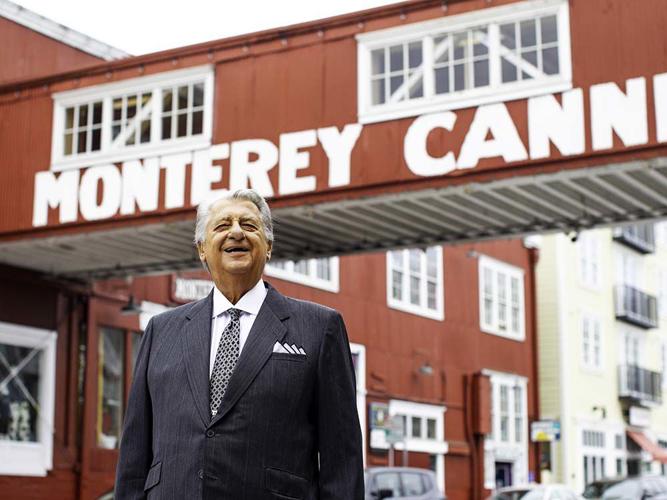
Ted Balestreri, co-founder and CEO of The Cannery Row Co., re-opened the famed Sardine Factory restaurant on May 30. Business has been mixed, he says, with people driving in from other parts of California just to get away for a day.
AT THE WILDLY POPULAR HULA’S ISLAND GRILL IN NEW MONTEREY, THE TAKEOUT MENU IS LOADED WITH FAN FAVORITES, like the crispy coconut shrimp rolls, the Hilo sliders, a slew of burgers and sandwiches, and the epic rib plates. On March 17, Hula’s furloughed its entire staff, sending 45 people home.
Many of them, says co-owner Craig Delaney, were anxious to get back to work, and Hula’s opened for takeout on May 1. Delaney says he had been gearing up “for a huge summer,” based in part on the fact that Trip Advisor, in February, had named Hula’s one of the top 20 restaurants in the country.
“We were staffing up and training people and building up and thinking, ‘OK, this is going to be gigantic,’ and then all of a sudden… ” Delaney says, his voice trailing off. All of a sudden meant closure.
Like Balestreri, Delaney is an optimist, and even calls himself one. He said he hopes “people come out in droves,” even as he imagines the dining room will be less full due to the need to space out tables and diners.
But it’s not going to be like it was before, and it won’t be, for a long while.
“I think it will be a year or two before people start being comfortable, or until there’s a vaccine,” he says. “Entrepreneurship will carry us through and we will do whatever it takes to keep the business alive. We are 80-percent local trade and I don’t know how many people will be coming here. But I’m glad we opened for takeout. It’s doing well and giving income to the staff.”
DURING THE SHUTDOWN, MONTEREY COUNTY’S HEALTH DEPARTMENT HAD A BAND OF INSPECTORS WORKING WITH RESTAURANTS, making sure those who stayed open during shelter-in-place for takeout were abiding by the rules of social distancing, mask wearing and frequent sanitization of surfaces, prep spaces and hands.
And they were helping restaurants prepare for full reopening. Ric Encarnacion, the county’s assistant director of Environmental Health, says that effort included a lot of education, in English and Spanish, and coordinating with various groups, including Salinas’ newly formed Small Business and Economic Recovery Task Force, and the Monterey County Business Council. One recent webinar had more than 40 attendees, all wanting to know what safe service looks like.
With the task force, the Health Department is looking to develop a series of videos to help push out information.
“It hasn’t just been restaurant owners, but also regulators and service businesses that service restaurants,” Encarnacion says. “We’re looking at a number of ways, whether it’s out in the field, online, one-on-one with operators or partnering with key stakeholders, to get information out.”
He sounds wistful for a minute, remembering the time when you could go into a restaurant and wait shoulder to shoulder with other patrons for a table or attention at the bar.
“There’s no longer a time when you can have people shoulder to shoulder,” he says. “That’s been a common question – how many people can you have at a table?”
The other oft-heard question is about how to implement an actual plan, considering the state has released broad guidelines. Each plan should contain four key elements: distancing, face masks, frequent hand washing and employee training. The plan should also be in writing.
“Businesses were planning ahead,” Encarnacion says. “They want to show customers, ‘We’re concerned about you, we want you back and we’re being responsible.’”
The state guidelines call for employees to wear face coverings, and for customers to wear face coverings while waiting for a table or picking up takeout orders.
For Maurizio Cutrignelli of Osteria Al Mare in Monterey, the social distancing and sanitizing practices are workable. It’s the masks and loss of facial expressions, given the culture of hospitality, that he has the hardest time imagining. “It’s just really awkward to visualize,” he says.

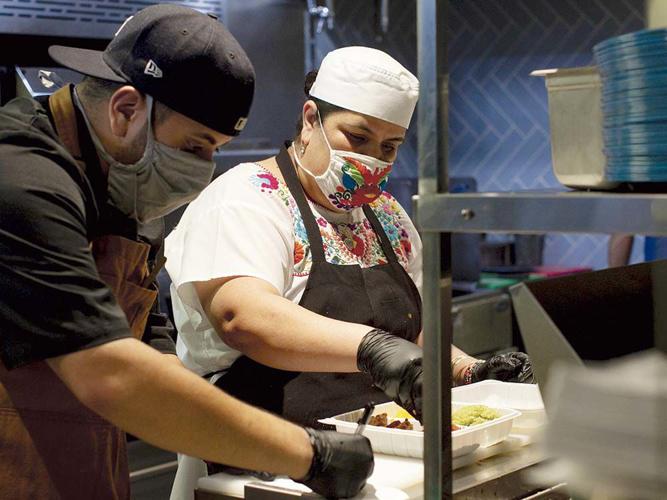
Villa Azteca Owner and Chef Susana Alvarez (right) and her son, Andres (left), put together a to-go order during shelter-in-place, before restaurants were allowed to reopen. Villa Azteca won’t reopen for table service for a few more weeks, as Alvarez wants to see how other businesses fare before they take that leap.
WHEN COUNTY HEALTH OFFICER MORENO PRESENTED THE ATTESTATION VARIANCE TO THE BOARD OF SUPERVISORS ON MAY 26, a few restaurant owners took it to mean that they were allowed to reopen their dining rooms immediately, not realizing it had to first be approved at the state level. Fisherman’s Wharf mainstay Old Fisherman’s Grotto, owned by brothers Chris and Sabu Shake, was among them, launching a Facebook campaign that announced they would reopen right away.
While they walked that back, they were only off by a few days – and preparations were already in the works for reopening to happen. The Shakes worked with Pacific Grove-based consultant Abraham Wilson (whose business is called Mr. Food Safety) to devise training and protocols, in English and in Spanish, for the staff. All 300 employees of the Shake’s businesses, which include The Fish Hopper and Austino’s Patisserie on Cannery Row, have been trained.
The restaurants implemented social distancing in the dining rooms, spread tables apart, placed hand sanitizer and wipes for customers, and removed shared items normally found on tables – ketchup bottles and salt and pepper shakers, for example – with single-use items.
The Grotto has remained open for takeout the entire time since the shutdown, and the Shakes remained busy, making upward of 400 hot meals a day to give to their out-of-work employees. In all, the brothers and their Pacific Restaurant Group own three restaurants on the Peninsula and one in Hawaii – it’s a lot of mouths to feed, with almost no income to spend on feeding them.
“Social distancing is going to be the driver for all restaurants in Monterey County. If everyone follows the plan and customers, when they do come in, have a sense of comfort and safety knowing we’re following all the protocols, that is going to be the test,” Chris Shake says.
They re-opened to good results, with long waits for tables, especially at the Grotto. But until tourism comes back, he expects business will remain slower than desired.
“Considering we’re only at 50-percent capacity, we did get a good response. The waiting lists are long and that was a good, positive start,” he says. “But what we’re really missing is the tourism.
“Until the hotels and Aquarium and whale-watching boats get reopened, business during the week is going to be soft,” Shake says. “We’re just not seeing the foot traffic. It’s better on Fisherman’s Wharf than on the Row.”
The next issue, he adds, is one mentioned by Balestreri and Delaney: How do you succeed when you have to reduce the number of tables by half? Especially given that in Monterey County, many restaurants are mom-and-pop, owner-operated and have only the income from one or two places to rely on.
Shake says that in talking to his restaurant owner cohorts, he hasn’t heard anyone say they’re not going to reopen, but adds, “I imagine that’s forthcoming.
“There’s going to be a domino effect across the board,” Shake says. “With all the fixed expenses we have, if income is cut in half, can a business survive?”
(0) comments
Welcome to the discussion.
Log In
Keep it Clean. Please avoid obscene, vulgar, lewd, racist or sexually-oriented language.
PLEASE TURN OFF YOUR CAPS LOCK.
Don't Threaten. Threats of harming another person will not be tolerated.
Be Truthful. Don't knowingly lie about anyone or anything.
Be Nice. No racism, sexism or any sort of -ism that is degrading to another person.
Be Proactive. Use the 'Report' link on each comment to let us know of abusive posts.
Share with Us. We'd love to hear eyewitness accounts, the history behind an article.