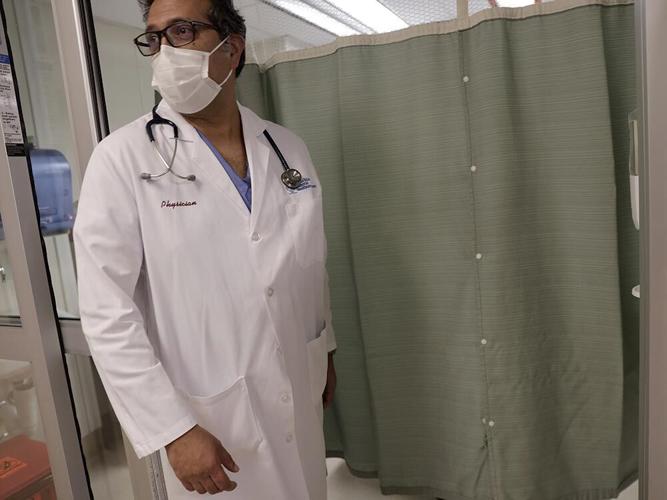



Dr. Rakesh Singh, an emergency physician at Salinas Valley Health, has seen an increase in people in psychiatric crises over the years for an array of reasons. He says some of this comes from an explosion of opioid use, some of it more recently is due to isolation during the Covid-19 pandemic.
NEWLY HOMELESS AND FRIGHTENED, REGINA LEBEL FELT A TUG INSIDE THAT MADE HER THINK ABOUT ENDING HER LIFE. Resisting that urge, she dialed 911 from a 7-11 and asked for an ambulance. One came and soon she was inside the emergency room at Community Hospital of the Monterey Peninsula on a bed and waiting to be transferred to a psychiatric bed, she hoped inside the Garden Pavillion at CHOMP. Hours went by, and still no transfer.
“I was waiting a day-and-a-half and it was fraught with anxiety and trepidation and insecurity,” says Lebel, remembering back to that day in 2017. “Hearing the sounds in the emergency room and all the true emergencies – I would get more insecure about even being there to be assessed by a psychiatrist or someone on staff there. I felt like I needed to make way for the true emergencies, even though I was a true emergency myself.”
Today Lebel is doing well and feeling grateful to be in a clean, safe, subsidized apartment. Back then in 2017 hers was indeed a true emergency, even as she fought to believe it herself. Every person who shows up in emergency rooms in a mental health crisis is treated as such, according to doctors who work in the ERs of Monterey County’s largest hospitals. They also readily acknowledge that waiting in an ER for a day-and-a-half – patients like Lebel can sometimes wait up to three days in an ER – is not ideal.
“The emergency department is not a very therapeutic place for a patient in a psychiatric crisis,” says Dr. Veronica Searles Quick, director of crisis psychiatry for CHOMP. “It’s hard for our patients and it’s hard for us to be a witness to that, knowing they are not getting the care they really need.”
The problem is there just aren’t enough psychiatric beds available in California. And on any given day, case workers at hospitals in Monterey County are performing a Sisyphean task, making call after call to psychiatric facilities up and down California looking for an open bed. If they’re lucky there might be a bed in San Jose, or Oakland, Davis or maybe San Luis Obispo, ready in a couple of hours.
It’s not just a problem for the patients, it’s also a serious issue for local emergency rooms with limited capacity that keep the patients in crisis safe until they can be transferred. It can mean patients with other emergencies will have a longer wait to get into an ER bed.
“It’s a national issue, something we very much wrestle with in Monterey County,” says Dr. Rakesh Singh, an emergency room doctor and vice head of staff at Salinas Valley Health, formerly Salinas Valley Memorial Hospital. One study puts the shortage of beds in California at just over 4,700. In March, Gov. Gavin Newsom stated there was a shortage of approximately 6,000 psychiatric beds.
It’s an intractable problem for patients and staff at the three large hospitals located in Monterey County. All agree that a bustling emergency room is not the best place for patients in mental distress. And for every ER bed that’s occupied by psychiatric patients waiting for transfer, it means other patients may have to wait. The reasons for the shortage of psychiatric beds are complicated, and root causes go back decades. With pressure building on the system, California legislators are taking notice and creating legislation hoping to fix the problem.
Hospitals in Monterey County can’t wait for large-scale, systemic changes, however, so instead they are finding creative ways to serve patients, either through technology, or by crafting entirely new spaces where those in crisis can get care during the wait.
THE NEED FOR PSYCHIATRIC BEDS AT ALL LEVELS IN CALIFORNIA IS STARK, ACCORDING TO A 2021 STUDY BY THE RAND CORPORATION. The 4,700-bed shortage includes a need for 1,971 acute beds for emergency situations where a short-term stay is needed and nearly 2,800 sub-acute beds for longer stays. (Those numbers exclude beds at the state’s five psychiatric hospitals, which care for court-ordered patients, 90 percent of whom come to them from the criminal justice system.) Over half the counties have no acute beds and most have no beds for children and teens.
Separately, the state is short of nearly 3,000 community residential beds – usually in homes and small facilities that provide a room, meals, medication and other support services for people who do not need 24-hour nursing care, according to the study.
Monterey County has 40 acute psychiatric care beds, located at CHOMP and Natividad – the hospital run by Monterey County – with 18 and 22, respectively. As of now, Monterey County has none for children and teens.
Dr. Christopher Burke at Natividad says they usually have a psychiatric bed available for a patient who arrives in crisis, but if not, the calls to other facilities in the state begin. “The big crisis for us is the lack of child and adolescent beds,” he says. “Those are often very sad cases and difficult to care for.”
The county is set to get its first in-patient facility for youth with 16 beds and an outpatient wing. The outpatient wing is set to open this fall, and the residential beds in early 2024. Ohana, as it was named, currently operates as an outpatient program of Montage Health, the nonprofit parent company of CHOMP. A permanent home is under construction in Ryan Ranch in Monterey. It was made possible by what was the largest donation in Montage’s history in 2018 by Roberta “Bertie” Bialek, $105.8 million, to build a mental health treatment center just for children and adolescents. (Bialek is sister to Warren Buffett and was an early investor in his company.) She named the future facility Ohana, the Hawaiian word for “family.”
Another facility for children and youth recently broke ground in Santa Clara County, but statewide there are only 746 psychiatric beds in 16 counties for minors (see sidebar, p. 30). That is despite a growing need and a severe shortage of outpatient services.

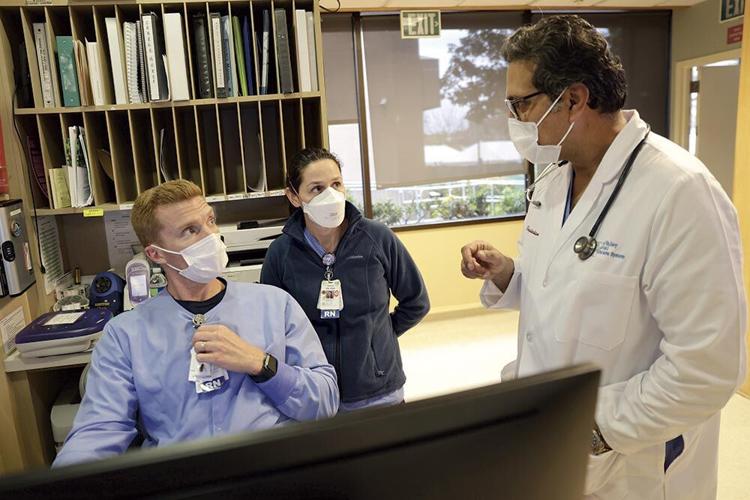
Dr. Singh confers with staff members.
HOW CALIFORNIA GOT TO THIS POINT GOES BACK DECADES TO THE LATE 1950S AND EARLY 1960S, when deinstitutionalizing psychiatric patients became a cause for advocates and elected officials. It was partly brought on by the introduction of the drug Thorazine, which allowed some patients to live independently outside of a locked psychiatric hospital, according to a report by CalMatters. In 1967, then-governor Ronald Reagan signed into law the Lanterman-Petris-Short Act, which essentially ended hospitalizing people against their will except in extreme cases where they are a danger to themselves or others or “gravely disabled,” the ones that are treated long-term in state hospitals.
The overall theory at the time the LPS Act was passed was that people in psychiatric hospitals could receive individualized treatment in facilities located in their communities. The problem was that community facilities were not built as deinstitutionalization unfolded. In large part, it boils down to money.
Thanks to state and federal laws that dictate how mental health care providers are reimbursed for care, opening a facility or expanding an existing one are losing propositions, according to Dr. Emily Wood, a Los Angeles child and adolescent psychiatrist and the government affairs chairperson for the California Psychiatric Association. The reimbursements don’t begin to cover the actual costs of keeping a bed in operation. Over the decades since LPS the hospitals with psychiatric beds have shut down. “And now we’re saying, oh gosh, we needed those,” Wood says.
The problem of too few beds goes beyond just money, she says, because it also includes not using existing beds in an efficient way. There are those patients who are considered for conservatorship – a court-ordered process for determining the vulnerability of someone who might not be able to care for themselves – that are housed in acute beds for up to eight months when they could be stabilized within a month and then cared for in a step-down facility providing less intensive care. The result, Wood says, “is we have people in hospitals who shouldn’t be there.”
Meanwhile, the need within the general population for psychiatric services is growing, compounded by the pernicious problem of substance abuse. The RAND study found the need for psychiatric beds in California may only increase by a modest 1.7 percent through 2026. However, there is a general consensus that the overall need for greater mental health services and professionals is growing at a much higher rate.
WALK-IN PATIENTS TO THE EMERGENCY ROOM AT SVH start at outdoor tents that were erected at the start of the Covid-19 pandemic. Here, patients are evaluated for respiratory illnesses and triaged by severity of illness or injury. Some are treated in the tents and released. More acute patients are taken inside to a bed.
The reality is that Salinas’ growing population – 14,000 when the hospital was built in 1950 and 60,000 when it expanded in 1974 – has outpaced the hospital’s capacity. Now with over 160,000 residents and more than 53,000 ER visits in 2021, SVH’s 16 beds aren’t enough, Singh says. The hospital needs at least 44 to meet the community’s needs, from minor infections to major accidents.
Someone who arrives at SVH in a severe mental health crisis, especially if they want to harm themselves, is taken inside to an ER bed. Mental health visits only constituted 2.4 percent of ER patients in 2021 – 1,224 total mental health visits, with 38 of those transferred to psychiatric beds elsewhere – but Singh says those patients require more time and resources. First, staff look for life-threatening issues and make sure the patient isn’t overdosing on a drug. Once they’ve made sure a patient with mental health needs is medically stable, they begin to assess whether they need inpatient care or might do well with outpatient care. That takes time for which there is no quick fix, he says: “You have to slow down and act compassionately.”
Meanwhile other patients with physical issues might be waiting for their turn. “We really try to use those beds as well as possible for the needs of our community while trying our best to address mental health needs,” Singh says. “It does stress the system [and takes] a bed out of the system and we cannot use that bed for another patient. It does wind up limiting our capacity in the ER, but we work around that.”
The workaround Singh describes sounds a bit like playing a game of Tetris, moving the sickest patients with other ailments to beds upstairs so that more patients – like those with mental health needs – have a place in the ER. “We’re always ready with a bed for that really sick patient but we have to be somewhat flexible,” Singh says.
It’s a process that is played out at the other two large hospitals in the county, Natividad, a public hospital, and CHOMP in Monterey, a private nonprofit hospital like SVH. (The fourth hospital located in the county, Mee Memorial in King City, is a rural hospital which refers patients in mental health crises to Natividad.) The fact that Natividad and CHOMP have in-house psychiatric beds make them different from SVH. The two are designated for what are known as “5150” holds; a law that allows psychiatric patients who are a danger to themselves or others to be held for 72 hours in a psychiatric hospital.
Even with psychiatric beds inside their hospitals, CHOMP’s Garden Pavilion secure psychiatric unit and Natividad still reach times when all their psychiatric beds are full, leaving patients waiting in ERs. Doctors and nurses will locate patients in quieter corners of ER rooms, but they agree it doesn’t replace a dedicated psychiatric bed where patients are getting targeted care and a chance to rest.

Monterey County currently has no psychiatric beds for children or adolescents, but that’s set to change by next year. Montage Health is building Ohana, an outpatient and inpatient behavioral health center in Ryan Ranch, Monterey. The outpatient portion is expected to open in fall of 2023, and the 16-bed inpatient section in 2024. It will serve adolescents with mood and anxiety disorders. The length of treatment will normally last from two to four weeks.
FINDING THEMSELVES WITH NO WAY TO FIX THE LARGER ISSUE of not enough beds at the state level, staff at two local hospitals decided they had to figure out their own ways to alleviate the pressure.
At CHOMP, the relief came first in the form of carving out space in eight rooms in the ER where patients in a mental health crisis would find respite. “It was over five years ago we noticed a significant increase in behavioral health patients where we felt we needed to section off a portion of the emergency department,” says Christy Soboleski, interim director of the department.
The average length of stay for patients in CHOMP’s ED on crisis evaluation orders varies. In January, they saw 120 patients who stayed for an average of 19.8 hours before being released or transferred to a psychiatric treatment facility. The high was June 2022, when they saw 122 patients for an average of 39.6 hours. In August 2022, 162 patients with crisis evaluation orders who stayed an average of 25.7 hours.
“It’s very important that we keep an environment that is calm, as quiet as possible,” as well as control the light and pipe calming music into the rooms, Soboleski says. Staff members are trained in de-escalation techniques, and there are opportunities to begin individual or family therapy in the rooms. Still, it’s hard on patients who are waiting for psychiatric beds to open up, sometimes for days. “Our emergency department doesn’t have windows so patients go without sunlight or being outside for a significant amount of time,” she says.
CHOMP’s emergency beds were sometimes occupied by patients in a more temporary crisis, which is what led to the creation of the Crisis Stabilization Unit, located across the hall from the ER. The unit opened its doors on March 20 to patients aged 18 and older. A separate area for those aged 17 and younger is set to open in late May. Stays will last no longer than about 24 hours for adults, with children expected to stay a bit longer. It will not be available to patients who need hospitalization, are violent or who have advanced dementia.
The goal, says Searles Quick, is to get patients into a therapeutic space rapidly, where they can receive consultations and begin group or family therapy before being released for outpatient care.
CHOMP reported that in January, a typical month, there were 146 ER patients who needed mental health assistance or evaluation. Alexandra Keller, director of behavioral health services for CHOMP, said in an announcement about the opening that many of those patients could have been helped by the crisis unit. That in turn would have relieved stress on all of CHOMP’s emergency beds.
At SVH, the staff turned to technology to help psychiatric patients. “We’re trying to have a more sophisticated approach in the emergency room,” Singh says. Around five years ago the hospital incorporated telehealth into the ER, allowing patients to receive 30 – to 45-minute sessions with a psychiatrist using a mobile monitor at their bedsides. The ER team receives a detailed three – to four-page report from the psychiatrist with an assessment of issues.
“Nothing beats having someone there, but overall patients feel grateful they can talk to a professional that gives them individualized attention,” Singh says. With many patients landing in the ER having not been able to access outpatient services leading up to the crisis – be it lack of resources or access due to an overall lack of mental health professionals in the county – it’s their first opportunity to be listened to by a professional. “Patients appreciate finally being able to talk to someone, even if it’s telehealth,” Singh says.

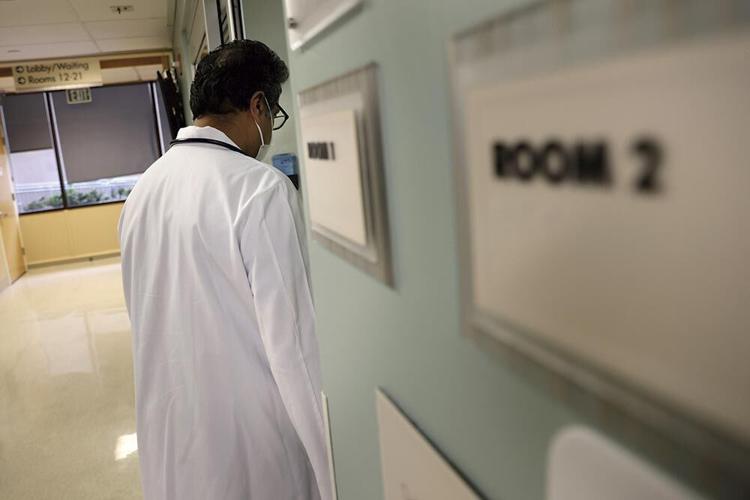
Dr. Singh enters a room to see a patient.
THERE IS A LEGISLATIVE PUSH IN SACRAMENTO to create more psychiatric beds in California, or at least do a better job of keeping track of what’s available.
Senate Bill 45, introduced on March 9 by State Sen. Richard Roth, D-Riverside, would establish the California Acute Care Psychiatric Loan Fund to make loans to participating health institutions for the refinancing, acquisition, construction or remodeling of facilities. Senate Bill 363, sponsored by Sen. Susan Talamantes Eggman, D-Stockton, would require the creation by 2025 of a real-time, online database to collect, organize and display information about beds by their specific use, ranging from substance abuse rehabilitation facilities to acute psychiatric hospitals.
Assembly Bill 1001, introduced Feb. 15 by Matt Haney, D-San Francisco, would require hospitals to assemble psychiatric response teams with at least two registered nurses with experience in psychiatric care, a doctor or other staff member licensed in psychiatric care and someone who is either a social worker or clinical psychologist. It would also require the California Department of Public Health to establish requirements for how these teams would respond to psychiatric emergencies.
On March 19, Newsom announced a bond measure for the 2024 ballot designed to raise at least $3 billion to fund the construction of new mental health facilities, residential care locations and housing with permanent services attached. He estimated 10,000 people per year could be helped by the new and expanded facilities. Bond money would also go toward housing for homeless veterans.
“This is the next step in our transformation of how California addresses mental illness, substance use disorders, and homelessness – creating thousands of new beds, building more housing, expanding services, and more,” Newsom said in a press release. “People who are struggling with these issues, especially those who are on the streets or in other vulnerable conditions, will have more resources to get the help they need.”
Mental health advocates in the state say money for beds is not enough to address the problem. It’s one thing to add the physical beds, it’s another issue altogether to pay for the high costs associated with operating the beds, given the problem of facilities being unable to be adequately reimbursed for expenses. Newsom said he wanted to redirect $1 billion in funds from the already existing Mental Health Services Act, approved 20 years ago, which imposes an income tax on the richest Californians to cover operational costs.
Even if legislation passes this year, or Newsom’s bond measure is successful next year, it would still be several years before money would flow toward adding and supporting more psychiatric beds.
For now, the phone calls from local emergency rooms to facilities around the state will continue. “Every single emergency room is doing the same thing,” Singh says. “They are also calling around trying to get a bed.”
(0) comments
Welcome to the discussion.
Log In
Keep it Clean. Please avoid obscene, vulgar, lewd, racist or sexually-oriented language.
PLEASE TURN OFF YOUR CAPS LOCK.
Don't Threaten. Threats of harming another person will not be tolerated.
Be Truthful. Don't knowingly lie about anyone or anything.
Be Nice. No racism, sexism or any sort of -ism that is degrading to another person.
Be Proactive. Use the 'Report' link on each comment to let us know of abusive posts.
Share with Us. We'd love to hear eyewitness accounts, the history behind an article.