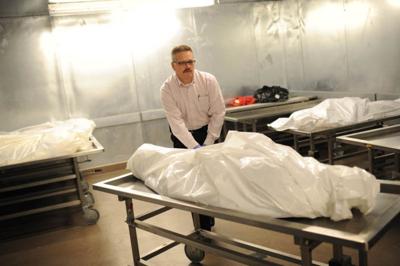
“Instead of being burned out or depleted by death,” Dr. John Hain says, “I accept it for what it is, simply another part of the mystery of life, offering me and anyone else willing to pay attention an opportunity to learn and understand more of what it means to be a human being in today’s world.”
Some deaths, however, are more mysterious than others, and not in the romantic sense. The most slippery examples, according to Hain, involve underwater, cliffside and drugging episodes:
1. “The most difficult cases are often scuba diving deaths. Although most all of them have inhaled sufficient water to justify drowning as the cause of death, it is often unknown exactly what the preceding event was that caused sufficient panic or impaired consciousness to make that happen… A case from many years ago may well have been an intentional underwater drowning of a female diver by her former boyfriend, but there was insufficient evidence to support that theory, so it was labeled as undetermined.”
2. “There have been a couple instances I can remember where the person died after falling from a cliffside where the circumstances pointed toward homicide, but all injuries seen at autopsy could be explained by the fall. Occasionally a likely homicide goes unprosecuted or insufficiently investigated because there is no evidence from autopsy to support the theory. Yet in other instances there has been strong autopsy evidence of homicide but insufficient investigative evidence to support prosecution. Neither of these situations sit well with me.”
3. “The most common case where there is insufficient evidence to provide a satisfactory explanation is when a decedent is found to have a fatal level of a drug or medication in his/her system and there are no investigative links to the source – where, when, and how the substance was taken or administered? In [one] instance, a man (with two wives) who died suddenly and unexpectedly at CHOMP was discovered through toxicology to have been intoxicated with a substance that either he self-administered or that was administered to him by a visitor. Vital evidence was unwittingly destroyed by hospital personnel and the investigation was delayed and poorly conducted, making the case unsolvable.”
(0) comments
Welcome to the discussion.
Log In
Keep it Clean. Please avoid obscene, vulgar, lewd, racist or sexually-oriented language.
PLEASE TURN OFF YOUR CAPS LOCK.
Don't Threaten. Threats of harming another person will not be tolerated.
Be Truthful. Don't knowingly lie about anyone or anything.
Be Nice. No racism, sexism or any sort of -ism that is degrading to another person.
Be Proactive. Use the 'Report' link on each comment to let us know of abusive posts.
Share with Us. We'd love to hear eyewitness accounts, the history behind an article.