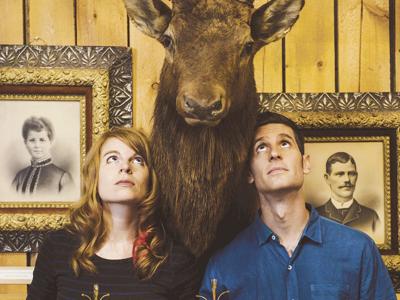

Banjoist/composer Jayme Stone says combing through tens of thousands of recordings from Alan Lomax’s coveted archives “opens a sonic door to the ethos and atmosphere of bygone eras.”
Late folklorist, ethnomusicologist, archivist, writer and oral historian Lomax dedicated his life to recording humanity under every condition.
From Mississippi Delta penitentiaries and plantations to hundreds of other obscure locations throughout the U.S., Africa, Europe and beyond, Lomax captured over 5,000 hours of audio. He captured the first recordings of Lead Belly, Muddy Waters and Woody Guthrie. He collected black spirituals and work songs from prisoners, ranchers, homemakers and sea captains. He recorded a cappella singing of the Georgia Sea Islands, Appalachian ballads and lonesome Bahamian sea shanties. He believed “music is the expression of community.”
With Jayme Stone’s Lomax Project, the Canadian musician put together an impressive roster of talent, including world-renowned folk musicians Tim O’Brien and Bruce Molsky. He also featured a slew of up-and-coming prodigies, including Eli West, Greg Garrison, Brittany Haas, Margaret Glaspy and Moira Smiley. Smiley (vocals, accordion), Sumaia Jackson (fiddle, vocals) and Joe Phillips (bass, vocals) join Stone Thursday, April 21, when theLomax Project comes to Carmel’s Carl Cherry Center.
“Some of the songs were left practically untouched,” he explains. “Nothing needed to be added; you just need to sing the living daylights out of the music. And then others we radically transformed.”
Here’s a small sampling of the Lomax-mystique behind some of the tunes on Stone’s 19-song collection.
“Lazy John”
After hearing Fats Domino for the first time, Lomax composed this tribute himself.
“The Devil’s Nine Questions”
The oldest version of the tune is a handwritten manuscript from 1450 preserved at Oxford’s Bodelian Library.
“Hog Went Through the Fence, Yoke and All”
Lomax described the eastern Kentucky songwriter Luther Callahan Strong as “lanky and shy and our favorite fiddler.” The original Library of Congress recording was made on Oct. 18, 1937, after Strong spent the night in jail.
“Whoa, Back, Buck”
Lead Belly’s 1935 early country blues recording of the number was inspired by his uncle’s “ox-driving song.” You may need some translation help: “Gee” means “turn right” and “haw” means “turn left.”
JAYME STONE’S LOMAX PROJECT 7:30pm Thursday, April 21. Carl Cherry Center for the Arts, Fourth and Guadalupe, Carmel. $25. www.brownpapertickets.com
(0) comments
Welcome to the discussion.
Log In
Keep it Clean. Please avoid obscene, vulgar, lewd, racist or sexually-oriented language.
PLEASE TURN OFF YOUR CAPS LOCK.
Don't Threaten. Threats of harming another person will not be tolerated.
Be Truthful. Don't knowingly lie about anyone or anything.
Be Nice. No racism, sexism or any sort of -ism that is degrading to another person.
Be Proactive. Use the 'Report' link on each comment to let us know of abusive posts.
Share with Us. We'd love to hear eyewitness accounts, the history behind an article.