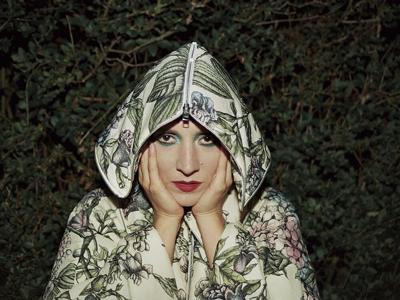
Welsh indie musician Cate Le Bon remembers one particular meltdown during the early days of the pandemic. She arrived in Iceland to produce an album for John Grant just before the virus triggered lockdowns across the globe. She had initially planned, after a few weeks in Iceland, to travel around the world to record her sixth solo studio album. Instead, she was stuck on an island in what felt like the middle of nowhere as uncertainty and existential dread reigned.
She turned to Grant, distressed by her revelation that she may never see her friend and close collaborator, Tim Presley, ever again.
“Grant turned to me and said, ‘Oh, well that’s always been true,’” Le Bon says from her home in Cardiff, Wales, as the city was tidying itself up for a visit from the new King Charles III. “To me, I was like, oh yeah, you know we’re always living on the precipice of… things changing in a way that makes life unrecognizable, and I guess you try to find a healthy relationship with that. The pandemic was almost like a crash course in figuring that out.”
Le Bon’s latest effort, Pompeii, released in February, isn’t a pandemic album insofar as it isn’t about the pandemic and refrains from declarations about the virus, its politics or the loneliness of quarantine. However, the mood of the album – which Le Bon began writing during lockdown – is certainly of the pandemic. After three months in Iceland, and a realization that the virus was here to stay, Le Bon changed her plans and returned home.
“I was going to go to Chile and Norway to remove myself from familiarity so I could be completely uninhibited, but then I ended up writing the album in the kids’ bedroom of the house I lived in 15 years ago,” she says. “It was a lesson in trying to mentally access those uninhibited places instead of relying on geography to remove familiarity.”
The album, which the online music magazine Pitchfork called “wondrous,” derives its name from the Roman city buried under lava and ash.
“Pompeii [the ancient city] is a metaphor but also visually captures this idea of someone’s last moments made to be so public and permanent,” Le Bon says. “That fed into this strange relationship I was having with time, and the idea of these things you love and feel are disappearing, or they’re close but you can’t quite touch them.”
(0) comments
Welcome to the discussion.
Log In
Keep it Clean. Please avoid obscene, vulgar, lewd, racist or sexually-oriented language.
PLEASE TURN OFF YOUR CAPS LOCK.
Don't Threaten. Threats of harming another person will not be tolerated.
Be Truthful. Don't knowingly lie about anyone or anything.
Be Nice. No racism, sexism or any sort of -ism that is degrading to another person.
Be Proactive. Use the 'Report' link on each comment to let us know of abusive posts.
Share with Us. We'd love to hear eyewitness accounts, the history behind an article.