
How many black filmmakers can you name? I can think of Spike Lee, Charles Burnett (check him out), Gordon Parks, Forest Whitaker, Tyler Perry, the Hughes Brothers, John Singleton. Um. That’s about it.
Why does it matter? Because if the arts are intended to bring you into the experience of another person, who best to describe that experience than that person experiencing it?
Another reason: Because poor and minority kids of Monterey County need to see role models who look like them telling their own stories, because it imparts that important message, “Your life matters, your point of view is valid.” Hollywood has long failed to make room for stories that include people of color that aren’t stereotypes, secondary or derogatory (if someone else cites Hustle & Flow as an honest depiction of black life, I’m going to throw a garbage can through a movie studio exec’s window).
So it’s left to the underground filmmakers to mine the vast veins of untold and overlooked stories. And locally, for the last five years, that’s been the mission of the Monterey Bay Film Society’s Monterey Bay Film Festival.
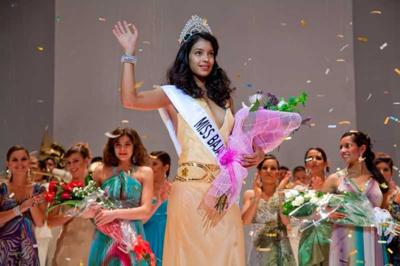
This weekend the festival features a promising black director named Terence Nance out of New York, and his film An Oversimplification of Her Beauty (7:30pm Fri, CSUMB’s World Theater). There are 15 short films by teens from CSUMB’s Teledramatic Arts and Technology Department’s teen workshops and beyond (1pm Sat, CSUMB’s World Theater); one of Mexico’s hot directors, Gerardo Naranjo, whose 2011 film Miss Bala drags the viewer into the spiral of an aspiring beauty contestant caught in the terrorism of the Mexican drug cartels (7:30pm Sat, Museum of Monterey); and the Best of Wholphin, a block of the coolest short films from Dave Eggers’ publishing house McSweeney’s. All the filmmakers will do Q&As at their films, and Naranjo and Nance will conduct workshops for students.
“Monterey Bay Film Festival is created by the community, for community, to support young filmmakers. That’s very unusual,” says Chris Carpenter, a TAT lecturer and the festival’s co-director. (Full disclosure: the other co-director is my girlfriend, Enid Baxter Blader.)
Carpenter says the young Nance’s feature film, his first, is “amazing.”
“A self-determined image of African maleness [is] an almost absurd idea in the Western world,” Nance writes.
Mike Plante is the creative director of the Monterey Bay Film Society; he’s also the Short Film Programmer at Sundance. He became involved in the MBFF when he was invited to TAT’s film program (to substitute teach a film class) and was impressed with its mission of serving underserved youth in the county.
“[TAT] students are seeing truly independent films, shorts, experimental stuff, so they have a more realistic view of how to make a film,” he says. “They make really good personal films and have fun making [them]. They’re not trying to be something they’re not.”
He says the programming of the MBFF is “not just outside Hollywood, but outside of any system,” bringing uncommon films that audiences may not see anywhere else, Netflix included.
“I already work at a film fest that tries to get 120 features and 80 shorts,” he says of Sundance. “Here, we’re not trying to make a film festival for the rest of the country, but for the Monterey area.”
The film festival organizers share the local focus and grassroots approach.
“We don’t have a Rolex or a Jaguar, a large corporate sponsor,” Carpenter says. “We created this ourselves. We had to build it up from nothing.”
Juan Ramirez, Community Outreach Coordinator, began as one of TAT’s workshop leaders, teaching kids in juvenile hall to use filmmaking to own and tell their own stories; they did, and that film won international awards.
For the teen segment of the film festival, he says, “We got over 300 submissions, including Ecuador and Kenya. [We] have work from Echo Park Film Center; their soundtrack was made by the L.A. Symphony.”
Locally made teen short films come from nonprofits TAT serves, including Imagine College, Rancho Cielo, and the Boys and Girls Club of Monterey County. It is a landscape snapshot of the county’s young people, funded by ARRA, President Obama’s stimulus grant.
Naranjo’s film has been critically acclaimed, but is tough stuff that he says, “You have to be a strange person to find joy in this [film]… .I believe art should confront you. It’s not about escaping.”
The wider festival isn’t so much about escape, but eruption – of creative energy, of art, of technology, to share with the rest of the world.
THE MONTEREY BAY FILM FESTIVAL happens various times Friday-Sunday at CSUMB World Theater, Sixth Avenue near A Street, Seaside; and Museum of Monterey, 5 Custom House Plaza, Monterey. $10/general admission; $5/student, military; free/1pm Sat; free/7:30pm Fri for students. 582-3743, www.MontereyBayFilmSociety.org
(0) comments
Welcome to the discussion.
Log In
Keep it Clean. Please avoid obscene, vulgar, lewd, racist or sexually-oriented language.
PLEASE TURN OFF YOUR CAPS LOCK.
Don't Threaten. Threats of harming another person will not be tolerated.
Be Truthful. Don't knowingly lie about anyone or anything.
Be Nice. No racism, sexism or any sort of -ism that is degrading to another person.
Be Proactive. Use the 'Report' link on each comment to let us know of abusive posts.
Share with Us. We'd love to hear eyewitness accounts, the history behind an article.