In recent years – particularly with regards to the transformation of New York’s Times Square from a locus of iniquity into a tourist-friendly projection of consumer id – people tend to wield the word “Disneyfication” in a negative context. This is, at times, unfair to the Walt Disney Corporation, whose properties include some of the finest achievements in cinema. At its best, Disney represents a kind of sanctuary where innocent happiness prevails over all, a projection of the worlds created in their finest animated films.
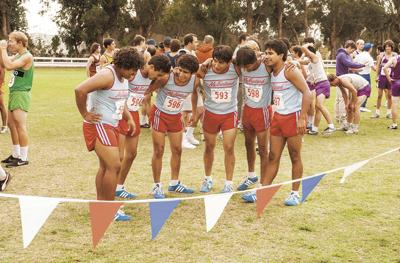
The distinction of “animated films” is deliberate, as their track record with live action is shakier. Their appropriation of true stories for “inspirational” fictional films is their shakiest sub-genre. In the quest for uplift, McFarland, USA squanders the considerable goodwill generated by an appealing cast, somehow ending up both grossly overlong and insufficiently substantial. The true story from which McFarland, USA is drawn is one of the more impressive obscure sporting achievements in recent memory: Starting in 1987, McFarland High School’s cross-country team won nine out of 14 California state championships. This was in spite of McFarland being one of the poorest towns not only in the state, but the country, and cross-country being a sport dominated by those who can afford the best conditioning. It’s a great story, whose triumphant underdogs conquer not only sport, but racism – the team members were all of non-white Hispanic descent – and classism, and who (mostly) lived happily ever after.
Where the movie makes its fatal error – although the blame for this error lies not with the filmmakers, but the film industry at large – is by telling this fascinating, rich story from the perspective of a white man who just happened to be there. Jim White (Kevin Costner) certainly deserves a degree of credit for coaching his runners to such success. But the runners were the ones who won those titles. And if there’s one thing American cinema is not lacking, it is stories about the nobility and spiritual growth of white people, especially when it lights the way for non-white people.
In pure craft terms, director Niki Caro (Whale Rider, North Country) does a creditable but merely serviceable job visually; as much as it may seem like simply pointing a camera at Kevin Costner, Maria Bello or Californian landscapes would be sufficient, there’s more to it than that.
In spite of the business the script forces the characters through, Caro gets solid performances out of the cast. But, about that script: There’s the manner, recalling Costner’s own Dances With Wolves, whereby he and his family experience initial revulsion toward their Hispanic neighbors – which is pungent and off-putting enough to nearly derail the whole movie before it even properly starts – only to fully adopt their customs and be fully forgiven for their initial transgressions. Even this is less awkward than the way the script attempts to portray the poverty in McFarland; the brutal toll of fruit/vegetable/nut picking is limited to a couple of members of the team missing practice a couple times, and Costner being shown as not able to keep up with their pace when he joins them at work as an act of solidarity. Most offensively, poverty is portrayed as a frame of mind one can conquer by choice.
It’s not that this film is without its pleasures, especially the performances of the runners and their families. But those pleasures are sadly outweighed by the queasiness imposed by the need to make everything cute, unthreatening and neat.
The real world, for better or worse, is not Disney.
MCFARLAND, USA (11/2) Directed by Niki Caro Starring Kevin Costner, Maria Bello, Carlos Pratts • Rated PG • 128 mins. • At Maya Cinemas, Century Cinemas Del Monte, Northridge Cinemas.
(2) comments
Danny Bowes, I'm uncertain what movie you watched when you reviewed McFarland USA, however, I must say you missed the mark. As a Chicano, I found the movie to be very authentic in the way it represented how my culture acts in its own community. The fact that yes we've got our stereotypes of gang affiliation, but we must overlook that for the fact there were more important events that took place.
Fact that Coach White left a community common to his race, and stepped into an unfamiliar one; the Mexican community. Oh yes, it's okay to use the word Mexican rather than Hispanic, because, I'm not Hispanic, I'm not Herpanic, I'm nobody's panic, soy Chicano. But it's not uncommon for someone to write about our culture and use the "H" word, enough said about that. Now let's get back to the movies.
Coach's White first encounter was with a group of low riders on a dark night when the White family first arrived into McFarland. Coach White makes eye contact with the [mero chingon] of this car club, Javi, played by Rigo Sanchez, and it stood to reason how coach White felt and Kevin Costner certainly portrayed his part wonderfully by how he nervously drove out of the parking lot; the scene is rather humorous but certainly understandable. Later in the movie the family has now moved in to their new residence and Coach White's wife played by Maria Bello car breaks down in the middle of town, keep in mind McFarland is about three blocks long. So, while Mrs. White is stranded looking lost standing in front of her car and looking perplexed about how she's going to get her groceries home when the lovely Lupe (martha Higareda), the beauty shop owner/operator comes out and and in typical chola style says to Mrs. White que paso honey? Lupe comforts Mrs. White and assures her that everything is going to be alright and humorously shows more concern about Mrs. Whites nails than the car and invites into her shop. Lupe boyfriend Javi comes out and of course fixes the car, and we move on in the movie.
It's wonderful how further on in the movie Coach White sees the working of a typical Mexican family. In the scene with the Diaz familia; the father played by Omar Leyva is the patriarch and in a capesino aka farmworker family everyone works and the Diaz family is no different. As in the majority of Mexican families, if you are working you contribute to the family finances.
Coach White becomes concerned when it's time for practice and three of the Diaz boys; Danny; Ramiro Rodriguez, David; Rafael martinez, and Damacio played by Michael Aguero, don't show up for practice. So Coach White goes out to the Diaz residence. The mother Señora Diaz played by Diana Maria Riva, orders one of her sons to invite Kostner into have dinner with them and feeds maybe a dozen enchiladas along with arroz y frijoles while the Diaz boys are watching. At the end of dinner Señora Diaz fixes a tupperware bowl full of food for Coach to take home with him, and it's funny how Señora Diaz is not going to take no for an answer as well as Kostner gives a funny line about it's not polite to say no. Later on in the scene there's an interaction between Kostner and Señor Diaz and theres something for the people who do not understand our culture to see and that is the pride we have. You'll have to see it to understand.
The movie continues without any period of dryness it just keeps revealing our Mexican pride and heritage. How we welcome you into our lifestyle. Coach White has two daughters Julie played by Morgan Saylor and Jamie played by Elsie Fisher. Julie is fifteen and Jamie is eleven. The two daughters seem to assimilate fine into the community at high school.
Ofcourse the movie focus is on the McFarland track team and after Coach White starts to win some meets and starts to gain notoriety the town gets behind them and does fundraising for uniforms and equipment. And there's one great scene where all the ladies (comadres) get together and make tamales in the Whites kitchen it's typical mexicano and then they sell the tamales at a car wash. Naturally, the car club brings their lowriders to the car wash and this is where Kostner is able to make amends to Javi from their first encounter.
Kostner on one of his outings to the hardware/market is talking to the owner and it's at this point Kostner mentions that his oldest daughter Julie just turned fifteen. Ofcourse the owner mentions she needs to have a quinceñera which Kostner knows absolutely nothing about but ask the hardware store owner for his help to arrange a party since he forgot to pickup Julies birthday cake earlier on in the movie. They go to the Whites residence, and it's a this point the hardware store owner says not to worry that it will be taken care of when all of a sudden there's a storm of women giving directions to move furniture and begin the decoration of the the party it's hilarious.
The party is a success and then as is customary the young lady whom the party is for (Julie), is to be paraded and shown to the community and what a better way to do so than in a lowrider. Ofcourse there's great apprehension for the parents but are convinced that Julie will be safe so they hesitantly allow her to go.
What would a good movie be without tragedy. So, as the celebrants are driving through town you can see the neighborhood waving and cheering, but of course the dark forces step in and a rival gang is pictured, and the next scene is the ambulance treating Julie as she has been been banged up a bit. Also, Javi is carted off in an ambulance when Coach White shows up questioning and outraged that this could happen. There's something later revealed that shows the respect our culture has for life, and you'll see if you go see the movie. I'm not going to reveal it.
I think Disney hit this one out of the park in showing realities of life and how the Mexican culture is rich with family, pride and traditions. Danny Bowes, I'm uncertain what movie you went to see but the fact is we don't see eye to eye on this movie.
Danny Bowes, I'm uncertain what movie you watched when you reviewed McFarland USA, however, I must say you missed the mark. As a Chicano, I found the movie to be very authentic in the way it represented how my culture acts in its own community. The fact that yes we've got our stereotypes of gang affiliation, but we must overlook that for the fact there were more important events that took place.
Fact that Coach White left a community common to his race, and stepped into an unfamiliar one; the Mexican community. Oh yes, it's okay to use the word Mexican rather than Hispanic, because, I'm not Hispanic, I'm not Herpanic, I'm nobody's panic, soy Chicano. But it's not uncommon for someone to write about our culture and use the "H" word, enough said about that. Now let's get back to the movies.
Coach's White first encounter was with a group of low riders on a dark night when the White family first arrived into McFarland. Coach White makes eye contact with the [mero chingon] of this car club, Javi, played by Rigo Sanchez, and it stood to reason how coach White felt and Kevin Costner certainly portrayed his part wonderfully by how he nervously drove out of the parking lot; the scene is rather humorous but certainly understandable. Later in the movie the family has now moved in to their new residence and Coach White's wife played by Maria Bello car breaks down in the middle of town, keep in mind McFarland is about three blocks long. So, while Mrs. White is stranded looking lost standing in front of her car and looking perplexed about how she's going to get her groceries home when the lovely Lupe (martha Higareda), the beauty shop owner/operator comes out and and in typical chola style says to Mrs. White que paso honey? Lupe comforts Mrs. White and assures her that everything is going to be alright and humorously shows more concern about Mrs. Whites nails than the car and invites into her shop. Lupe boyfriend Javi comes out and of course fixes the car, and we move on in the movie.
It's wonderful how further on in the movie Coach White sees the working of a typical Mexican family. In the scene with the Diaz familia; the father played by Omar Leyva is the patriarch and in a capesino aka farmworker family everyone works and the Diaz family is no different. As in the majority of Mexican families, if you are working you contribute to the family finances.
Coach White becomes concerned when it's time for practice and three of the Diaz boys; Danny; Ramiro Rodriguez, David; Rafael martinez, and Damacio played by Michael Aguero, don't show up for practice. So Coach White goes out to the Diaz residence. The mother Señora Diaz played by Diana Maria Riva, orders one of her sons to invite Kostner into have dinner with them and feeds maybe a dozen enchiladas along with arroz y frijoles while the Diaz boys are watching. At the end of dinner Señora Diaz fixes a tupperware bowl full of food for Coach to take home with him, and it's funny how Señora Diaz is not going to take no for an answer as well as Kostner gives a funny line about it's not polite to say no. Later on in the scene there's an interaction between Kostner and Señor Diaz and theres something for the people who do not understand our culture to see and that is the pride we have. You'll have to see it to understand.
The movie continues without any period of dryness it just keeps revealing our Mexican pride and heritage. How we welcome you into our lifestyle. Coach White has two daughters Julie played by Morgan Saylor and Jamie played by Elsie Fisher. Julie is fifteen and Jamie is eleven. The two daughters seem to assimilate fine into the community at high school.
Ofcourse the movie focus is on the McFarland track team and after Coach White starts to win some meets and starts to gain notoriety the town gets behind them and does fundraising for uniforms and equipment. And there's one great scene where all the ladies (comadres) get together and make tamales in the Whites kitchen it's typical mexicano and then they sell the tamales at a car wash. Naturally, the car club brings their lowriders to the car wash and this is where Kostner is able to make amends to Javi from their first encounter.
Kostner on one of his outings to the hardware/market is talking to the owner and it's at this point Kostner mentions that his oldest daughter Julie just turned fifteen. Ofcourse the owner mentions she needs to have a quinceñera which Kostner knows absolutely nothing about but ask the hardware store owner for his help to arrange a party since he forgot to pickup Julies birthday cake earlier on in the movie. They go to the Whites residence, and it's a this point the hardware store owner says not to worry that it will be taken care of when all of a sudden there's a storm of women giving directions to move furniture and begin the decoration of the the party it's hilarious.
The party is a success and then as is customary the young lady whom the party is for (Julie), is to be paraded and shown to the community and what a better way to do so than in a lowrider. Ofcourse there's great apprehension for the parents but are convinced that Julie will be safe so they hesitantly allow her to go.
What would a good movie be without tragedy. So, as the celebrants are driving through town you can see the neighborhood waving and cheering, but of course the dark forces step in and a rival gang is pictured, and the next scene is the ambulance treating Julie as she has been been banged up a bit. Also, Javi is carted off in an ambulance when Coach White shows up questioning and outraged that this could happen. There's something later revealed that shows the respect our culture has for life, and you'll see if you go see the movie. I'm not going to reveal it.
I think Disney hit this one out of the park in showing realities of life and how the Mexican culture is rich with family, pride and traditions. Danny Bowes, I'm uncertain what movie you went to see but the fact is we don't see eye to eye on this movie.
Welcome to the discussion.
Log In
Keep it Clean. Please avoid obscene, vulgar, lewd, racist or sexually-oriented language.
PLEASE TURN OFF YOUR CAPS LOCK.
Don't Threaten. Threats of harming another person will not be tolerated.
Be Truthful. Don't knowingly lie about anyone or anything.
Be Nice. No racism, sexism or any sort of -ism that is degrading to another person.
Be Proactive. Use the 'Report' link on each comment to let us know of abusive posts.
Share with Us. We'd love to hear eyewitness accounts, the history behind an article.