This story is excerpted from an article that was published in the Weekly on Oct. 6, 2016.
Into a volatile climate of police abuse and shootings, divisive political attacks, and George Zimmerman’s acquittal for killing 17-year-old Trayvon Martin, the Black Lives Matter movement was born.
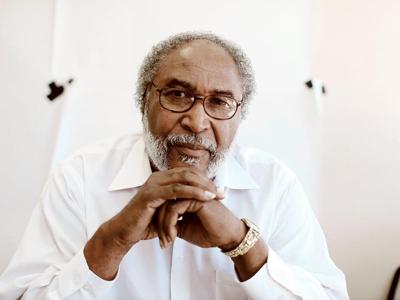
To someone like Mel Mason, it may seem too familiar. Fifty years ago, similar circumstances inspired the creation of the Black Panther Party. Mason, a longtime Seaside community leader and therapist, was once a member.
“Life in the Party was exciting and arduous,” he writes by email. “Much was expected of each of us.”
The Monterey Peace and Justice Center commemorates the 50th anniversary of the Black Panther Party’s 1966 founding with a program, Oct. 8, 2016 in which Mason talks before a screening of Stanley Nelson’s 2015 documentary Black Panthers: The Vanguard of the Revolution.
The film provides a fresh history. The organization first gained attention when members sporting black leather jackets, berets, afros and shades, marched on California’s state capitol armed with rifles and shotguns – all legal, per the state’s open-carry laws at the time. (Those laws were quickly repealed.)
That stunt got attention and inspired young black men across the country to join local chapters under the charismatic leadership of Huey Newton, Bobby Seale, Stokely Carmichael and Fred Hampton.
Their platform prohibited drugs, compelled political reading, questioned gender roles, built cross-racial coalitions, gave away clothing, established medical clinics and followed Marxist theory. One of the big campaigns provided breakfast for kids because studies showed it helped them perform better in school.
J. Edgar Hoover turned the FBI’s resources on destroying the BPP from without and within, using infiltrators, sabotage, surveillance, lies and violence.
Some FBI lies – that the BPP hated white people – still persist despite very visible white allies including academics, celebrities and the White Panther Party.
The appeal of the Black Panthers started with style and bravado, but their convictions went where liberation meets fear, where people clash with the power structure, where black lives matter.
One of Mason’s first assignments came in April of 1968 as security for the funeral of Lil’ Bobby Hutton, a “comrade” shot to death with his hands up during a police shootout in Oakland.
“We knew what we were doing was dangerous,” Mason says.
The organization made mistakes. Women gained power in the party, but it triggered a male chauvinistic backlash from within, which later caused an exodus. It finally shut down in 1982.
The gains cost casualties, and psychic and emotional pain. To hear Mason tell it, it was worth it.
(0) comments
Welcome to the discussion.
Log In
Keep it Clean. Please avoid obscene, vulgar, lewd, racist or sexually-oriented language.
PLEASE TURN OFF YOUR CAPS LOCK.
Don't Threaten. Threats of harming another person will not be tolerated.
Be Truthful. Don't knowingly lie about anyone or anything.
Be Nice. No racism, sexism or any sort of -ism that is degrading to another person.
Be Proactive. Use the 'Report' link on each comment to let us know of abusive posts.
Share with Us. We'd love to hear eyewitness accounts, the history behind an article.