
This is excerpted from a story that was first published on Jan. 26, 2012
Martin Luther King Jr.’s birthday commemoration compels the nation to revisit the life and work of the civil rights leader, while Black History Month shines a light on major black figures of the past like Harriet Tubman, Langston Hughes, Malcom X and Jackie Robinson.
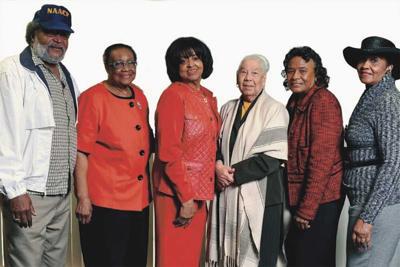
But maybe not as well known to many: Seaside is home to a deep team of black activists, and white and non-white allies, who, starting in the 1950s, risked and worked and won major victories for equality. Some are gone, but many are alive and still working on various fronts in that unfinished business.
“These folks don’t talk about themselves,” says Mel Mason, 69, a longtime community organizer. “I didn’t understand the significance of those people until later.”
Monterey County is a different place – more fair, accepting and accessible – than it would have been if it weren’t for the work of the obscure heroes who fought for acceptance and equality in decades past. In the midst of all the commemoration, their stories remind us who we’ve been, who we are today, and why.
Mason moved to Seaside in 1956 with his mother when he was 13.
“I was growing up in Kentucky at the height of Jim Crow segregation,” he says. “Separate but unequal everything. I believed I was coming to heaven [here] – no racism, everyone the same.”
Instead, he found that in Seaside, “everything to the left of La Salle,” a neighborhood then called Ord Terrace, didn’t allow blacks, non-whites and Jews. That was in accord with deed covenants, conditions attached to house titles that restricted their sale to minorities. Mason and his mom were not alone in encountering them.
Lenora Bean is a secretary at Seaside’s New Hope Baptist Church and has been with that church for 45 years. She and her husband arrived on the Peninsula from L.A. in 1952.
“There were places [that] didn’t want to sell houses to black people, even in Marina and Del Rey Oaks,” she says. “My husband was in World War II… and he wasn’t good enough.”
In her Seaside history book Racial Beachhead: Diversity and Democracy in a Military Town, Carol Lynn McKibben reprints a clause from the title company of Del Monte Properties: “Said premises shall not… be occupied or used by Asiatics, Negroes, or any person born in the Turkish Empire, nor any lineal descendant of such person, except that persons of said races may be employed as household servants.”
Military couple Bobbie and Morris McDaniel, of Seaside, first moved to the Peninsula in 1958; then were then stationed elsewhere, and returned in 1979. He says that when they were looking for a place to rent during their first stint, at one duplex they had the keys in hand and were going next door to the landlord to accept the place, but were told it had “just been rented.”
“The neighbor called the owner,” he postulates, and told him, “‘There are some black folks here.’”
A 1963 Monterey Peninsula Herald story cited a survey of local real estate listings at the time, finding that racial restrictions on one-bedroom furnished rentals were found in 73 percent of Monterey’s listings, 67 percent of Carmel’s, and 56 percent of Seaside’s. Among one-bedroom unfurnished rentals, 100 percent of Pacific Grove’s listings contained racial restrictions.
Mason tells a story about the secretive nature of deed covenants by way of Richard Nance, pastor of First Baptist Church, the oldest black church in Central California. “He was good friends with folks from St. Mary’s Episcopal Church – progressive women,” Mason says. “He called them his St. Mary’s soldiers.”
Rev. Nance told the women the NAACP planned to fight racial discrimination in the P.G. neighborhood above Congress Avenue known as the Triangle, but they didn’t believe there was such a thing in “America’s Last Hometown.” He sent black people to houses with For Sale signs; they were told, “Oh gosh. It’s just been sold.” Then the reverend sent in the white women from St. Mary’s and they were shown the house.
“They were absolutely incensed,” Mason says with a laugh, “and joined the NAACP.”
(0) comments
Welcome to the discussion.
Log In
Keep it Clean. Please avoid obscene, vulgar, lewd, racist or sexually-oriented language.
PLEASE TURN OFF YOUR CAPS LOCK.
Don't Threaten. Threats of harming another person will not be tolerated.
Be Truthful. Don't knowingly lie about anyone or anything.
Be Nice. No racism, sexism or any sort of -ism that is degrading to another person.
Be Proactive. Use the 'Report' link on each comment to let us know of abusive posts.
Share with Us. We'd love to hear eyewitness accounts, the history behind an article.