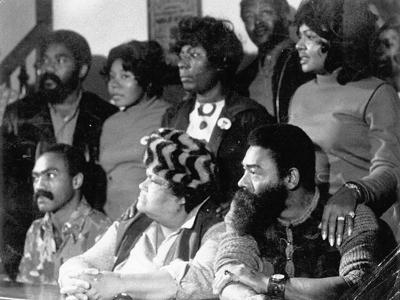

A new book, Voices of Change, chronicles Monterey County activism – from Dust Bowl refugees in 1934 to police abuse watchers in 2015 – transcribed from recorded oral stories. It’s self-published by three people accustomed to doing things themselves and not waiting for permission.
Gary Karnes’ father worked in a Naval shipyard in Vallejo for 34 years, but Karnes devoted himself to “dismantling the military machinery.” Karen Araujo draws inspiration in the faith-driven activism of Dorothy Day and Edward Kale.
Juan Martinez witnessed the aftermath of the 1963 Chualar train-bus crash that injured 25 and killed 32 migrant bracero workers at age 11. In 2013 he led a campaign to rename part of Highway 101 the Bracero Memorial Highway, reaching out to friends and allies including Karnes and Araujo. In interviewing people, they discovered other stories – about war, education, labor, discrimination. So they formed the People’s Oral History Project to capture and share them.
The stories come from Fernando Armenta, Jan Black, Tatsuo Okada, Helen Rucker, Eva Ruiz Gomez, Sabino Lopez, Dian Kiser, Sylvia Shih, 63 all told, a roster of those who risked much for justice.
“[Activism] can get you in trouble,” Karnes says by email. “Troublemakers get fired, blacklisted and all that.”
Choqosh Monroy Auh’Ho’oh, a Chumash Indian woman, talks about the injustice of the Pope taking steps to canonize Father Junipero Serra, and her spiritually guided protest at a Carmel Mission ceremony – in 1985.
Maurice “Mo” Jourdane talks about how he learned of the havoc that the cortito – the short-handled hoe – caused to farmworkers’ backs, and how he geared up the legal case for the United Farm Workers to abolish it.
The stories convey details that make them viscerally real, like Corey Miller’s account of how, in the 1970s, a biased judge subverted justice.
“[He’s] standing up with a gun, pointing it around the room. Yes, a gun, under his robe, in a Monterey courtroom.”
Documents, memorabilia and supporting accounts shore up the stories, but interviews make up the majority of the content, during which some cried. A few died shortly afterward, making their lessons even more essential.
“It’s about rekindling relationships for the future. All these people have all these skills,” Martinez says.
Karnes says a successful activist must be “resourceful, persistent and must like people – even difficult people.”
(0) comments
Welcome to the discussion.
Log In
Keep it Clean. Please avoid obscene, vulgar, lewd, racist or sexually-oriented language.
PLEASE TURN OFF YOUR CAPS LOCK.
Don't Threaten. Threats of harming another person will not be tolerated.
Be Truthful. Don't knowingly lie about anyone or anything.
Be Nice. No racism, sexism or any sort of -ism that is degrading to another person.
Be Proactive. Use the 'Report' link on each comment to let us know of abusive posts.
Share with Us. We'd love to hear eyewitness accounts, the history behind an article.