
Ron Diamond of Los Angeles runs Acme Filmworks, a talent agency of animation directors who do commercial work for clients like Microsoft and Toyota.
He was always on the search for fresh talent, and found it at film festivals and schools, getting to see amazing short works that lacked distribution channels to bigger audiences.
“These are films that are somewhat orphans,” he says. “Films that [most] people would not see.”
He wanted to share them, so he set up private screenings with animators and illustrators at Pixar, Blue Sky Studios, Google, Electronic Arts, Illumination, etc. He returned with a program of such work for 16 years, but he wanted to share the films with even more people. So he started a Kickstarter, raised $120,000 for film rights, packaging and distribution, and last year launched the nonprofit Animation Show of Shows into movie theaters and universities in 47 cities.
This year it’s playing in more than 70 cities, with a 74-minute program of 18 short animated films. They come from 11 countries (all are in English), seven of the directors are women, five of the films are student works, many are indie.
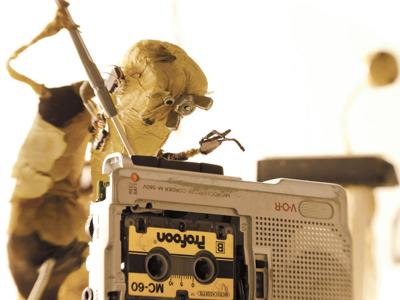
Like Ainslie Hendersen’s “Stems,” two-and-a-half minutes of simplicity, brilliance and poignance about the process of animation, done in stop-motion mode.
“Everything the [puppets] do is their swan song,” Hendersen says in a statement. “They have a tiny little life.”
Some films come from high-powered places. “Piper” was made at Pixar to test out new animation techniques, played before the feature Finding Dory, and went on to win an Oscar this year.
“Mirror” is a collaboration amongst all-star talents including illustrator Chris Ware, animator John “Phoobis” Kuramoto, This American Life host Ira Glass and contemporary classical composer Nico Muhly. They came together to animate the illustrated cover of the Dec. 7, 2015 issue of The New Yorker.
The program is mostly family-friendly until the end, when a five-minute intermission lets parents remove kids 13 and under. Then they’ll screen the last four films, which are adult-oriented.
The films deliver myriad characters and stories in formats ranging from computer animation to watercolor. Altogether, Diamond says they were assembled to elicit one thing: wonder.
“I want people to discover something they’ve never seen before,” he says.
(0) comments
Welcome to the discussion.
Log In
Keep it Clean. Please avoid obscene, vulgar, lewd, racist or sexually-oriented language.
PLEASE TURN OFF YOUR CAPS LOCK.
Don't Threaten. Threats of harming another person will not be tolerated.
Be Truthful. Don't knowingly lie about anyone or anything.
Be Nice. No racism, sexism or any sort of -ism that is degrading to another person.
Be Proactive. Use the 'Report' link on each comment to let us know of abusive posts.
Share with Us. We'd love to hear eyewitness accounts, the history behind an article.