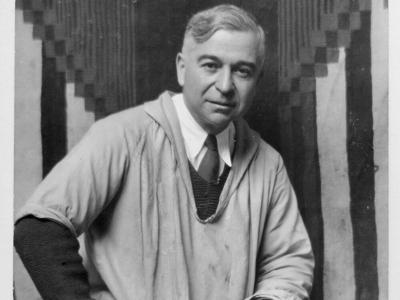

The first time that all-media artist Jo Mora (1876-1947) saw Monterey and Carmel was in 1903, from the back of his horse Lady, while taking a pilgrimage along El Camino Real, the 600-mile route connecting the 21 Spanish missions of Alta California.
Born in Montevideo, Uruguay, Joseph Jacinto Mora came from a cosmopolitan, ever-moving family who finally settled on the East Coast of the U.S. when he was still a child. But New York and Boston were not enough for Mora’s imagination, and after studying art in New York, he ventured West, supporting himself by creating newspaper illustrations and cartoons. In 1920, he made Monterey County his home, becoming part of the dream of the art colony of the West. The vast and diverse amount of sculptures, paintings, drawings and book illustrations Mora produced after settling in Monterey County is nothing short of amazing.
And this week, Monterey History and Art Association – which recently acquired the Jo Mora archive – is hosting the first Jo Mora Day Celebration to embrace all of that. It will be a family-oriented event that includes a self-guided walking tour of four MHAA venues and Pacific House in Monterey, each of which will feature different aspects of Mora’s life and art.
Fruits of Mora’s work can be found all over California, but no place is richer in them than Monterey County – from his humorous Monterey County Fair art to his playful local maps that speak volumes about his investment in the community. In Carmel, Mora made the “El Paseo” sculpture in the courtyard of the El Paseo Building on Dolores Street and 7th Avenue; decorated the Carmel Dairy Building; and carved and painted the wooden statue of Father Junipero Serra, installed within a wooden shrine at the intersection of Camino del Monte and Alta Avenue. In June 2020 the statue was removed by the city of Carmel for safekeeping in the wake of protests and the destruction of symbols of racism and colonialism around the country, leading to a long debate over who owns the statue and where it should go.
In addition to illustrating numerous books and book covers, Mora was a writer. His last book, Californios, was devoted to the life of the local ranchos, the last gesture in his lifelong interest in everything Western.
(0) comments
Welcome to the discussion.
Log In
Keep it Clean. Please avoid obscene, vulgar, lewd, racist or sexually-oriented language.
PLEASE TURN OFF YOUR CAPS LOCK.
Don't Threaten. Threats of harming another person will not be tolerated.
Be Truthful. Don't knowingly lie about anyone or anything.
Be Nice. No racism, sexism or any sort of -ism that is degrading to another person.
Be Proactive. Use the 'Report' link on each comment to let us know of abusive posts.
Share with Us. We'd love to hear eyewitness accounts, the history behind an article.