
Black History Month may be over, but as we are often reminded, it is important to continue learning outside of the designated 28 days.
To that end, Monterey History & Art at Stanton Center offers an opportunity to continue learning through an exhibit featuring local artist Germain Hatcher. Hatcher is a mixed-media artist based on the Peninsula and the owner of Imagine Art Supplies in Pacific Grove. Her work spans over 20 years in Monterey County as an art advocate and mentor to younger generations via Monterey-based Youth Arts Collective.
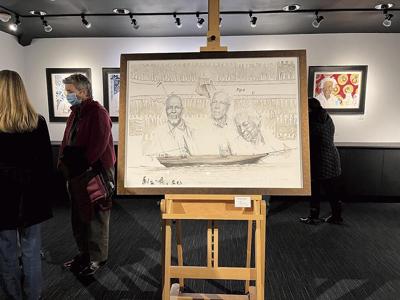
A reception was held Friday, Feb. 23 to introduce her exhibit Beyond Bullwhip Days. The 23-piece collection features graphite, watercolor, wax-based paints and collage. The pieces are recreated portraits of people who shared their stories of being enslaved in the 19th century.
Many of the pieces are based on Bullwhip Days: The Slavers Remember: An Oral History, a project by the Works Progress Administration’s Federal Writers Project. The book is an archive of ex-slaves’ stories collected during the Great Depression.
For Hatcher, her exhibit serves as the first part of a more in-depth story. She didn’t shy away from difficult topics. She explained the basic painting and drawing techniques help highlight the sense of unknowing that goes along with these stories. The artwork focuses on the expressions of each person and gives them a sense of humanity, as many did not have names.
Hatcher says she does not believe Americans have to like or be comfortable with these stories, but there is a certain accountability in listening to them, even through artwork. Some pieces are simpler, portraits of people who likely lived difficult and labor-intensive lives. Others, that have names or symbols that would not be considered appropriate language today, are stark reminders of how different life was. For example, in “La Negresse d’ Adana,” a Black woman is seen breastfeeding a white child, and in “Mammy Prater,” an older Black woman doing hemwork is portrayed with a picture of a cotton plant behind her.
“I want people to remember these faces, and start a conversation,” Hatcher says. Beyond Bullwhip Days does just that.
(0) comments
Welcome to the discussion.
Log In
Keep it Clean. Please avoid obscene, vulgar, lewd, racist or sexually-oriented language.
PLEASE TURN OFF YOUR CAPS LOCK.
Don't Threaten. Threats of harming another person will not be tolerated.
Be Truthful. Don't knowingly lie about anyone or anything.
Be Nice. No racism, sexism or any sort of -ism that is degrading to another person.
Be Proactive. Use the 'Report' link on each comment to let us know of abusive posts.
Share with Us. We'd love to hear eyewitness accounts, the history behind an article.