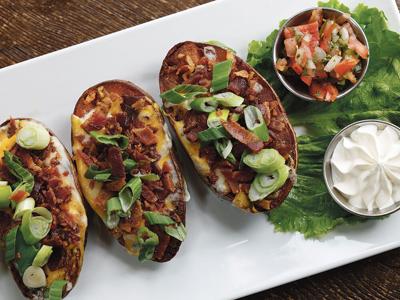

There was a time when any worthwhile happy hour featured potato skins, when couples doted over a starter of baked brie or swooned cutting into the molten lava cake for dessert. In between, they might order popular entrees of the day, such as blackened redfish or pasta primavera.
Some might say the 1980s was the decade when Americans reawakened to the world of flavors beyond continental standards. It was a time when Gael Greene of New York Magazine observed the new phenomenon of “serious foodies.” Paul Prudhomme’s cookbook Louisiana Kitchen turned Cajun and Creole dishes into a national craze.
As the decade came to a close, Los Angeles Times writer Ruth Reichl could look back at 10 years when the likes of Prudhomme, Wolfgang Puck, Alice Waters and others in the wave of celebrity chefs “changed the way we ate.”
Glancing at menus today, it is evident that we have moved well beyond this nascent period. Yes, Buffalo wings, which broke out of that city in a flurry during the 1980s, are everywhere. Monterey’s Fish House and Seaside Seafood & Market still serve blackened seafood. It’s just that we have to look a bit harder for some old favorites.
“Everybody knows potato skins,” observes Shane Cassidy, chef de cuisine at the Tap Room in Pebble Beach. Several area restaurants – notably Rosine’s in Monterey – still feature the appetizer. While people know them well, however, potato skins are no longer so common. Tap Room served an elevated version, but recently pulled potato skins from the menu.
“Some might call it outdated,” Cassiday says. “I don’t like that.”
It’s easy to forget the prevalence of skins. Claimed by three restaurants, it was TGI Fridays that truly brought the dish to the nation. By 1984, farmers had ramped up potato acreage in order to keep pace with demand.
The version served at Rosine’s is reminiscent of the fundamental skins of the ’80s – scallions, crumbled bacon and plenty of melted cheese. They seem to call for a bottle of St. Pauli Girl. But “skins” is also a misnomer here. These are two potatoes, cut in half and piled on, with no scooping out involved.
Terry Mohsin, owner of Mo’s River Road Grill near Salinas, knows from experience that some diners still crave nostalgia. Until 2015, a wine bar occupied the Mo’s space and baked brie was one of its staples. A new ownership group changed the concept, dropping brie from the menu. Six months later, the place closed.
“All the people wanted it,” Mohsin says of the warm appetizer. So when she opened Mo’s, she contacted the wine bar’s chef and brought the favorite back.
The version prepared at Mo’s is encased in puff pastry and drizzled with honey. Cranberries and candied walnuts are tumbled over the plate and the whole is served with crackers and French bread.
“A lot of people order it, but not everybody finishes it,” Mohsin reports. “I only eat it twice a year, otherwise I’d be big.”
April Hess added baked brie to the Breadsong Bistro lineup. It’s an indication that many dishes common in the ’80s never fell out of favor. Instead, they were pushed aside as the American palate expanded.
Most foods are cross-cultural in origin, of course. And global dining experiences have been available for centuries. Still, it wasn’t until the 1980s that the broader American apprehension toward raw fish eased. Kale, however, was still consigned to soul food diners. And while Judy Hyun’s The Korean Cookbook appeared in 1970, it would be another 23 years before another guide to that nation’s cuisine was published in the U.S.
Since then, dishes like bulgogi, poke bowls, avocado toast and pho have replaced the likes of potato skins and baked brie.
Other ’80s favorites are harder to find. Remember pasta primavera? As basic as this New World creation sounds, its popularity was spurred by the dining public gaining interest in seasonal produce. Fresh spring vegetables dressed the dish.
Gino’s, the longstanding family restaurant in Salinas, still serves pasta primavera – although they break from “tradition” by plating it with a choice of sauces.
So it’s possible to dine like it’s 1989 – unless you want to cap the evening with a fuzzy navel.
(0) comments
Welcome to the discussion.
Log In
Keep it Clean. Please avoid obscene, vulgar, lewd, racist or sexually-oriented language.
PLEASE TURN OFF YOUR CAPS LOCK.
Don't Threaten. Threats of harming another person will not be tolerated.
Be Truthful. Don't knowingly lie about anyone or anything.
Be Nice. No racism, sexism or any sort of -ism that is degrading to another person.
Be Proactive. Use the 'Report' link on each comment to let us know of abusive posts.
Share with Us. We'd love to hear eyewitness accounts, the history behind an article.