
Pizza is widely popular – that much we can agree on. Yet pizza is often a point of serious contention, as well.
There is the matter of pineapple, for example, which once caused a diplomatic tiff between Iceland and Canada. And there are the legions who snub Chicago-style deep dish as round lasagna.
But there are also other possible imposters, such as flatbreads covered in pizza toppings. At some establishments – Post No Bills in Carmel, The Bench in Pebble Beach, both of Monterey’s Lalla locations to name a few – flatbread pizzas stand in for the more traditional pie.
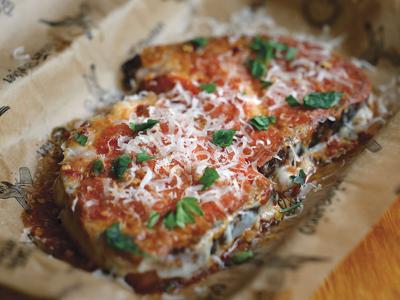
Other Brother Beer Co. in Seaside even celebrates happy hour with pizza toast, a sweet, spicy and tangy presentation of pepperoni, mozzarella and hot honey on slices of Ad Astra sourdough.
“It’s something I used to make for myself as a child,” says Other Brother Chef Josie Lewis. “It’s fun and people like it.”
All of this raises a question: Just what defines a pizza?
“Most people will tell you it’s the crust, the sauce, the cheese,” explains Janice Robertson, owner of Iolis’ Pizza in Carmel Valley. She’s not concerned about shape. Palermo is known for rectangular pies, as is Detroit. Nor does she wade into the matter of toppings. “Throw on whatever toppings you like,” she says. “However it’s made is a matter of personal opinion.”
It’s the first item on the list that, for Robertson, disqualifies flatbreads. Essentially, pizza dough is allowed to rise, often fermenting for 24 hours. Flatbreads, even when smothered in pepperoni and cheese, are unleavened.
Lewis agrees, even dismissing Other Brother’s variation.
“I wouldn’t call it a pizza,” she says with a wry grin. “It’s pizza toast, a play on words. Piece of toast.”
Culinary historians trace flatbreads to ancient times. Romans, Greeks, Egyptians and other people would routinely top these breads with local herbs, vegetables, oils or other favorites. Scholars consider flatbreads – in particular the Roman panis focacius – as the precursor to pizza. In fact, a 1535 tome claims that “Focaccia in Neapolitan is called pizza.”
Paul Lenz, a writer who delves into the history of everyday items, notes that the earliest existing record of “pizza” is from a rental agreement between a tenant and landlord in the Italian town of Gaeta calling for payment in pizza, which he believes is a reference to focaccia – either that or the very first mention of pizza delivery.
Either way, the now ubiquitous pie in its modern form is generally traced to Naples a few centuries later, after the arrival of tomatoes.
And so variations on pizza are clearly labeled as such. For instance, at Carmel’s Rise+Roam and Cafe Rustica in Carmel Valley, they take care to distinguish the Alsatian style pie as tarte d’Alsace and flammekueche, respectively. Yet it is clear flatbreads and pizza share the same lineage. And there are traditional flatbreads made from fermented dough. Pissaladiere is a round bread found in Southern France, typically covered with onions, olives and anchovies. Meanwhile, pinsa is a favorite from Rome and its surroundings.
“Pinsa has been around for a long time,” observes Maurizio Cutrignelli, owner of Monterey’s Osteria al Mare and neighboring Piccolo, where the dish is served. “They have a few things in common. The toppings are pretty much the same, but the dough is a bit different.”
For pinsa, the dough involves wheat, rice and soy flour. The resulting bread develops a crackling crust over a pillowy dough that is lower in gluten. The team at Piccolo prepare a pinsa margherita, one with grilled chicken and a daily special. Cutrignelli plans for more. The style is becoming more popular, although it can be hard to find locally.
“I’m the only one, as far as I know,” he says. “For now.”
Cutrignelli says that some people in Rome and the Lazio region consider pinsas a form of pizza, but he is hesitant: “No, they are flatbreads.”
The crust, the sauce and the cheese define a pizza. The shape can vary. One can stuff the edges with extra cheese. Its toppings can be almost anything. But we know a pizza when we see it.
As for flatbread versions, Robertson says, “We don’t make them here.”
(0) comments
Welcome to the discussion.
Log In
Keep it Clean. Please avoid obscene, vulgar, lewd, racist or sexually-oriented language.
PLEASE TURN OFF YOUR CAPS LOCK.
Don't Threaten. Threats of harming another person will not be tolerated.
Be Truthful. Don't knowingly lie about anyone or anything.
Be Nice. No racism, sexism or any sort of -ism that is degrading to another person.
Be Proactive. Use the 'Report' link on each comment to let us know of abusive posts.
Share with Us. We'd love to hear eyewitness accounts, the history behind an article.