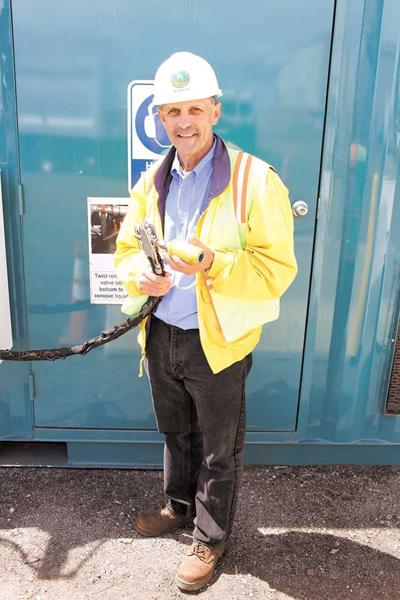

When William Merry first joined Monterey Regional Waste Management District 33 years ago, the district had about a dozen employees, a budget under $1 million and a fledgling recycling effort. Now MRWMD has more than 100 employees, a $21 million budget and a mission of “turning waste into resources.”
Ten years ago, Merry was named the district’s general manager. Since then, it’s become an international model in diverting trash away from the landfill – and converting it into useful things like energy, salvaged merchandise, reusable plastic bags and compost.
Merry met with the Weekly at The Press Club before his May 28 retirement.
Weekly: Why don’t you like the word “dump?”
Merry: When I first came to the district in 1982, the local newspaper did a feature story on the district, and the headline was, “Please Don’t Call It a Dump.” Over the years, we have labored under that title. Where I grew up, on a farm in northern Wisconsin, I went with my father to the dump once a year with a wagon loaded with all of our refuse from the year. We had very little waste in those days. The dump was an open-burning dump – smoky and smelly. So I have an image in my mind of what “the dump” is, and it’s not what we have here.
Why are you excited about seven Peninsula cities switching haulers, from Waste Management to GreenWaste Recovery?
They’re both good companies. GreenWaste is a privately held, smaller, regional company, and perhaps they have a little more flexibility to respond to the needs of a community. One of the things they’ll be doing is to offer a bulky item pickup, and they’ll deliver those items to Last Chance Mercantile. They’ll even densify expanded polystyrene [aka styrofoam]. One of the things they turn it into is surfboards. That’s a beautiful thing – sending it to the ocean in a good way, as a big thing, instead of in tiny pieces.
What else are you proud of?
Our board just approved a $20 million renovation of our 100,000-square-foot materials recycling facility. We’re going to put in new equipment that will serve the district for the next 20 years. I’m also excited about this anaerobic digester that was put in. It’s the first in California and the second in the U.S. Using food scraps and other organics as a feedstock, it produces methane in 21 days instead of putting it in a landfill, where it takes 20 years or more.
Do you have any tips for the city of Pacific Grove on dealing with seagulls?
It’s a different brand of seagull they have in P.G. Over the years we have tried many different techniques. We tried starter pistols; after a few days the seagulls didn’t even get up. We tried this bubble-gum kind of nasty scent seagulls aren’t supposed to like; that didn’t do anything. We strung monofilament wires around, but the landfill changes every day, so that didn’t work very well. Seagulls are really smart, and they’re coming to get whatever food there is. Now the falconer uses the starter pistol in conjunction with the falcon and dogs who chase the seagulls when they land.
What future program are you most excited about?
The district is building a compressed natural gas [CNG] fueling station for the GreenWaste hauling trucks. We will use landfill gas to make the CNG. That is closing the loop on recycling. The truck picks up the food scraps and brings it to us, and 21 days later, the fuel has been produced onsite to send that truck back out to collect the food scraps.
Most Monterey Bay jurisdictions have limited the use of styrofoam and plastic bags, and now there’s buzz about plastic straws. What do you think?
I participate monthly in a litter clean-up at San Carlos Beach, and over the years we have seen the amount of plastic bags and polystyrene diminish incredibly as a result of people not having access to those products. I draw a distinction for coastal communities. Since we sit on the shores of a national marine sanctuary, we have a higher responsibility. Should we target banning straws? Yes, we should. I used to drink water right out of a glass. I don’t need a straw. The ocean is choking right now on this plastic material. It’s going to be incredibly challenging to clean that up. It’s in tiny micro pieces, it’s being ingested by animals, it’s being incorporated into the flesh of the animals we’re eating. We can do better.
(0) comments
Welcome to the discussion.
Log In
Keep it Clean. Please avoid obscene, vulgar, lewd, racist or sexually-oriented language.
PLEASE TURN OFF YOUR CAPS LOCK.
Don't Threaten. Threats of harming another person will not be tolerated.
Be Truthful. Don't knowingly lie about anyone or anything.
Be Nice. No racism, sexism or any sort of -ism that is degrading to another person.
Be Proactive. Use the 'Report' link on each comment to let us know of abusive posts.
Share with Us. We'd love to hear eyewitness accounts, the history behind an article.