




Snakes. Poison oak. Ninety-degree heat. Back pain. Over-exertion. Ticks. Aching knees.
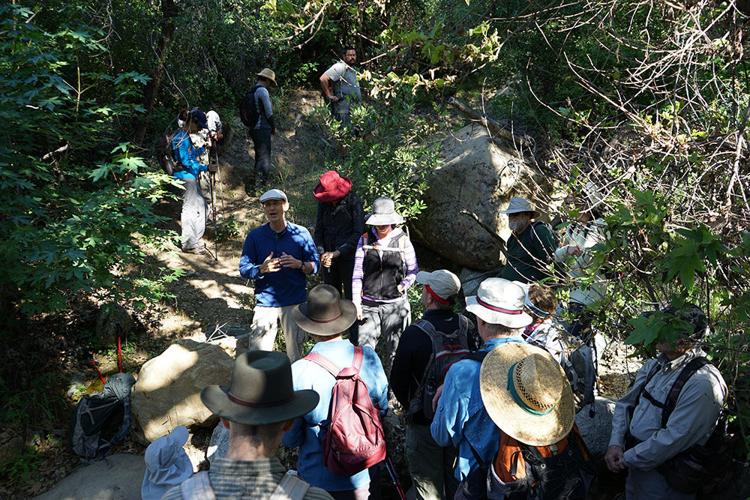
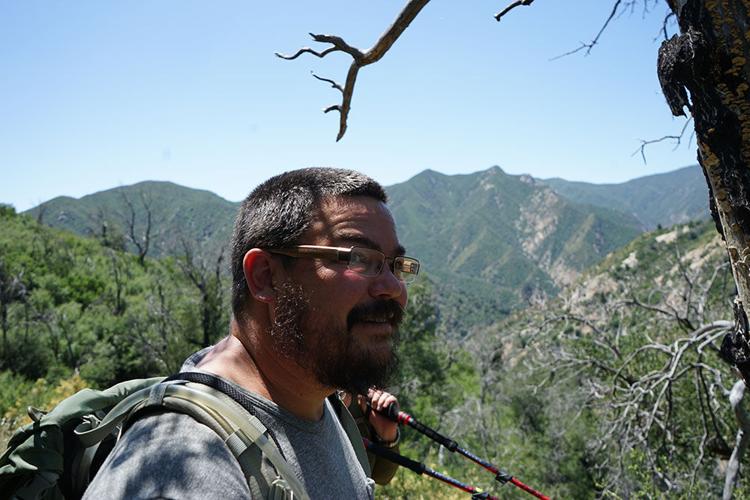
These are the fears shared by 25 strangers gathered for The Nature of Zen weekend workshop at Tassajara. Long-time workshop facilitator and Big Sur resident Steven Harper was to guide us into the wilderness that surrounds the center, nestled in the Santa Lucia Mountains.
But first he wants to know the group’s concerns.
He speaks of inherent risks: “You don’t need to keep up with everybody else. Ask for support where you need it. Responsibility is the ability to respond.”
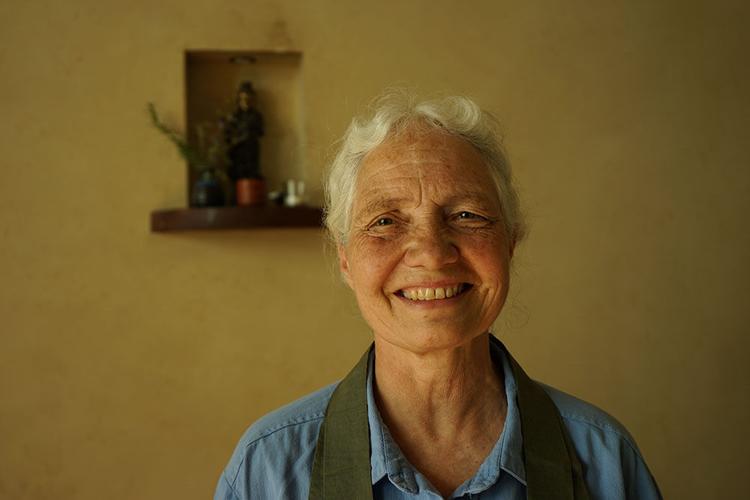
On the first evening, sitting on meditation pillows in a circle seems a natural way to convene. Leslie James, the Abiding Teacher at Tassajara and its longest-residing teacher – having first arrived as a student in the early ’70s – quietly sits next to Harper, a twinkle in her eyes. She was to be our Zen guide, too.
We aren’t just going to explore the outside; we are going to explore the inside wilderness. The nature of Zen is both inside and out.
James discusses the practice of Zen Buddhism and the essence of zazen (seated meditation), and confirms it has inherent challenges. “In the modern world, things are happening, seemingly out of control,” she says. “We think we should be in control. Zazen is about finding ease in what is. Everything is connected and everything affected by the self.
“For students of Buddhism, the two truths are, everything changes and everything is connected. For many of us, that’s a hard truth to accept about ourselves.”
For those learning to sit in meditation – like many in this group – the intention is to sit quietly in a stable posture, to stay open-hearted, focused on the breath (without drifting into thoughts) by constantly revisiting the breath. The intention: Connect more with yourself.
“Most of us,” James says, “were brought up to believe we are supposed to be building our best self. ‘Who am I going to be?’ For Buddhism, it is 180 degrees from this. The question is, ‘How do I be with who and what I am?’ Perhaps the journey is to sit in the confusion. Clarity is way overrated. Mainly, we don’t know.”

Outside the Zendo
~ ~ ~
It’s still dark when there comes a sound, of a running monk, feet hitting the dirt pathway, ringing a handbell. The monk trots by each cabin. It’s 5:20am, time to awaken, Tassajara-style.
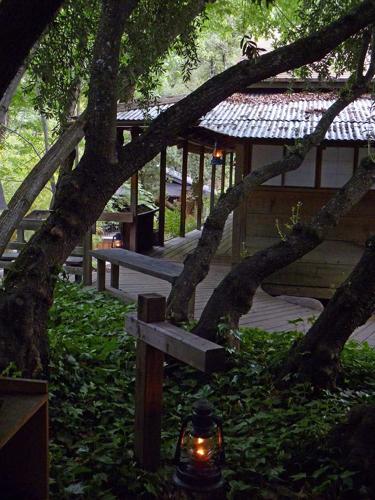
Within 30 minutes, the resident monks, students and curious guests are seated for morning meditation in the Zendo, the Zen Temple, where zazen practice begins. In winter months, Tassajara only sees three hours of direct sunlight. I’m grateful it’s May and not January, as it’s still a very chilly early morning and the unheated cabin offers little solace.
Ten minutes before meditation begins, a monk bangs the Han, a heavy block of wood to signal the forthcoming start of zazen. It’s an unusual rhythm, approximately every 10 seconds with a thump, ultimately speeding up, thump, thump, thump, then rolling down faster, faster, faster, then silence.
Five minutes later it starts again.
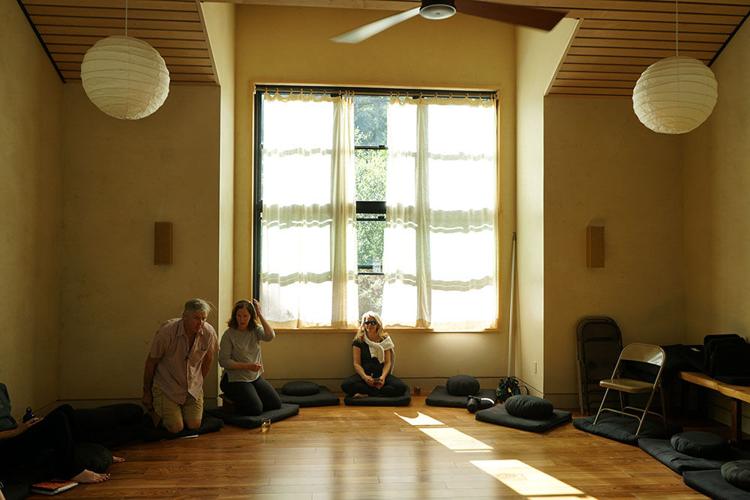
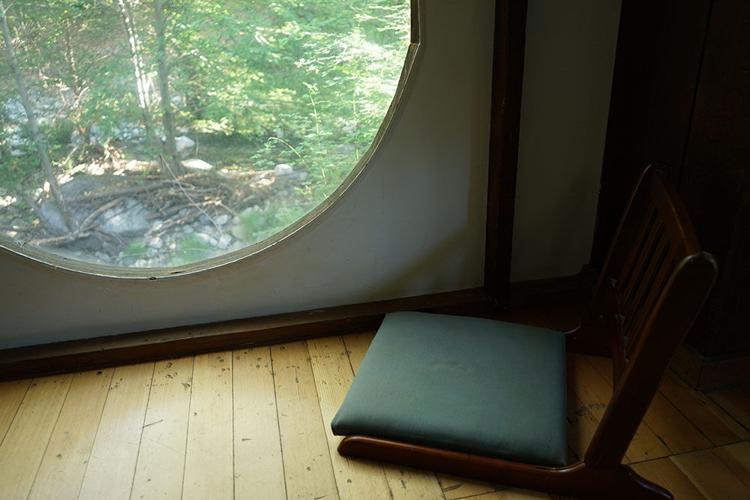
A monk assigns each person a place to sit in the spacious, rectangular temple. A simple altar with Buddha sits in the center. Each person quietly finds their mat, bows and takes their seat on a cushion, facing the wall to limit distractions. Most sit in a cross-legged position. A metal gong signals the beginning of zazen.
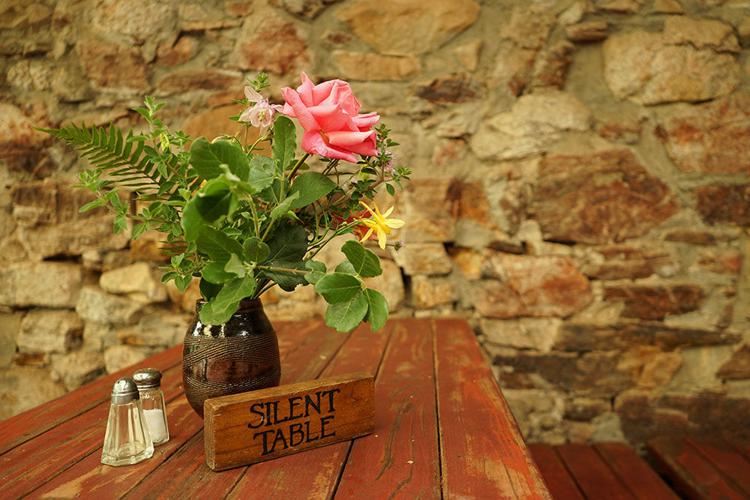
It may be quiet but it’s not silent. The birds slowly begin their chirp. Blue jays drop acorns on the deck. There is an occasional rustle, a sniffle, a cough.
The practice feels good. I can feel its ease. I make a note to myself: more silence, longer periods of silence.
This isn’t my first time meditating but it certainly will be my longest. I wonder if I can sit for an hour comfortably.
~ ~ ~
Last November, in Mumbai, India, Munishri Ajitchandrasagarji, a 24-year old Jain monk and devoted student of meditation, achieved a feat not done in three centuries: recalling 500 questions, statements, math problems, even phrases in one of six different languages, posed to him randomly from an audience of over 6,000. It took six hours to recite them back, and he remembered each in descending order as they had been given. Afterward he said, “Anyone can do this, it is not a miracle. When you know your own capacity, when you get rid of your distractions, the power of your mind is immense.”
That same month a Harvard University team of researchers used MRI scans to document how meditation produced massive changes inside the brain.
“Although the practice of meditation is associated with a sense of peacefulness and physical relaxation, practitioners have long claimed that meditation also provides cognitive and psychological benefits that persist throughout the day,” said Sara Laza, the study’s author. “This demonstrates changes in brain structure may underlie reported improvements.”
Nearly midway into the hour-long morning meditation, the pain in my sleeping left foot proves wildly distracting. It tingles and goes numb. I can’t wiggle my toes.
I wrestle with whether I should move. It seems I might lose my lower leg. The tendons in my knees are screaming. Still, I try to sit in one position for the entire practice, determined not to make any noise. But in this moment, I am stir crazy.
I’ve heard from some spiritual mentors that our capacity to hold pain may increase our capacity for joy.
I was curious how Benson Canfield, a striking 6-foot-5-inch Tassajara student, managed the physical challenges of long-sittings. He quotes Taizan Maezumi in response: “The taste of zazen is pain in the knees.”
That afternoon James suggests we don’t want to do zazen from a macho place, and even though we’re always trying to move away from pain there are rewards in that struggle. “You move when you need to. But when is that? That is the question.”

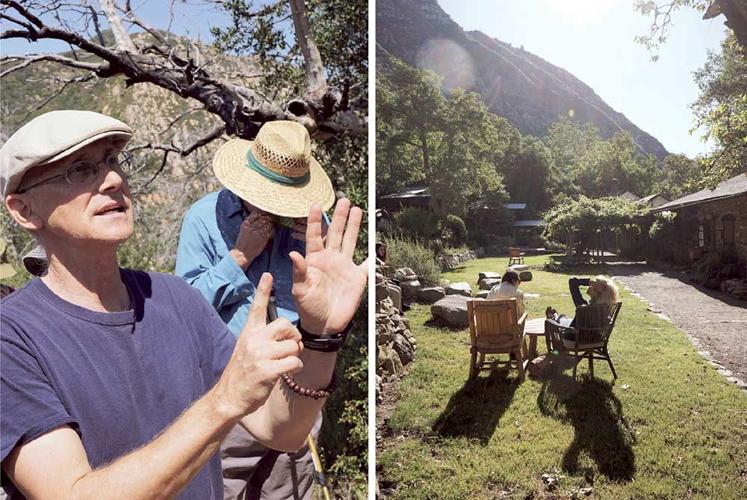
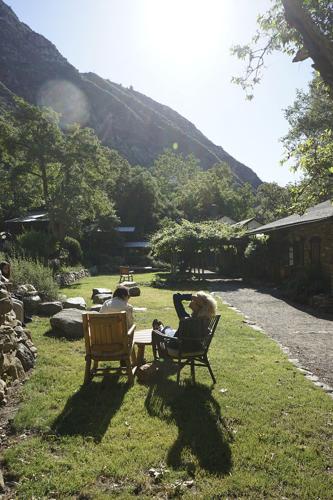
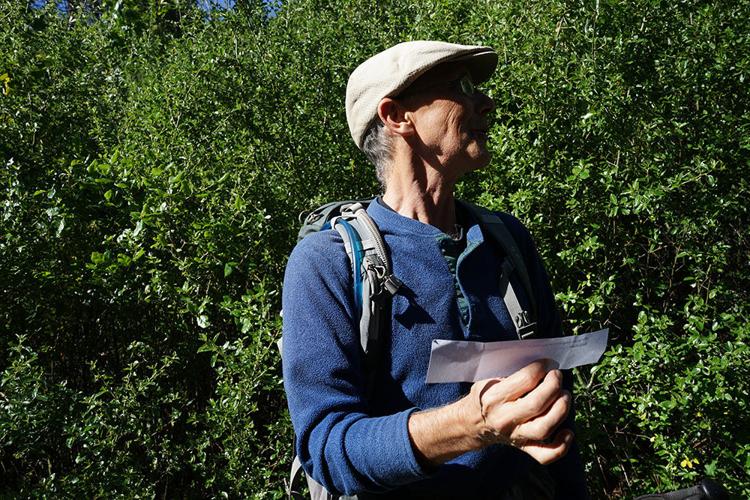
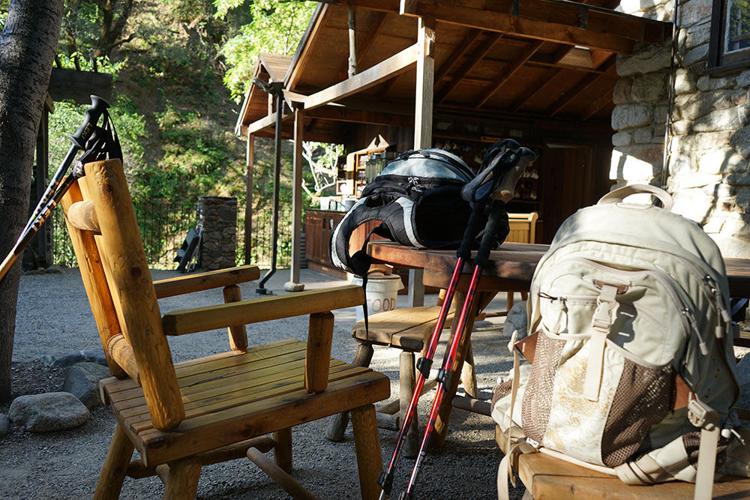
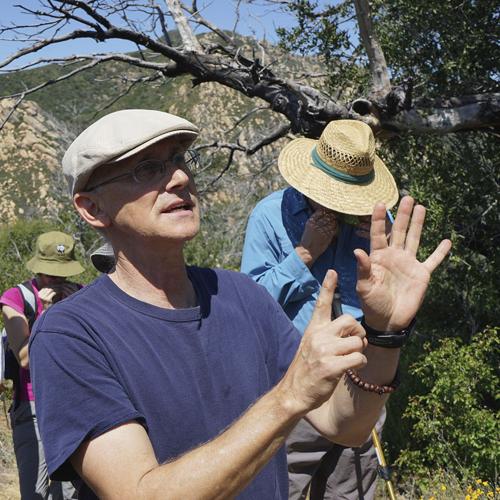
(left) workshop leader and Big Sur resident Steven Harper encourages meditation students to find nature, outside and inside. (right) Tassajara students relax on the grounds of the famed Zen center in remote Monterey County.
~ ~ ~
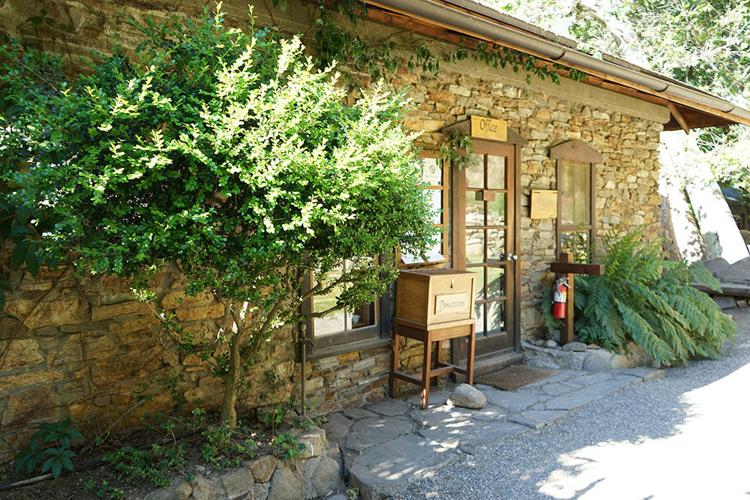
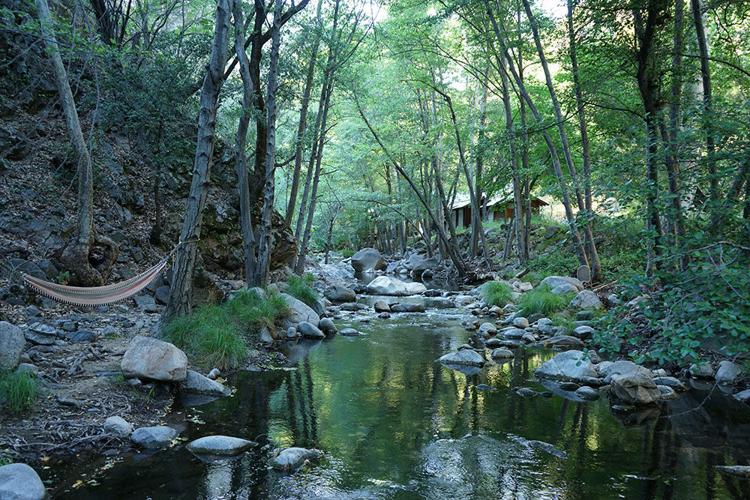
Tassajara is a hidden gem of Monterey County. It’s isolated, off the grid, an hour past Jamesburg, where the paved portion of Tassajara Road ends and the dirt begins. The 14 scenic miles, over the mountain pass by Chews Ridge at 5,000 feet, descends into a narrow valley where the road dead-ends and the monastery comes to life. It’s hard to imagine this path was built with rudimentary tools.
Early travelers used to cut down a pine tree at Chews Ridge and chain it to the rear axle to keep the stagecoach from running over the horses on the exceptionally steep downhill. That’s the essence of the Zen way: Find the peace in, and through, the struggle.
According to Harper, Tassajara was established as a hunting and fishing lodge, then transformed into a resort for healing thermal baths, a recommended treatment to many medical ailments in the late 1800s. But in 1966, Susuki Roshi, the founder of the San Francisco Zen Center, recognized an ideal location for the first Zen Buddhist monastery outside of Asia. Today, travelers revel in the hot springs, but the main attraction remains the Zen center, with its traditions, tranquility and legendary vegetarian food.
Speaking of which, the great tastes from this Zen kitchen are adventurous and original, surprisingly spicy, and delicious beginning to end. Like much of Tassajara, that’s intentional.
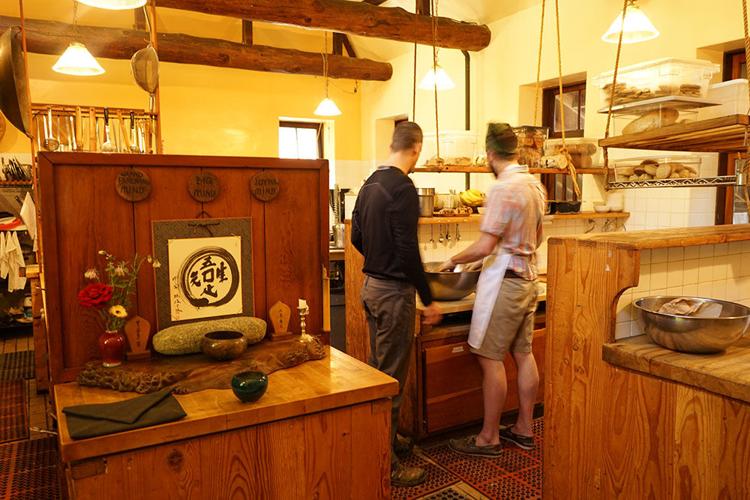
Michael McCord, the kitchen manager, is a devoted Zen monk who follows the Tenzo Kyoken, Instructions for the Cook, written in 1237 by Dogan, a Zen Buddhist in Japan. The Tenzo offers guidance to the head chef, setting standards for the overall attitude of the cooks and servers.
Despite the prodigious volume of meals created – between 110 and 135 meals, three times per day, plus from 16 to 32 loaves of bread baked daily – the kitchen staff practices (near) silence and focus, putting down their knives when having a conversation with co-workers instead of multi-tasking. Before powering up the blender, one staffer announces, “There will be sound.”
For similar high-volume kitchens, this would not only be eccentric but mutinous – intentional quiet communication confronting operational efficiency. But in this Zen space there’s no evidence of chaos or dysfunction, even though it bustles like the back-of-house of most restaurants. According to Harper, practicing the Zen way is a constant “dialogue with gravity.” Local chefs may find inspiration in the Tenzo: Some laws of physics and gravity are open to interpretation.
~ ~ ~
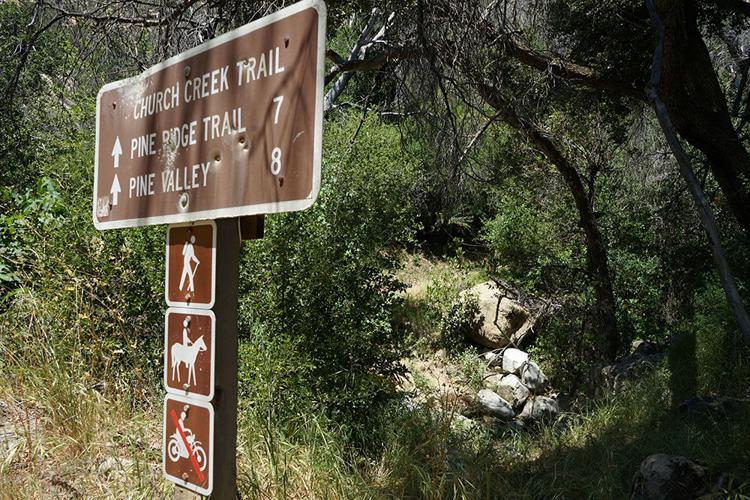
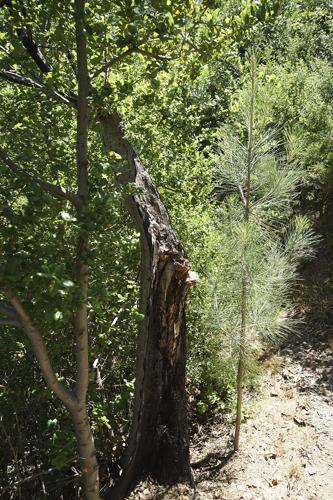
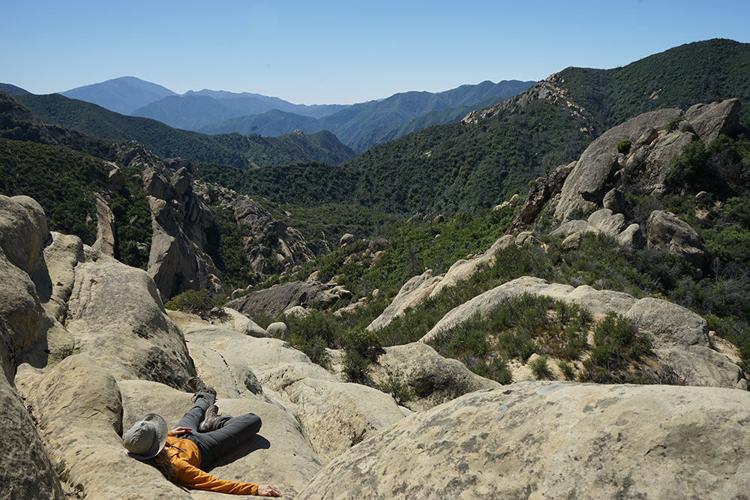
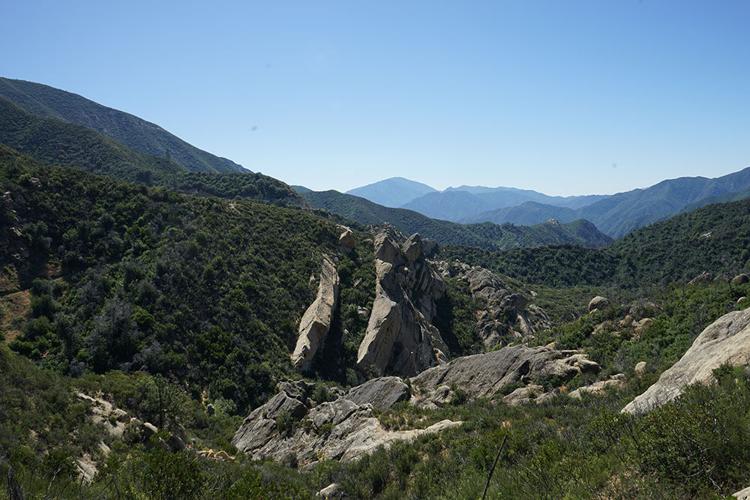
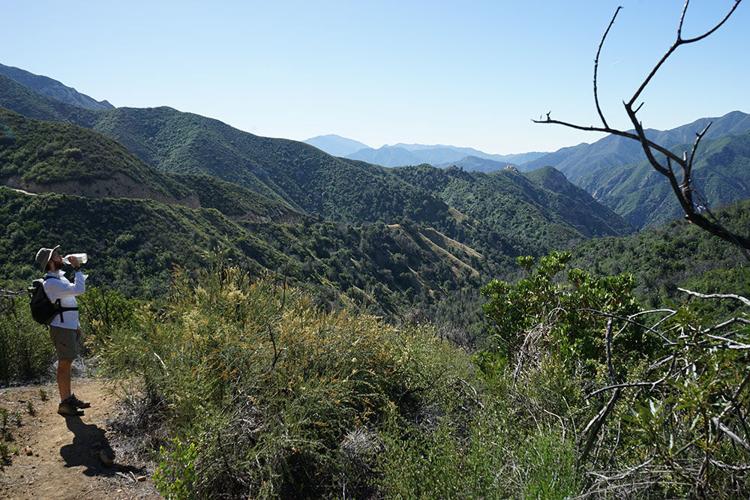
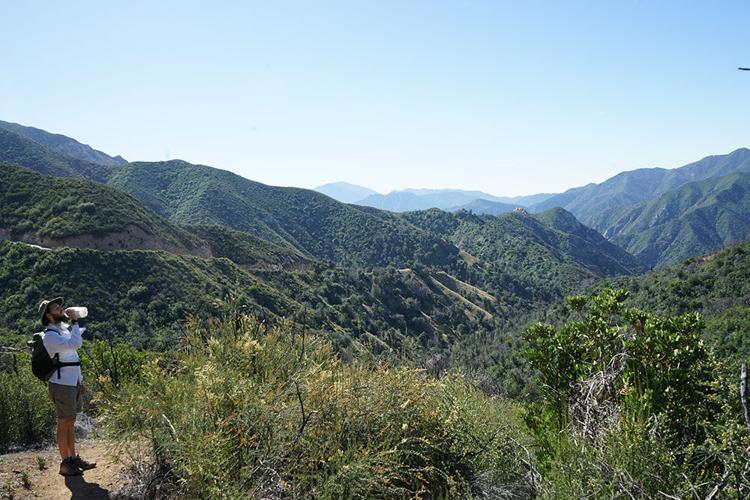
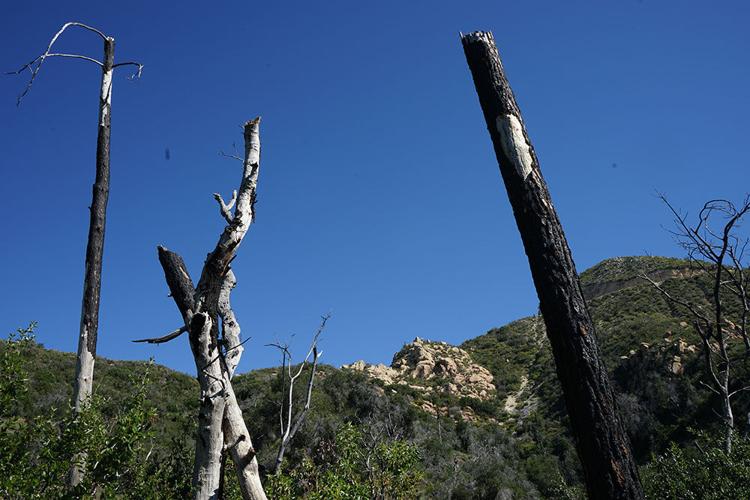
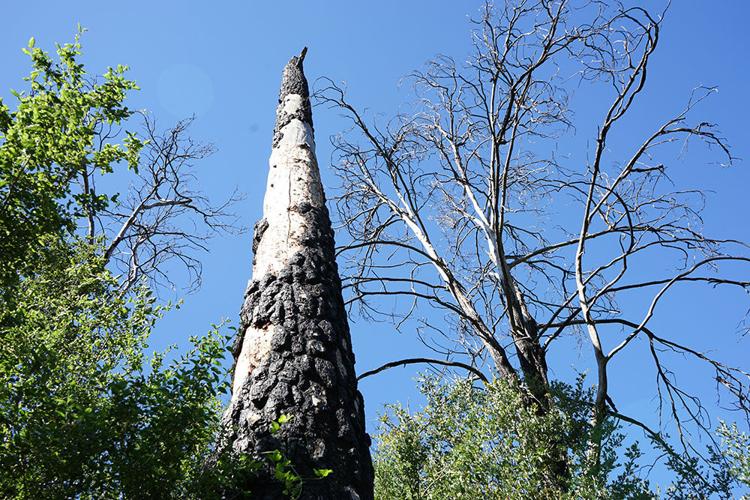
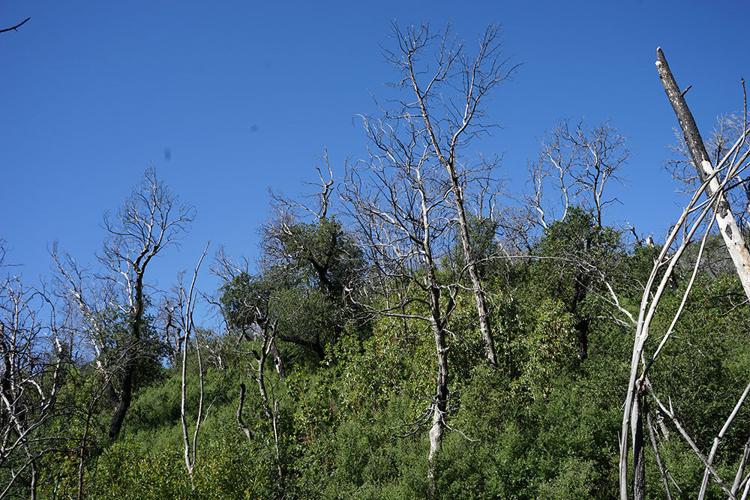
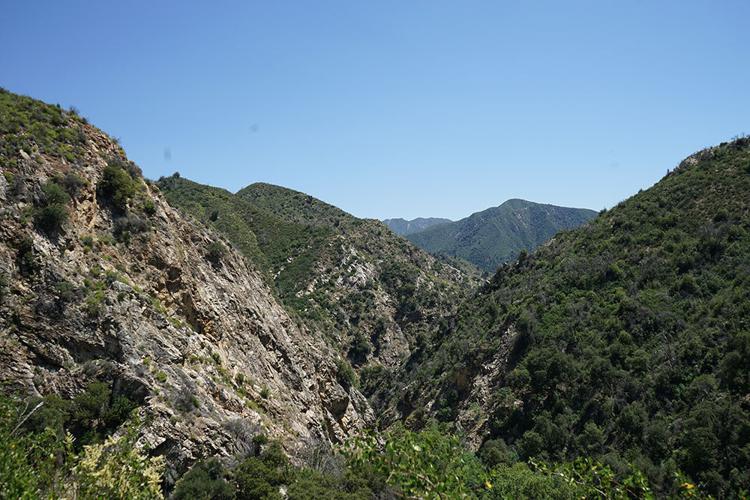
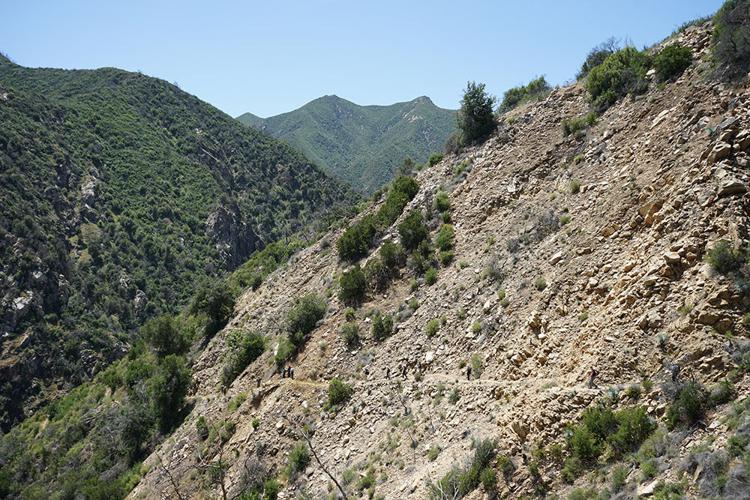
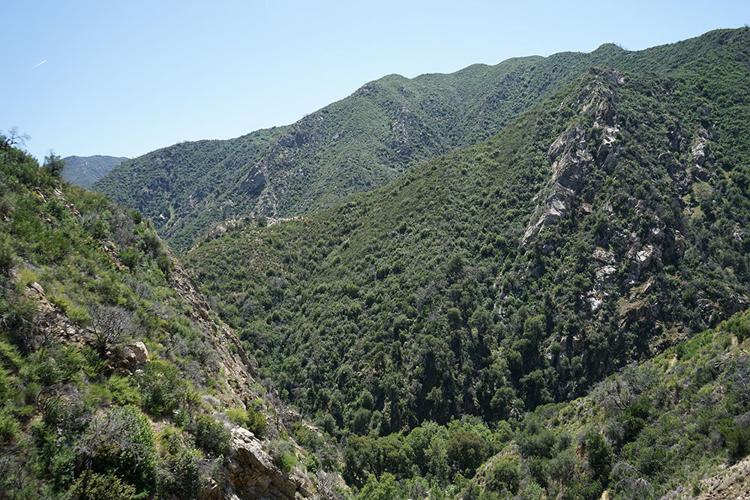
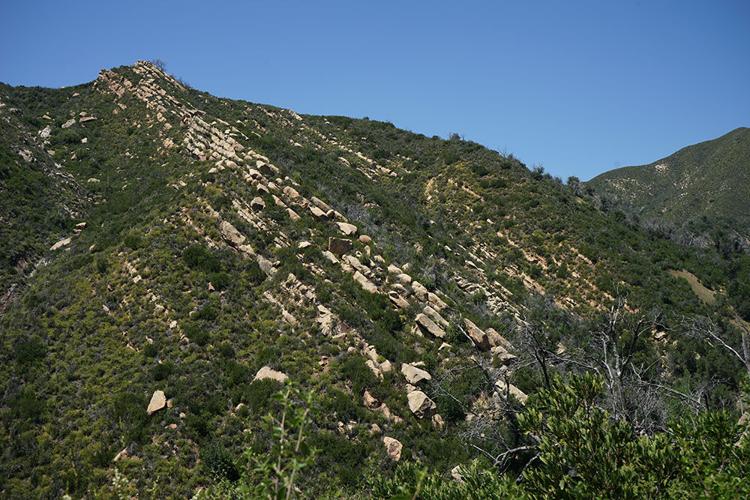
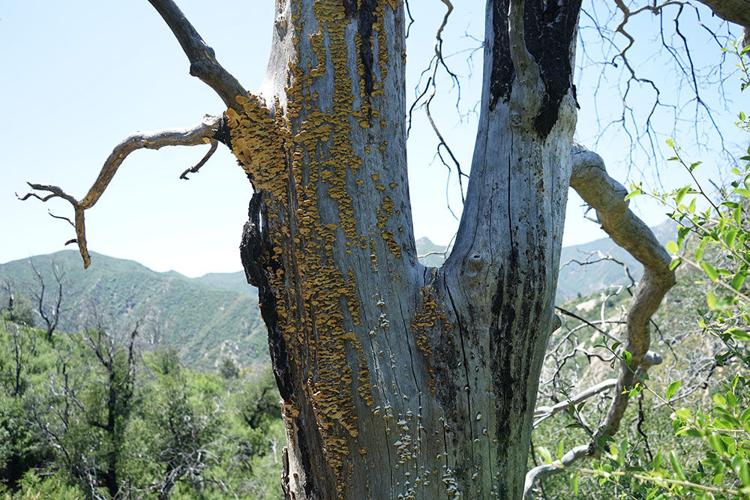
What were we up to? That is the question of the weekend. We hike into the Santa Lucias unique geography. We start at 1,539 feet above sea level and climb from there, into the Big Sur wild that is renewing since the 2008 Los Padres fire devastated much of it, and nearly ravaged Tassajara too.
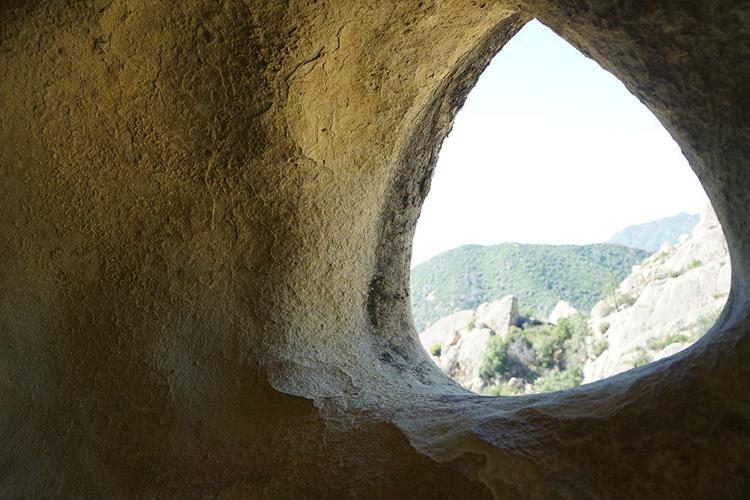
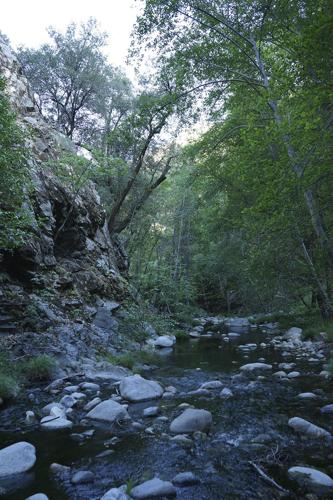
We visit wind caves, the historic horse pasture; practice a walking meditation; experience long stretches of silent hiking; soak our bones in the chilly creek. We are guided to cross into the threshold of nature when we step on the trail, and to have that same consciousness in Tassajara’s temple, or while eating and sharing our meals. We are invited to consider nature as the primary teacher, to become students in nature. We are asked to become students of ourselves.
“We get appreciation and respect in our culture for knowing,” Harper says. His encouragement: to step into “not knowing.” Ask what it means to be a student.
This implies there are other capacities for knowing. We set out to the outdoors to go “inside,” and indoors are asked to explore our inner landscape further.
Tassajara is a place for a continuous retreat. For good nourishment. It is a place where the wake-up calls come early and often, furnishing a potent antidote to a world where there will be sound.
(0) comments
Welcome to the discussion.
Log In
Keep it Clean. Please avoid obscene, vulgar, lewd, racist or sexually-oriented language.
PLEASE TURN OFF YOUR CAPS LOCK.
Don't Threaten. Threats of harming another person will not be tolerated.
Be Truthful. Don't knowingly lie about anyone or anything.
Be Nice. No racism, sexism or any sort of -ism that is degrading to another person.
Be Proactive. Use the 'Report' link on each comment to let us know of abusive posts.
Share with Us. We'd love to hear eyewitness accounts, the history behind an article.