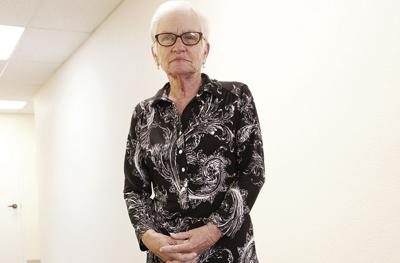

When Marcia Parsons got her start in the criminal justice system, she was just out of college with a sociology degree from San Jose State. She became a social worker, then a probation officer. She quit in 1970 – “to raise a family and play tennis,” she says – and then returned to work in 1989 after a divorce.
Probation had changed drastically: Most notably, officers were armed to handle a more violent clientele. Parsons became the first female armed probation officer in Monterey County, and in December, was appointed by the County Board of Supervisors as the first woman probation chief. (Today, the gender ratio of sworn officers is close to 50-50.)
She’s inherited more changes since, and is overseeing the construction of an expanded juvenile hall and the ongoing implementation of realignment, or AB 109, California’s plan to uncrowd state prisons to comply with a Supreme Court ruling.
Parsons, 70, spoke to the Weekly from her Oldtown Salinas office, where some 6,500 probationers check in regularly for a variety of services ranging from counseling to drug treatment.
~ ~ ~
What was probation like when you first got started in the 1960s?
Probation officers carried a badge, but we didn’t carry any weaponry. I don’t think we carried cuffs; if we had to take a juvenile into custody, we said, “Can you please get into the car?” And they did.
What’s been different since you returned?
Our population has become quite different. The level of violence has changed. We didn’t have kids shooting kids on the street.
I think society’s tolerance for violence is very high, much higher than it was back in the ’60s. Therefore we’re dealing with a much different probationer now, a more high-risk, violent offender. Probation has kept up with the type of clientele we deal with. They’re very needy, with lots and lots of mental health issues that we really didn’t see back then, or weren’t diagnosed.
How does that affect what you do?
We have made the move to evidence-based practices. That starts out with a risk/needs assessment for our clients. Research has shown if you give low-risk offenders too much attention, they become high-risk offenders. They pick up bad habits.
We are right in the middle of the social work-law enforcement continuum. We really are the only public agency that wears both those hats, and we wear them at various times of the day. At 9 you have to arrest a client, then at 10 you have to talk to that client about services.
We have to do prevention, intervention, suppression, re-entry, and we have to do all four of those at the same time.
How is AB 109 implementation going?
AB 109 changed the entire culture of the way we do business. We took on responsibilities that belonged to the state. I think we do a better job in rehabilitation and supervision. These young men coming out of prison onto post-release supervision are our people. They grew up in Monterey County, and probably went through our juvenile system.
We have some huge challenges other counties don’t have. If there are two parents, they’re both at work at 5 in the morning and back at 6pm, and they really don’t have a clue what their child has done all day. It leads a lot of kids into the gang lifestyle. Getting out of the gang lifestyle is extremely difficult, particularly here in Salinas, with two state prisons, and family members coming here to be close to guys in prison.
In court files, which are incredibly impersonal, probation reports seem like the only documents that give a sense of a defendant’s real life.
We do a social study. We try to give the court a picture not only of this person’s legal difficulties, but also the chance that perhaps this person can turn it around.
Many people re-offend. How optimistic are you about getting probationers out of the criminal justice system for good?
I don’t think anybody in this building would get up and come to work if they didn’t think there was hope they could change the people on their caseload. The best part is running into someone 10 years later, at the grocery store or the bank, and they’re thriving. They say, “I didn’t tell you back then, but you really helped me turn my life around.”
What was it like becoming the first armed woman officer in the county?
I just stood out there on the firing range with them. I kind of grew up in a man’s world. It wasn’t difficult for me; I’ve always been accepted by everyone.
(0) comments
Welcome to the discussion.
Log In
Keep it Clean. Please avoid obscene, vulgar, lewd, racist or sexually-oriented language.
PLEASE TURN OFF YOUR CAPS LOCK.
Don't Threaten. Threats of harming another person will not be tolerated.
Be Truthful. Don't knowingly lie about anyone or anything.
Be Nice. No racism, sexism or any sort of -ism that is degrading to another person.
Be Proactive. Use the 'Report' link on each comment to let us know of abusive posts.
Share with Us. We'd love to hear eyewitness accounts, the history behind an article.