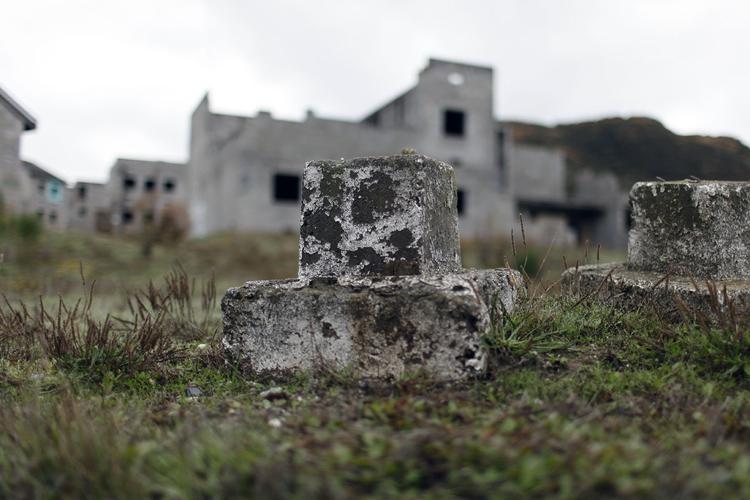
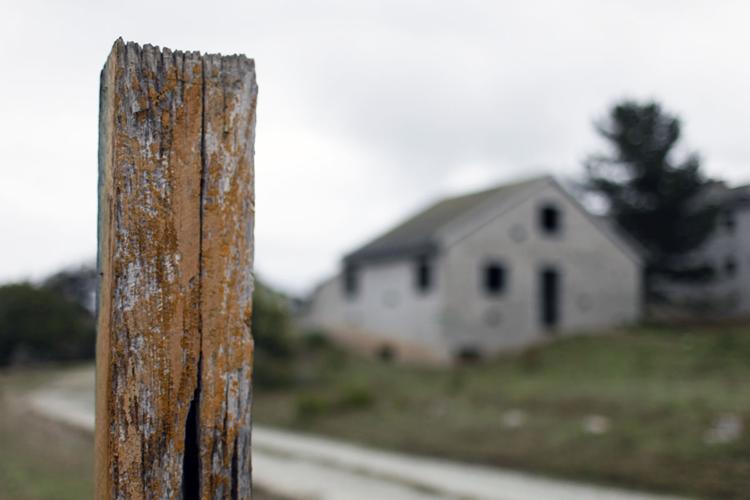

Heavy green mosses, dripping oak leaves and perky grasses adorn the former Fort Ord on a rainy day. A left turn onto Eucalyptus Road in Seaside reveals a wilderness of saturated greens.
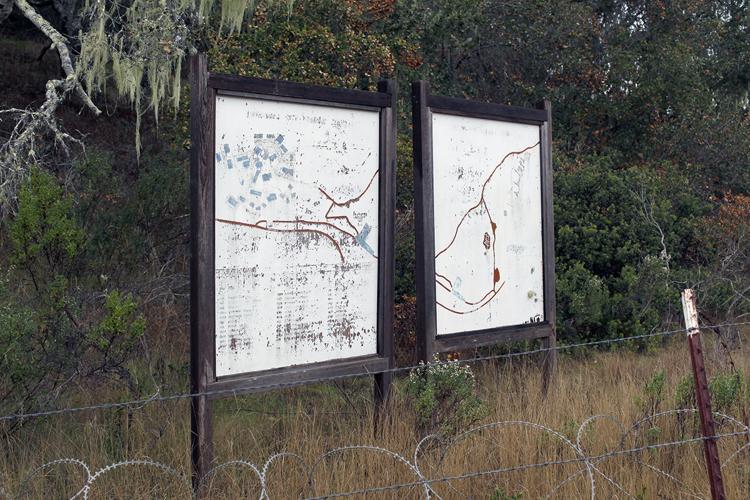
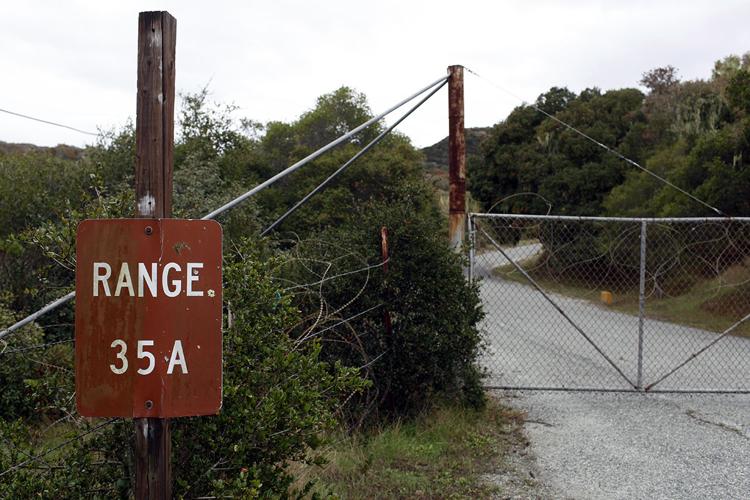
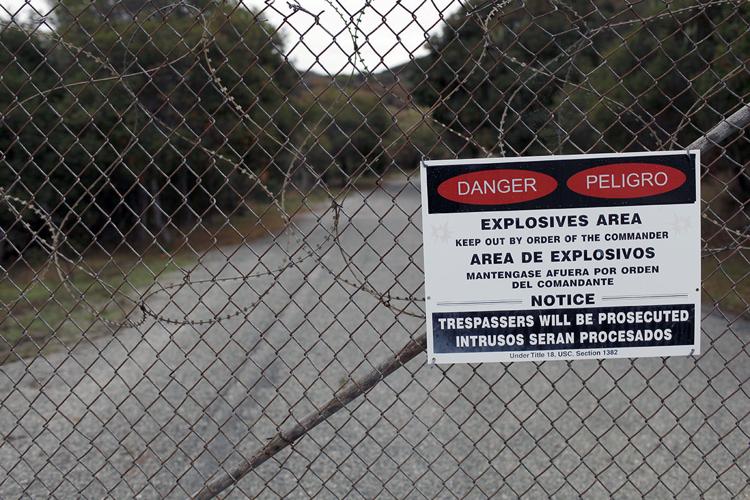
Heading from Parker Flats toward Watkins Gate, a gate rimmed with concertina wire marks the perimeter of the inland ranges, with signs warning, “Explosives Area Keep Out!”
The inland ranges remain the most dangerous part of Fort Ord. It’s slated to become part of the nearly 15,000-acre Fort Ord National Monument after the Army completes an extensive clean-up process. Once it’s done, which is expected to be by 2022, the U.S. Bureau of Land Management will get it ready for hikers, bikers and joggers.
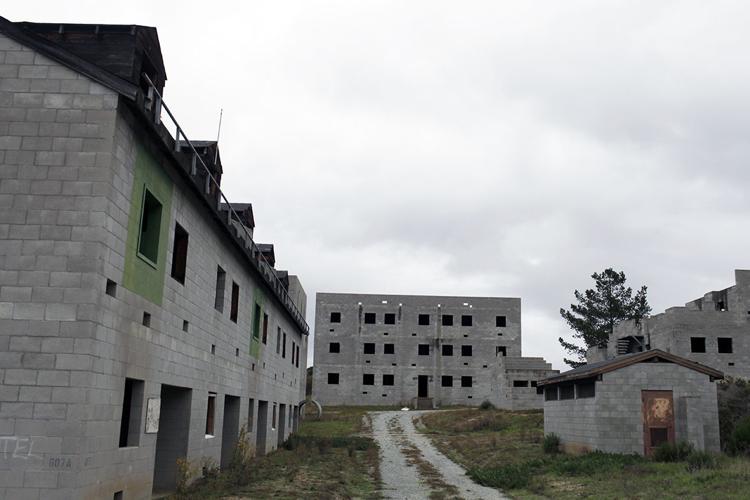
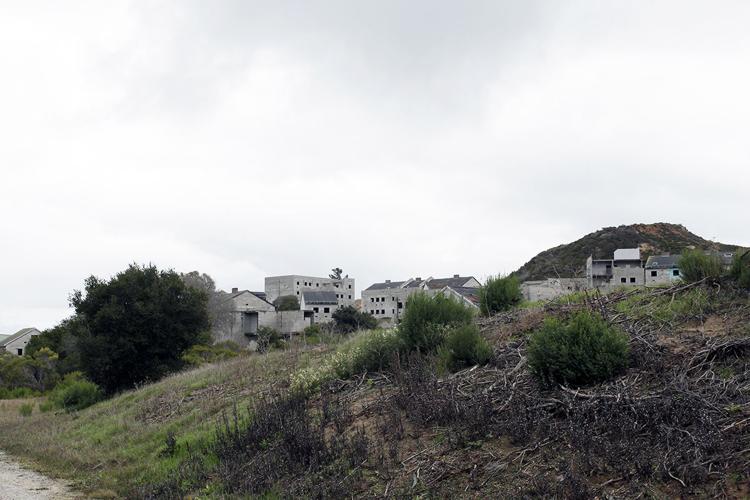
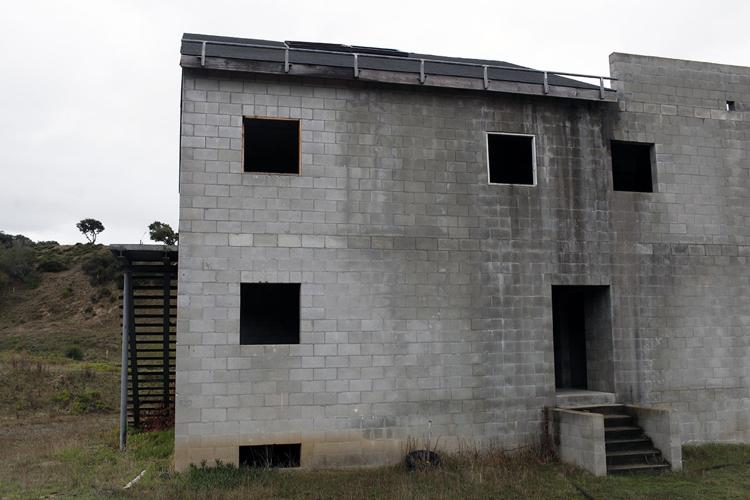
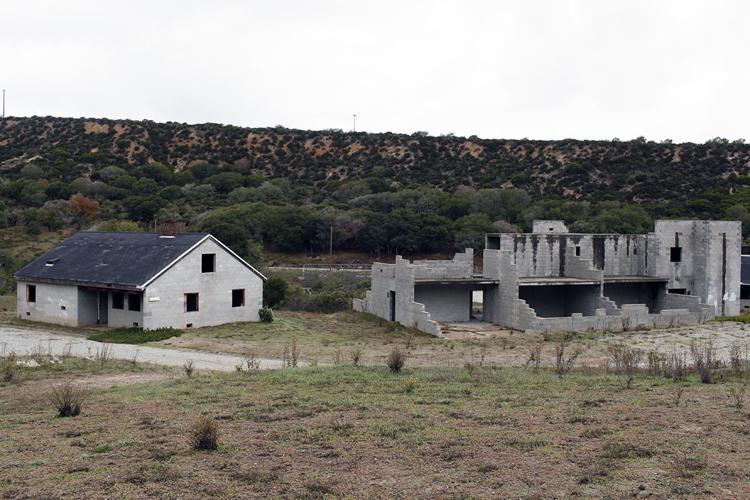
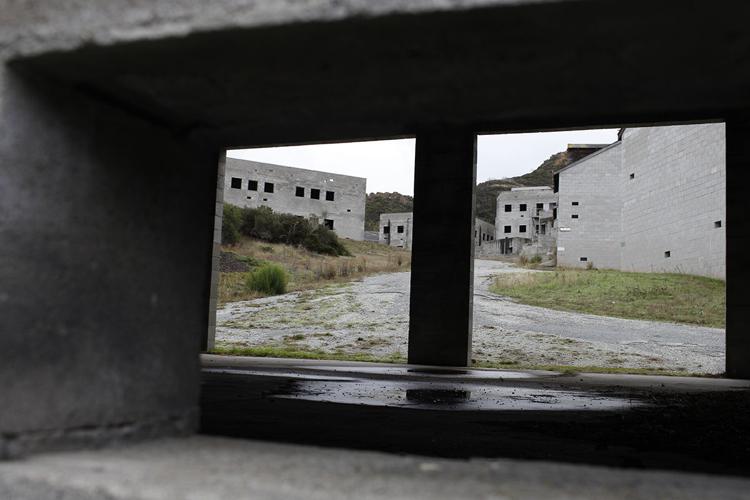
All of it, that is, except for a 51-acre section, which sits like a donut hole in the middle of the monument. From time to time, this little plot becomes a pretend war zone, complete with helicopter landings and live fire. It’s formally called the MOUT (Military Operations on Urban Terrain) site, but everyone calls it the Impossible City, nicknamed after the steep Impossible Canyon it sits in.
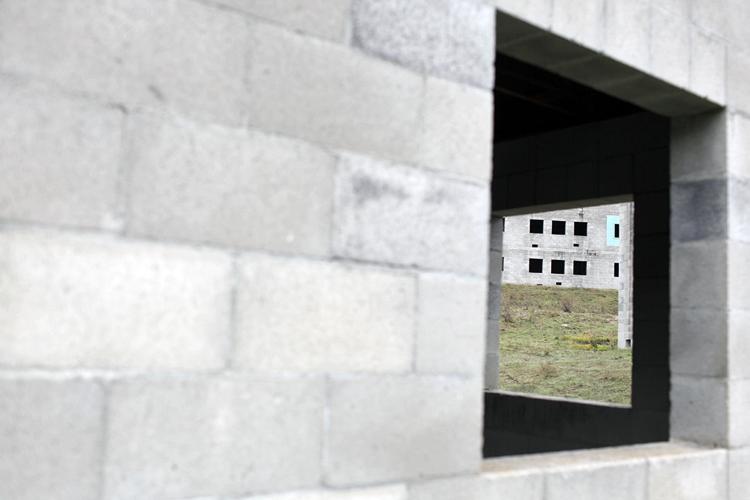
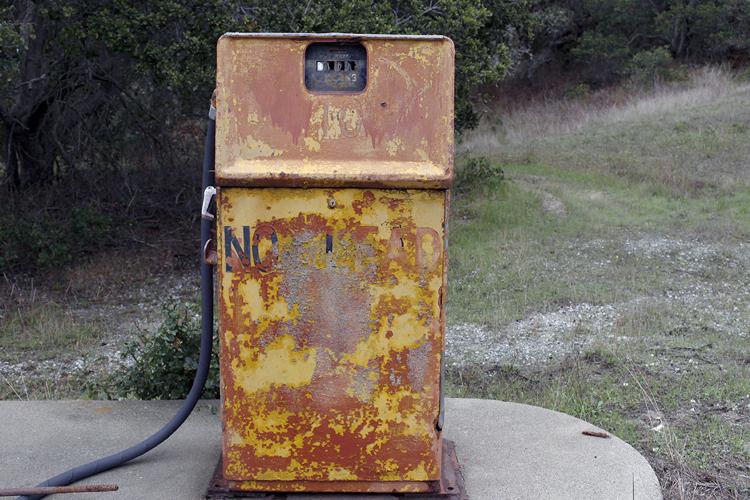
Some people see a European village; others the Middle East. There’s a gas station, a civic center, a public square, apartments, houses. The large cinder-block buildings are generic enough to be offices, embassies or bunkers. White graffiti on one wall says, “USA NO GOOD.” It might’ve been painted by a trespasser, or by an instructor setting up a simulation of a Syrian town.
It’s a life-sized game of make-believe, with real weapons and high stakes.
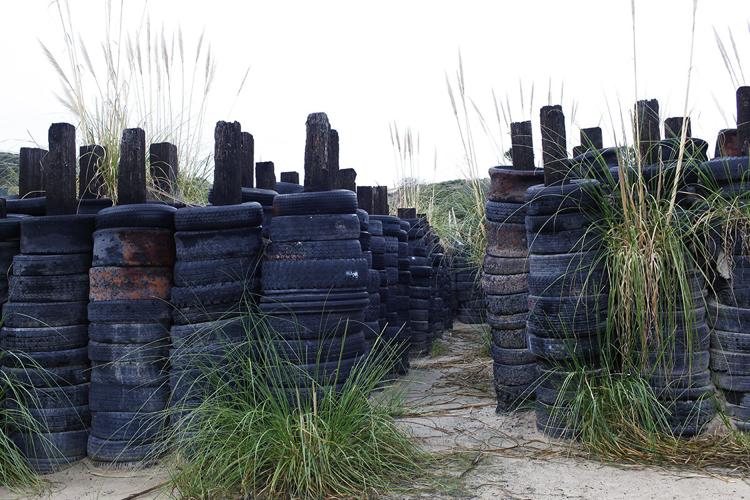
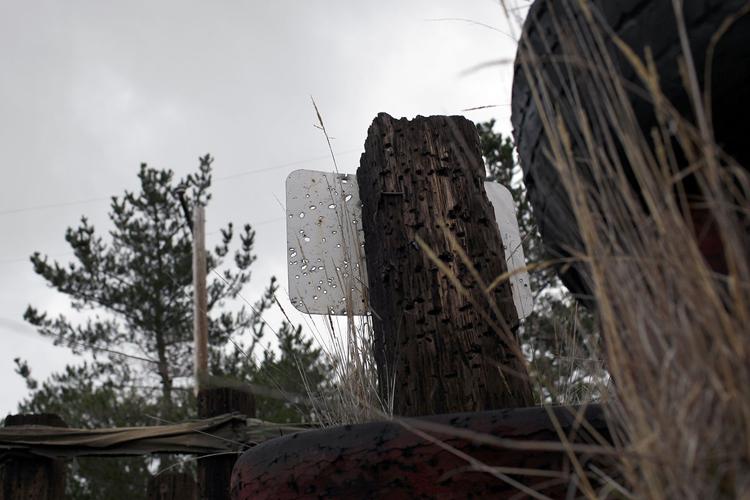
One building is a maze made out of old tires. It was the place to practice navigating with live fire, since the tires prevent dangerous ricochets. (Live fire hasn’t been used here since 2009.) The dirt floor is littered with bronze-colored bits of metal, live and blank ammunition.
White graffiti on one wall says, “USA NO GOOD.”
Some floors are full of puddles and pine needles. Moss creeps up some of the walls. It looks like an abandoned town, but nothing is dilapidated. Except for a few rubbish piles – that could be trash, or could be part of a simulated village – it’s in sturdy condition.
The Army built the Impossible City in 1987, a few years after the 7th Infantry Division was designated as “light infantry.” At the time, it was a new idea for versatile, rapid deployment. That new division would go to Panama in 1989 and capture the dictator, Manuel Noriega.
The MOUT concept at Fort Ord dates back to at least World War II, when a similar mock-up village existed elsewhere on Fort Ord. Later, there was a model Vietnamese village.
Today, it’s managed by the Presidio of Monterey’s 229th Military Intelligence Battalion, even though the property is owned by the Fort Ord Reuse Authority. When FORA took over the property in 2009, it grandfathered in the Army’s use for up to 45 days a year.
Language students simulate real-life interpretation scenarios under pressure, or keep up with basic military drills. But next year, the parcel is scheduled to transfer to Monterey Peninsula College.
That story traces back to 2003, when two parallel bureaucratic processes simultaneously gave a prime Fort Ord parcel to MPC and the county. In the deal that ended the conflict, the county got the parcel in question – now the East Garrison residential development – and MPC got the Impossible City.
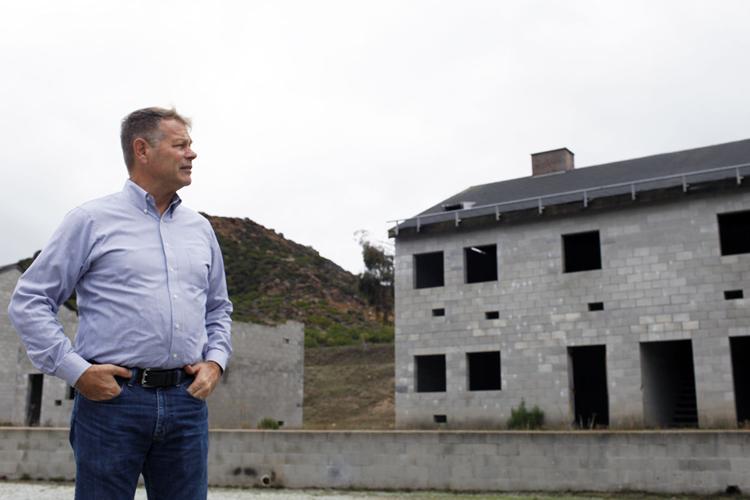
MPC President Walter Tribley envisions first responders, firefighters, medics and others using the Impossible City for drills. “I see potential as a great economic driver on the former Fort Ord,” he says. “The facility is unique.”
On one visit, Tribley showed up in a suit and tie. “I looked like the quintessential city-slicking president out there,” he says. Helicopter pilots, who were practicing their takeoffs and landings, asked him to play a victim.
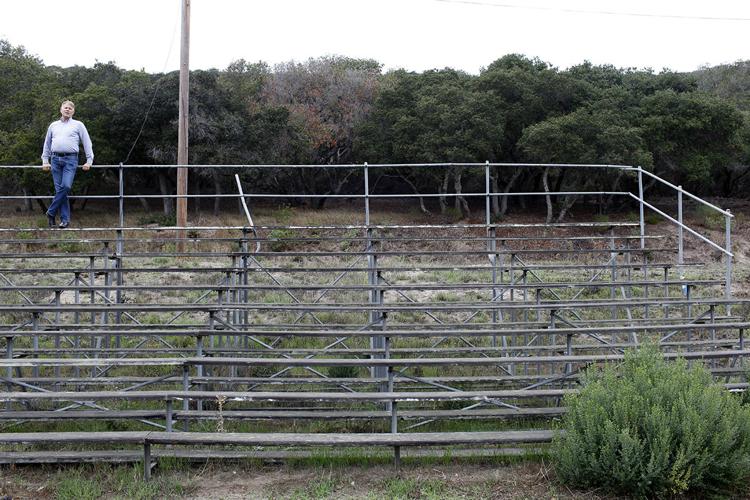
After MPC takes ownership, the place will remain fenced off. “Not to keep people from going into the MOUT facility, but to keep people training in the MOUT facility from going out into the National Monument,” FORA Property Manager Stan Cook says.
Although FORA now owns the site, Cook himself needs the Army’s permission to get in because of ongoing munitions cleanup. “Access to the inland ranges is highly controlled, and it should be,” he says.
The Impossible City’s transfer from FORA to MPC is expected to happen in 2015. It’s awaiting approvals from the U.S. Environmental Protection Agency, the Army and the California Department of Toxic Substances Control.
Even after it’s changed hands, the Impossible City will remain a sort of military Brigadoon, set deep in the woods and coming to life only a few times a year, becoming anywhere its masters want it to be.
(0) comments
Welcome to the discussion.
Log In
Keep it Clean. Please avoid obscene, vulgar, lewd, racist or sexually-oriented language.
PLEASE TURN OFF YOUR CAPS LOCK.
Don't Threaten. Threats of harming another person will not be tolerated.
Be Truthful. Don't knowingly lie about anyone or anything.
Be Nice. No racism, sexism or any sort of -ism that is degrading to another person.
Be Proactive. Use the 'Report' link on each comment to let us know of abusive posts.
Share with Us. We'd love to hear eyewitness accounts, the history behind an article.