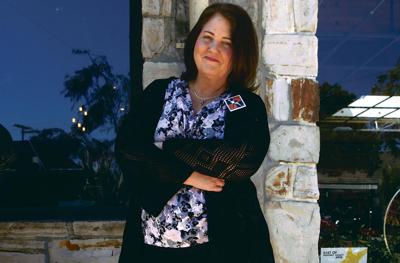

Julia Reynolds has a lot of accolades that can go in front of her name. Award-winning reporter. Harvard Nieman Fellow. Adjunct professor. Documentarian. And, at one time, defendant.
Reynolds, for the past 10 years the criminal justice reporter at the Monterey Herald, may be the only journalist in California – perhaps even the country – to have been sued by a criminal street gang.
The libel and defamation suit was filed in 2010 Sacramento County small claims court on behalf of an incarcerated member of Nuestra Familia, the notorious gang born in California’s prison system.
Reynolds had been hitting the gang hard with her coverage for years, revealing its inner workings like few ever had. But defendants in small claims suits are not allowed to bring attorneys to court, and Reynolds thinks the suit may have been an attempt to lure her to Sacramento by herself.
“I was almost disappointed when the suit was withdrawn,” she says. “The paper’s attorney argued it filed in an inappropriate venue and they never refiled.”
Reynolds fearlessness comes through in her new Blood in the Fields: Ten Years Inside California’s Nuestra Familia Gang, an account of turf wars between gang members, cops and feds (who didn’t always see eye to eye with local law enforcement). Reynolds pored over tens of thousands of pages of court documents involved in Operation Black Widow – the FBI’s attempt to dismantle the gang by turning members into informants – to enhance a story told through her access to gang members. The book is available at independent book stores or Amazon.com.
Weekly: There are a number of “holy shit” moments in the book. The first one is when gang members are fighting about whether to kill [Salinas Mayor] Joe Gunter, who was then a police detective, because he “insulted” a leader by offering to buy him a drink.
Julia Reynolds: Joe didn’t remember that incident, but he said, “If it’s in a police report, I guess it’s true.” Matt, the guy who wanted to kill him, is in a Supermax prison now, so I don’t know what he was thinking. I thought Joe’s offer to buy him a drink was gracious, but he took offense to it.
The guy who was the source on this story, Pablo, is doing 24 years for armed robbery. He told Matt, “I don’t want to whack him because you’re drunk.” It was rare for Pablo to be the sensible one.
What made you think this story was worthy of a book?
I had this incredible stash of documents and tapes and I had reported about Operation Black Widow and problems with informants in that case. There were 100,000 pages of discovery – I still haven’t read it all – and what I saw was a story of informants running around with wires and dialogue of plans to kill people and the choreographing of the hits. I saw officials who knew the gang was going to murder people, but the feds said, “Keep going, we need more overt acts.” Finally a guy got killed and a woman was injured while they waited.
I also wanted to tell a story without judgment from the gang members’ point of view and from the Latino police who work with these guys. They’re unsung heroes. They grew up around this too.
You describe a gang that operates like a Fortune 500 business – almost.
I like to call it disorganized organized crime. On one hand, they’re extremely sophisticated and that’s why they’re difficult to break into and why it’s so hard to get kids out. On the other hand, most of these guys have no money, they’re living with their moms or at the Motel 6, they party a lot and they live for today. But they’re moving a lot of drugs, so someone has money. A lot of it gets filtered up.
What do you want readers to take away?
I want people to have a better understanding of the logic at work. It’s easy to think of gang members as sociopaths or psychopaths and most are not. Most were good kids and they go from that to becoming full-time professional criminals. We need to understand that to make better solutions. Most gang members want a way out, a safe and honorable way out. If they could get out, most would. There is nothing glamorous about it.
(0) comments
Welcome to the discussion.
Log In
Keep it Clean. Please avoid obscene, vulgar, lewd, racist or sexually-oriented language.
PLEASE TURN OFF YOUR CAPS LOCK.
Don't Threaten. Threats of harming another person will not be tolerated.
Be Truthful. Don't knowingly lie about anyone or anything.
Be Nice. No racism, sexism or any sort of -ism that is degrading to another person.
Be Proactive. Use the 'Report' link on each comment to let us know of abusive posts.
Share with Us. We'd love to hear eyewitness accounts, the history behind an article.