There’s a meme floating around the Internet that shows a white family sitting around a stuffed dinner table, holding hands and praying: “Thanks, Jesus, for this food.”
Under that picture is another: a Mexican farm worker in a cowboy hat picking crops under a blazing sun. The man – presumably named Jesus – responds: “De nada.” (“You’re welcome.”)
The tongue-in-cheek meme, despite being found on the same time-wasting websites that tout “Hipster Hitler,” is perceptive social commentary. It begs the questions: How much do we know about where our food comes from – and about the people toiling to bring it to us?
Two new investigative reports have revealed the invisible and often abusive world of immigrant farm workers, adding a devastating human perspective to the immigration debate now raging in Congress. The Frontline PBS documentary Rape in the Fields, which aired in late June and now can be viewed online, explores the hidden problem of rape among immigrant women laborers. And Fresh Fruits, Broken Bodies, published by the University of California Press in June, chronicles a medical anthropologist’s examination of the health care challenges faced by migrant farm workers, including those in the Salinas Valley.
Rape in the Fields focuses in part on the story of a Salinas woman, Maricruz Ladino, a field worker who accused a supervisor at the Anthony Smith Co. of rape in 2006. She later sued the grower.
“One of the supervisors wanted me to go with him to check the crops, and he insinuated that he wanted other things with me,” Ladino remembers in the documentary. “He took the opportunity to abuse me… if I said anything, I would lose my job. I couldn’t lose my job because I was the one taking care of my daughters.”
The exploitation is so pervasive, workers say, one Salinas worksite was referred to as the “field of panties.”
But relief is hard to come by. On the Central Coast and in the Central Valley, only a handful of organizations take on sexual harassment cases, making the justice-seeking process difficult for low-income clients, according to a report by the Center for Investigative Reporting, which partnered with PBS and Univision on the investigation.
Though at least two workers per harvest (there have been three so far this year) go to the Salinas office of California Rural Legal Assistance to report rape, it’s tough to get prosecutions, CIR reports. Prosecutors say such cases can be hard to prove, as there is sometimes little evidence.
Fresh Fruit, Broken Bodies reaches similarly dismaying conclusions about the health of immigrant laborers.
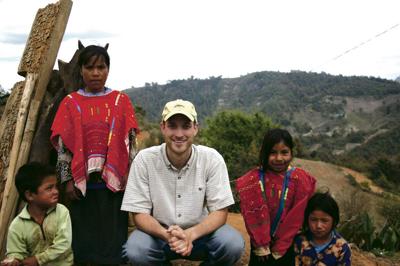
“The title is meant to show the exchange that goes on between those of us who shop at grocery stores and farmers markets and the farm workers who pick our food,” says author Seth Holmes, who traveled with migrants and worked at hospitals including Natividad Medical Center in Salinas during his research. “The indigenous Mexican farm workers gave up their health and their bodies, became injured and sick in order to give us healthy, fresh fruit.”
Holmes, a UC Berkeley anthropology professor, learned firsthand about the back-breaking work many U.S. citizens are unwilling to do. For nearly two years he helped pick blueberries and strawberries, worked in vineyards and slept in cars when there was no work to be had. He found his immigrant companions rarely sought health care. Though the co-pay at a nonprofit clinic might cost $50 or less, that’s a fortune for someone who makes between $5,000 and $9,000 a year and has a family to support, he says.
“I watched farm workers avoid medical care whenever possible, continuing to work against difficult odds,” he says.
Compounding the problem is California’s system of hiring farm labor, which often keeps pay below minimum wage, Holmes says. In what’s called the contractor system, the farm officially hires a contracting company, which then hires laborers. Because few laborers are put on the payroll, there’s no paper trail – and it’s easier for the boss to take advantage of the workers.
Holmes says workers he traveled with want legal permission to come to the U.S. and work, as well as the legal protections offered to citizens. But, they’d still like to live in Oaxaca if possible.
“It is important for politicians to consider ways to work toward equal binational economic development so that people in rural Mexico are able to stay home and are not forced to migrate in the first place,” Holmes says.
Meanwhile, on the citizenship end of the debate, some members of Congress won’t support immigration reform unless newly legalized immigrants aren’t eligible for health care for 15 years down the path to citizenship, he says.
“It is unfortunate, in my view, that the immigration debates are often so abstract and do not include the voices and stories of real humans who are immigrants,” Holmes says.
What isn’t abstract: the food on the dining room table. De nada.
(0) comments
Welcome to the discussion.
Log In
Keep it Clean. Please avoid obscene, vulgar, lewd, racist or sexually-oriented language.
PLEASE TURN OFF YOUR CAPS LOCK.
Don't Threaten. Threats of harming another person will not be tolerated.
Be Truthful. Don't knowingly lie about anyone or anything.
Be Nice. No racism, sexism or any sort of -ism that is degrading to another person.
Be Proactive. Use the 'Report' link on each comment to let us know of abusive posts.
Share with Us. We'd love to hear eyewitness accounts, the history behind an article.