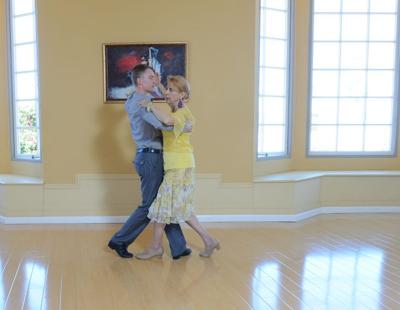
Irene Watson hustles around her home showing off her various hobbies: a box of records for genealogy (she taught herself Russian to read through them); a hallway full of framed photography; a closet stuffed with dresses, some of which she designed. The furniture is pushed back, the carpet rolled up so she can practice for her next public performance.
Watson, 71, exudes a youthful – almost frenetic – liveliness despite the fact her life teeters on the edge. Her struggle with cystic fibrosis, which nearly killed her three years ago, has been lifelong (though she wasn’t officially diagnosed until 2010), and seven years ago she learned of another fatal, and crippling, disease: Parkinson’s.
Hers is a daily battle. During one of many pneumonia episodes brought on by CF, her lungs were infected with a superbug, leaving her bedridden and near death. She pulled through with a combination of antibiotics and a salt-water mist she inhaled to induce violent coughing to get the mucus out.
Now Watson continues with the salt-water mist treatment, a four-hour daily ordeal, and takes more than 30 medications a day, using her iPhone to keep track. Meanwhile Parkinson’s erodes her ability to move, see and even digest.
Despite that, she’s been able to carry on in remarkably good health, at least under the circumstances. She identifies one reason why: a passion for dance.
“Without dance I probably would not be here anymore,” she says. “I was on my way out the door.”
Dance has always been part of her life. Watson learned to rock and roll when she was a teen, joined a musical in college, and took some ballet and jazz classes in her 40s for fun. She met her fourth husband, Rick Hilgers, 13 years ago at a dance. Then the pair married last fall on a dance floor in their yard.
Hilgers also has Parkinson’s. The illness was taking over their lives: Hilgers couldn’t walk into a closet without becoming immobilized, and medication would make Watson hallucinate that furniture was attacking. Their enjoyment of costume balls and jazz was fading.
“We didn’t even enjoy going to listen, because it was depressing,” Watson says.
That changed when the pair started studying dance more seriously. It began with the recommendation of a neuroscientist at the University of Arizona, who said aerobic exercise combined with learning new skills could help slow Parkinson’s. Watson thought her old hobby would be perfect.
The couple started an intense four-to-five-day-a-week ballroom dance training regimen in Pacific Grove. Just a year later, Watson saw huge health boosts: Her bone mass improved, and her lung function went from 46 percent to 60 percent. With the help of medication, she got it up to 70 percent. Another benefit: It’s fun.
“It lifts my spirits, and it makes me want to do the exercise that I get benefits from,” Watson says. “It makes me feel good about myself, it makes me feel younger, it makes me feel alive.”
Good results for Hilgers, too.
“I’d be in the shower, and couldn’t move. Dancing has taught me to think and do something like this,” he says, looping around with quick, small steps.
~ ~ ~
Dressed in a flowing yellow dress, Watson took the Pacific Grove stage in mid-June for a foxtrot, an elegant dance that sent her and her handsome Russian teacher twirling devilishly through the room.
“She’s just amazing,” says Linda Lundy, a masseuse who works with Watson. “I’ve seen her go from a knee brace, to going without a knee brace.”
Another part of Watson’s success is fastidious recordkeeping. She carefully tracks the progression of her diseases, even graphing her lung function on computer spreadsheets.
“Irene reads a lot,” Hilger says. “She’s a graduated engineer from Stanford. She talks at [doctors’] level. That she’s come a long way isn’t only due to her doctors, but to her own research.”
Watson just wrote an article, “Dancing Away Disability”; she says National Jewish Health and the Pacific Wellness Center at Community Hospital of the Monterey Peninsula plan to publish it online.
“They say that growing old ain’t for sissies, and I’d add that neither is living with CF or Parkinson’s,” she writes.
Hilger and Watson now have seniors join them in dance practice at their home, in conjunction with a dance class for seniors taught at Monterey Peninsula Dance.
“What I want people to get from this story is hope,” Watson says. “There are things you can do.”
Like strapping on those dancing shoes.
(1) comment
Just for reference. It's Pacific Grove Dance studio in PG. dance lessons monterey
Welcome to the discussion.
Log In
Keep it Clean. Please avoid obscene, vulgar, lewd, racist or sexually-oriented language.
PLEASE TURN OFF YOUR CAPS LOCK.
Don't Threaten. Threats of harming another person will not be tolerated.
Be Truthful. Don't knowingly lie about anyone or anything.
Be Nice. No racism, sexism or any sort of -ism that is degrading to another person.
Be Proactive. Use the 'Report' link on each comment to let us know of abusive posts.
Share with Us. We'd love to hear eyewitness accounts, the history behind an article.