

By Dr. Brynie Kaplan Dau, M.Sc., DVM
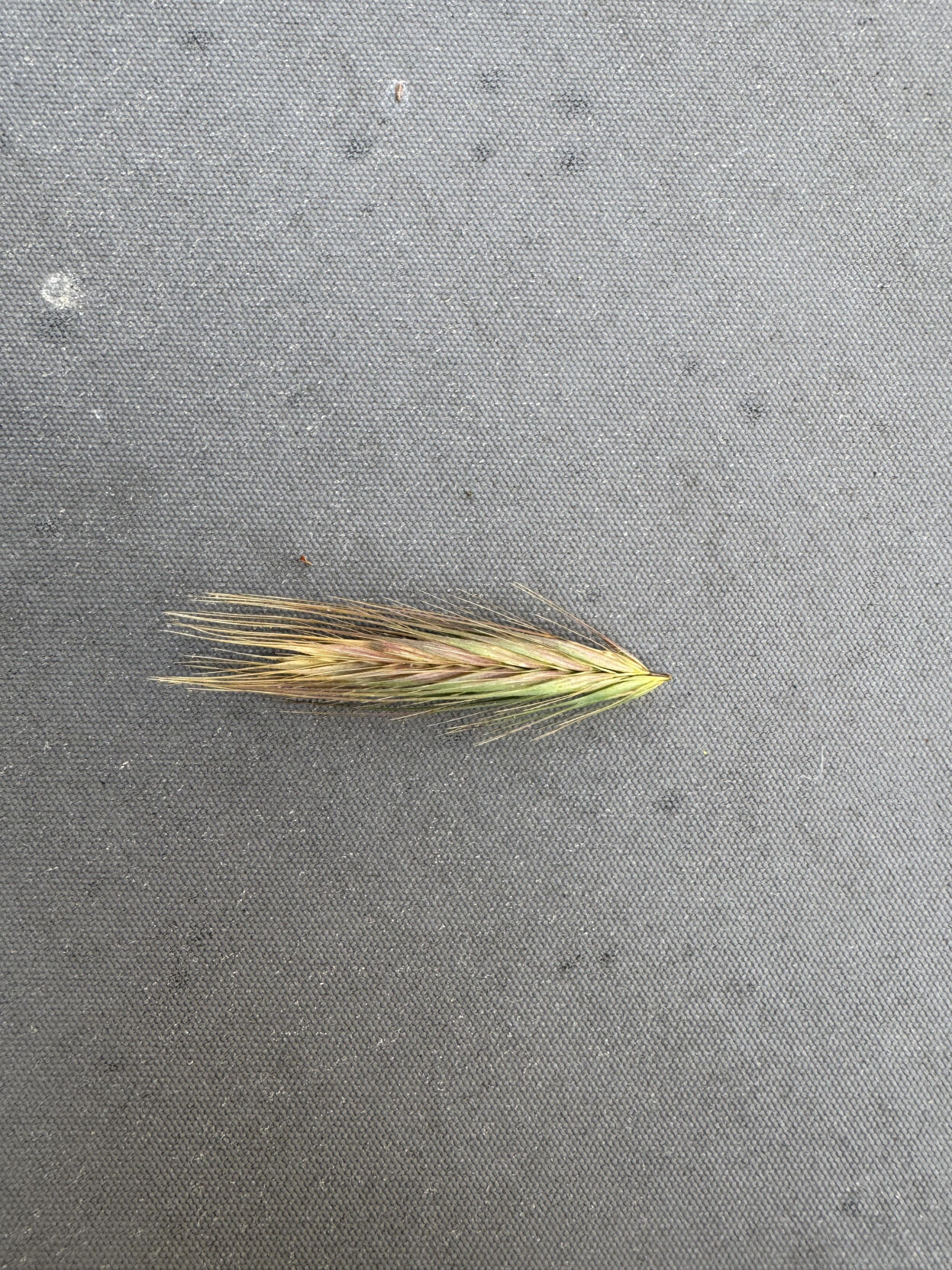
We live in a beautiful county of wide open spaces with wild plants, wildlife, natural beauty, and a rugged coastline. We have plenty of wide open trails for hiking and walking our dogs. This is one of the reasons we love living here, right? But all of this open space and wild plants has one major downside: foxtails. Foxtails are an unfortunate fact of life for those of us who live in Monterey County. Foxtails grow year round in California but we are now in the season when they dry up and fall off of the plants onto the ground. If you have a dog or an outdoor cat you probably already know what a foxtail looks like.
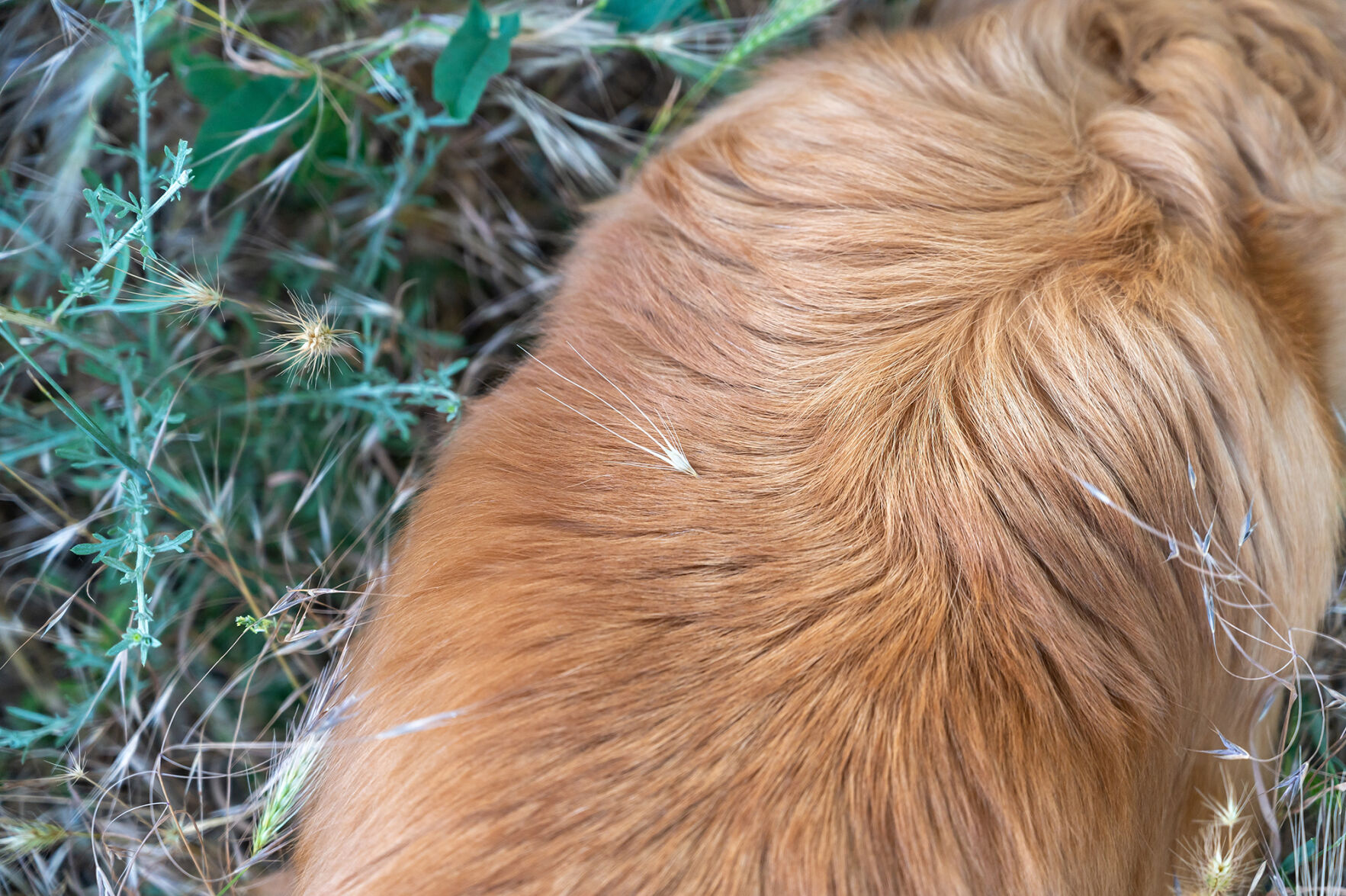
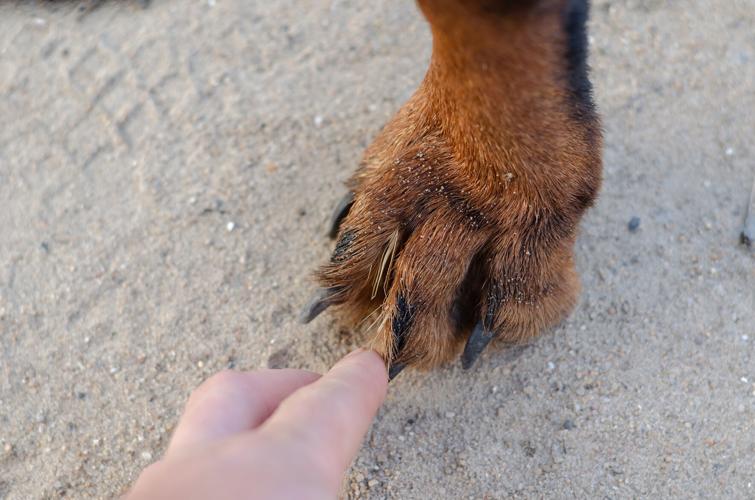
Foxtails are dried seed heads of grasses that are shaped like tiny barbed arrowheads, and they are everywhere. They can become embedded in the fur of our pets, causing significant pain and destruction. They become lodged in eyes, ears, paws, under the arms, and just about anywhere you can think of on a dog’s body. Not only do they hurt our pets initially, but they can travel to more serious places in the body if they aren’t removed. Veterinarians have removed them from the lungs, abdominal organs, and even the brain after they have traveled. Therefore it is important to bring your pet in to your veterinarian if you see or suspect a foxtail. If there’s one in the eye like I saw today in a young puppy, you’ll often notice squinting, redness, and yellow discharge. They can cause an ulcer on the cornea of the eye and cause significant pain. If a foxtail gets lodged in the ear you’ll notice head shaking and scratching. They can puncture the eardrum and migrate into the inner ear if left untreated. When a foxtail burrows under the skin between the toes, you’ll see a swollen bump, sometimes with a draining tract. I once removed over 35 foxtails from the belly of a dog who was laying in the shade in the weeds.

Checking your dog's paws can prevent foxtails from penetrating the skin.
The sooner we can remove these little troublemakers the better. To make matters worse, foxtails are not always easy to find. They can hide in the deeper layers of connective tissue underneath the skin. In this case removal requires sedation and exploratory surgery. Sometimes multiple surgeries are required. Foxtails also carry bacteria with them that gets injected under the skin, so antibiotics as well as pain medicine are often required. The best way to avoid all of this is to stick to the trails when out hiking, and to check your pets every time you go out. I recommend checking ears, and in between toes every day, particularly in hairy breeds. You can further protect your dog by keeping their hair trimmed short, or at least keeping their feet trimmed. A lot of people do a summer haircut, which can help make it easier to see a foxtail if it sticks to your dog. But if you do find a foxtail or suspect that one is embedded, take your dog or cat to the veterinarian right away so we can help you and your pet. That’s what we’re here for. Good luck this season!
Pacific Grove Animal Hospital.