PUBLIC ACCESS TO GOVERNMENT RECORDS IS ENSHRINED IN LAW, BUT IN PRACTICE IT DOESN’T ALWAYS QUITE WORK OUT THAT WAY. Each year during Sunshine Week in March, the Electronic Frontier Foundation and MuckRock combine forces to collect horror stories about Freedom of Information Act (FOIA) and state-level public records requests (like the California Public Records Act, or CPRA) from journalists and transparency advocates across the United States and beyond. The goal is to identify the most surreal document redactions, the most aggravating copy fees, the most outrageous retaliation attempts, and all the other ridicule-worthy attacks on the public’s right to know.
And every year since 2015, as we’re about to crown these dubious winners, something new comes to light that makes us consider stopping the presses.
As we were writing up this year’s faux awards, news broke that officials from the National Archives and Records Administration had to lug away boxes upon boxes of Trump administration records from Mar-a-Lago. We also just learned from journalist Maggie Haberman’s new book that staff claimed to find toilets clogged up with paper scraps, which were potentially torn-up government records. Former president Donald Trump has dismissed the allegations, of course.
Ultimately, we decided not to give Trump his seventh FOILie award. Technically he isn’t eligible: his presidential records won’t be subject to FOIA until he’s been out of office for five years.
Instead, we’re sticking with our original 12 winners, from federal agencies to small-town police departments that, at least metaphorically, have no problem tossing government transparency in the crapper.
The C.R.E.A.M. (Crap Redactions Everywhere Around Me) Award – U.S. Marshals
The Wu-Tang Clan ain’t nothing to F’ with… unless the F stands for FOIA. Back in 2015, Wu-Tang Clan produced the album Once Upon a Time in Shaolin, but they only produced one copy and sold it to the highest bidder: pharma-bro Martin Shkreli, who was later convicted of securities fraud.
When the U.S. Marshals seized Shkreli’s copy of the record under asset forfeiture rules, the Twitterverse debated whether you could use FOIA to obtain the super secretive album. Unfortunately, FOIA does not work that way. However, BuzzFeed News reporter Jason Leopold was able to use the law to obtain documents about the album when it was auctioned off through the asset forfeiture process. For example, he got photos of the album, the bill of sale, and the purchase agreement.
But the Marshals redacted the pictures of the CDs, the song titles, and the lyric book citing FOIA’s trade secrets exemption. Worst of all, they also refused to divulge the purchase price – even though we’re talking about public money. And so here we are, bringing da motherfoia-ing ruckus.
(The New York Times would later reveal that PleasrDAO, a collective that collects digital NFT art, paid $4 million for the record.)
Wu-Tang’s original terms for selling the album reportedly contained a clause that required the buyer to return all rights in the event that Bill Murray successfully pulled off a heist of the record. We can only daydream about how the Marshals would’ve responded if Dr. Peter Venkman himself refiled Leopold’s request.
The Operation Slug Speed Award – U.S. Food and Drug Administration
The federal government’s lightning fast (by bureaucratic standards) timeline to authorize Pfizer’s Covid-19 vaccine lived up to its Operation Warp Speed name. But the Food and Drug Administration gave anything but the same treatment to a FOIA request seeking data about that authorization process..
Fifty-five years – that’s how long the FDA, responding to a lawsuit by doctors and health scientists, said it would take to process and release the data it used to authorize the vaccine. And yet, the FDA needed only months to review the data the first time and confirm that the vaccine was safe for the public.
The estimate was all the more galling because the requesters want to use the documents to help persuade skeptics that the vaccine is safe and effective, a time-sensitive goal as we head into the third year of the pandemic.
Thankfully, the court hearing the FOIA suit nixed the FDA’s plan to review just 500 pages of documents a month. In February, the court ordered the FDA to review 10,000 pages for the next few months, and between 50,000-80,000 through the rest of the year.
The Highest Fee Estimate Award – Pasco County Sheriff’s Office
In September 2020, the Tampa Bay Times revealed in a multi-part series that the Pasco County Sheriff’s Office was using a program called “Intelligence-led Policing” (ILP). This program took into consideration a bunch of data gathered from various local government agencies, including school records, to determine if a person was likely to commit a crime in the future – and then deputies would randomly drop by their house regularly to harass them.
Out of suspicion that the sheriff’s office might be leasing the formula for this program to other departments, EFF filed a public records request asking for any contact mentioning the ILP program in emails specifically sent to and from other police departments. The sheriff responded with an unexpectedly high-cost estimate for producing the records. Claiming there was no way at all to clarify or narrow the broad request, they projected that it would take 82,738 hours to review the 4,964,278 responsive emails – generating a cost of $1.158 million for the public records requester.
The Futile Secrecy Award – Concord Police Department (New Hampshire)
When reporters from the Concord Monitor in 2019 noticed a vague $5,100 line item in the Concord Police Department’s proposed budget for “covert secret communications,” they did what any good watchdog would do – they started asking questions. What was the technology? Who was the vendor? And they filed public records requests under New Hampshire’s Right to Know Law.
In response, CPD provided a license agreement and a privacy policy, but the documents were so redacted, the reporters still couldn’t tell what the tech was and what company was receiving tax dollars for it. Police claimed releasing the information would put investigations and people’s lives at risk. With the help of the ACLU of New Hampshire, the Monitor sued but Concord fought it for two years all the way to the New Hampshire Supreme Court. The police were allowed to brief the trial court behind closed doors, without the ACLU lawyers present, and ultimately the state Supreme Court ruled most of the information would remain secret.
EFF took another look at the redacted documents. In under three minutes, our researchers were able to use a simple Google search to match the redacted privacy policy to Callyo, a Motorola Solutions product that facilitates confidential phone communications.
Hundreds of agencies nationwide have in fact included the company’s name in their public spending ledgers, according to the procurement research tool GovSpend. The city of Seattle even issued a public privacy impact assessment regarding its police department’s use of the technology, which noted that “Without appropriate safeguards, this raises significant privacy concerns.” Armed with this new information, the Monitor called Concord Police Chief Brad Osgood to confirm what we learned. He doubled-down: “I’m not going to tell you whether that’s the product.”
The Redacting Information That’s Already Public Award – Humboldt-area Law Enforcement Agencies
Across the country, police departments are notorious for withholding information from the public. Some agencies take months to release body camera footage after a shooting death or might withhold databases of officer misconduct. California’s state legislature pushed back against this trend in 2018, with a new law that specifically puts officer use-of-force incidents and other acts of dishonesty under the purview of the California Public Records Act.
But even after this law was passed, one Northern California sheriff was hesitant to release information to journalists – so hesitant that his staff redacted information that had already been made public. After the North Coast Journal filed a request with the Humboldt County Sheriff’s Office under the 2018 law, the sheriff took two full years to provide the requested records.
Why the long delay? One possible reason: The agency went to the trouble of redacting information from old press releases – which, by definition, were already public.
For example, the sheriff’s office redacted the name of a suspect who allegedly shot a sheriff’s deputy and was arrested for attempting to kill a police officer in May 2014, including blacking out the name from a press release the agency had already distributed that included the suspect’s name. And it’s not like the press had accidentally missed the name the first time: reporter Thadeus Greenson had published the release in the North Coast Journal right after it came out.
That isn’t Greenson’s only example of law enforcement redacting already public information: in response to another public records request, the Eureka Police Department included a series of news clippings, including one of Greenson’s own articles, again with names redacted.
The Return to Sender Award – Virginia Delegate Paul Krizek
There are lawmakers who find problems in transparency laws and advocate for improving the public’s right to know. Then there’s Virginia lawmaker Paul Krizek.
Krizek introduced a bill that would require all public records requests to be sent via certified mail, saying that he “saw a problem that needed fixing,” according to the Richmond Times-Dispatch.
The supposed problem? A records request emailed to Krizek got caught in his spam filter, and he was nervous that he missed the response deadline. That never happened; the requester sent another email that Krizek saw and he responded in time.
Anyone else might view that as a public records (and technology) success story: the ability to email requests and quickly follow up on them proves that the law works. Not Krizek. He decided that his personal spam filter hiccup should require every requester in Virginia to venture to a post office and pay at least $3.75 to make their request.
Transparency advocates quickly panned the bill, and a legislative committee voted to strike it from the docket. Hopefully the bill stays dead and Krizek starts working on legislation that will actually help requesters in Virginia.
The Rip Van Winkle Award – FBI
Last year, Bruce Alpert received records from a 12-year-old FOIA request he filed as a reporter for the Times-Picayune in New Orleans. Back when he filed the request, the corruption case of U.S. Rep. William Jefferson, D-New Orleans, was still hot – despite the $90,000 in cash found in Jefferson’s cold freezer.
In 2009, Alpert requested documents from the FBI on the sensational investigation of Jefferson, which began in 2005. In the summer of that year, FBI agents searched Jefferson’s Washington home and, according to a story published at the time, discovered foil-wrapped stacks of cash “between boxes of Boca burgers and Pillsbury pie crust in his Capitol Hill townhouse.” Jefferson was indicted on 16 federal counts, including bribery, racketeering, conspiracy and money laundering, leading back to a multimillion-dollar telecommunications deal with high-ranking officials in Nigeria, Ghana and Cameroon.
By the time Alpert got the 83 pages he requested on the FBI’s investigation into Jefferson, Alpert himself was retired and Jefferson had been released from prison. Still, the documents did reveal a new fact about the day of the freezer raid: another raid was planned for that same day, but at Jefferson’s congressional office. This raid was called off after an FBI official, unnamed in the documents, warned that while the raid was technically constitutional, it could have “dire” consequences if it appeared to threaten the independence of Congress.
The FOIA Gaslighter of the Year Award – Louisiana Attorney General Jeff Landry
In another case involving the Times-Picayune, the FOIA gaslighter of the year award goes to Louisiana Attorney General Jeff Landry for suing reporter Andrea Gallo after she requested documents related to the investigation into sexual harassment complaints in Landry’s office.
A few days later, following public criticism, Landry then tweeted that the lawsuit was not actually a lawsuit against Gallo per se, but legal action “simply asking the court to check our decision” on rejecting her records request.
Gallo filed the original request for complaints against Pat Magee, a top aide to Landry, after hearing rumblings that Magee had been placed on administrative leave. The first response to Gallo’s request was that Magee was under investigation and the office couldn’t fulfill the request until that investigation had concluded. A month later, Gallo called the office to ask for Magee and was patched through to his secretary, who said that Magee had just stepped out for lunch but would be back shortly.
Gallo started pushing harder for the records. Then, late on a Friday when Gallo was on deadline for another story, she received an email from the AG’s office about a lawsuit naming her as the defendant.
A month later, a Baton Rouge judge ruled in favor of Gallo, and ordered Landry to release the records on Magee. Shortly after Gallo received those documents, another former employee of the AG’s office filed a complaint against Magee, resulting in his resignation.
The Clear Bully Award – Clearview AI
Clearview AI is the “company that might end privacy as we know,” claimed The New York Times’ front page when it publicly exposed the small company in January 2020.
Clearview had built a face recognition app on a database of more than 3 billion personal images, and the tech startup had quietly found customers in police departments around the country. Soon after the initial reports, the legality of Clearview’s app and its collection of images was taken to court. (EFF has filed friend-of-the-court briefs in support of those privacy lawsuits.)
Clearview’s existence was initially revealed via public records requests filed by Open the Government and MuckRock. In September 2021, as it faced still-ongoing litigation in Illinois, Clearview made an unusual and worrying move against transparency and journalism: it served subpoenas on Open the Government, its researcher Freddy Martinez, and Chicago-based Lucy Parsons Labs (none of whom are involved in the lawsuit).
The subpoenas requested internal communications with journalists about Clearview and its leaders and any information that had been discovered via records requests about the company.
Government accountability advocates saw it as retaliation against the researchers and journalists who exposed Clearview. The subpoena also was a threat to journalists and others looking to lawfully use public records to learn about public partnerships with private entities. What’s more, in this situation, all that had been uncovered had already been made public online more than a year earlier.
Fortunately, following reporting by Politico, Clearview decided to withdraw the subpoenas. We guess you could say the face recognition company recognized their error and did an about-face.
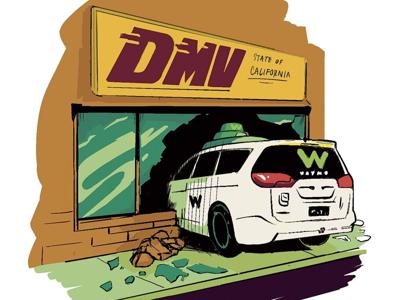
Whose Car is it Anyway? Award – Waymo
Are those new self-driving cars you see on the road safe? Do you and your fellow pedestrians and drivers have the right to know about their previous accidents and how they handle tight turns and steep hills?
Waymo, owned by Google parent Alphabet Inc. and operator of an autonomous taxi fleet in San Francisco, answers: none of your business! A California trial court ruled in late February that Waymo gets to keep this information secret.
Waymo sued the California Department of Motor Vehicles to stop it from releasing unredacted records requested by an anonymous person under the California Public Records Act. The records include Waymo’s application to put its self-driving cars on the road and answers to the DMV’s follow-up questions. The DMV outsourced the redactions to Waymo, and claiming that it needed to protect its trade secrets, Waymo sent the records back with black bars over most of its answers, and even many of the DMV’s questions.
Waymo even redacted which of its two models – a Jaguar and a Chrysler – will be deployed on California streets, even though someone on those streets can see that for themselves.
Do As I Say, Not As I Do Award – Texas Attorney General Ken Paxton
Texas law requires a unique detour to deny or redact responsive records, directing agencies to go through the Attorney General for permission to leave anything out. It’s bad news for transparency if that office circumvents proper protocol when handling its own records requests; it’s even worse if those records involve a government official – current Texas AG Ken Paxton – and activities targeted at overthrowing the democratic process.
On Jan. 6, 2021, Paxton (who is currently up for reelection, facing multiple charges for securities fraud, and was reportedly the subject of a 2020 FBI investigation) and his wife were in Washington, D.C. to speak at a rally in support of former President Donald Trump, which was followed by the infamous invasion of the Capitol by Trump supporters. Curious about Paxton’s part in that historic event, a coalition of Texas newspapers submitted a request under the state’s public records law for the text messages and emails Paxton sent that day in D.C.
Paxton’s office declined to release the records. It may not have even looked for them. The newspapers found that the AG doesn’t seem to have its own policy for searching for responsive documents on personal devices, which would certainly be subject to public records law, even if the device is privately-owned.
The Travis County District Attorney subsequently determined that Paxton’s office had indeed violated the Texas open records law. Paxton maintains that no wrongdoing occurred.
“When the public official responsible for enforcing public records laws violates those laws himself,” Bill Aleshire, an Austin lawyer, told the Austin American-Statesman, “it puts a dagger in the heart of transparency at every level in Texas.”
The Transparency Penalty Flag Award – Big 10 Conference
In the face of increasing public interest, administrators at the Big 10 sporting universities tried to take a page out of the ol’ college playbook last year and run some serious interference on the public records process.
In an apparent attempt to “hide the ball” (that is, their records on when football would be coming back), university leaders suggested to one another that they communicate via a portal used across universities. Reporters and fans saw the move as an attempt to avoid the prying eyes of avid football fans and others who wanted to know more about what to expect on the field and in the classroom.
“I would be delighted to share information, but perhaps we can do this through the Big 10 portal, which will assure confidentiality?” Wisconsin Chancellor Rebecca Blank shared via email.
“Just FYI – I am working with Big Ten staff to move the conversation to secure Boardvantage website we use for league materials,” Mark Schlissel, then-president of the University of Michigan, wrote his colleagues. “Will advise.”
Of course, the emails discussing the attempted circumvention became public via a records request. Officials’ attempt to disguise their secrecy play was even worse than a quarterback forgetting to pretend to hand off the ball in a play-action pass.
University administrators claimed that the use of the private portal was for ease of communication rather than concerns over public scrutiny. We’re still calling a penalty, however.
(0) comments
Welcome to the discussion.
Log In
Keep it Clean. Please avoid obscene, vulgar, lewd, racist or sexually-oriented language.
PLEASE TURN OFF YOUR CAPS LOCK.
Don't Threaten. Threats of harming another person will not be tolerated.
Be Truthful. Don't knowingly lie about anyone or anything.
Be Nice. No racism, sexism or any sort of -ism that is degrading to another person.
Be Proactive. Use the 'Report' link on each comment to let us know of abusive posts.
Share with Us. We'd love to hear eyewitness accounts, the history behind an article.